
Glew: Who is Joe Erautt?
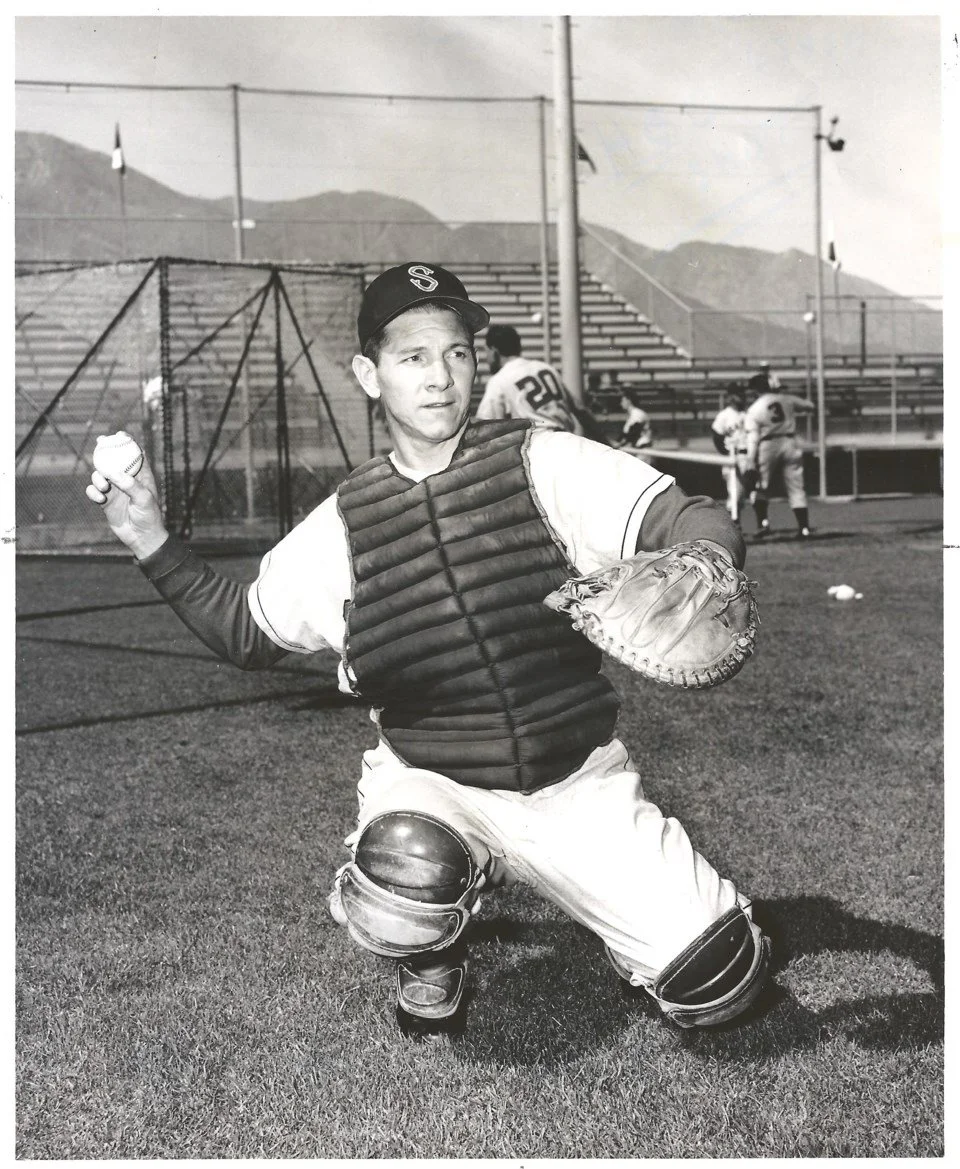
Joe Erautt (Vibank, Sask.) is shown here with the Pacific Coast League’s Seattle Rainiers. Photo: Saskatchewan Baseball Hall of Fame
April 10, 2026
By Kevin Glew
Canadian Baseball Network
Last Friday, Chicago White Sox outfielder Tristan Peters, who hails from Winkler, Man., delivered a walk-off single in the bottom of the 10th inning to give the Sox a 5-4 victory over the Toronto Blue Jays in their home opener.
It was also Peters’ first MLB RBI.
The White Sox later noted that this was the first time one of their players had recorded their first MLB RBI on a walk-off hit since August 4, 1950 when Joe Erautt, who was born in Vibank, Sask., hit a walk-off single in the bottom of the 10th inning against the Boston Red Sox.
As a Canadian baseball history blogger, this piqued my interest.
Here we had two Canadians, each born in a prairie province, sharing a rare feat.
But who the heck was Joe Erautt?
Well, I did some research to find out.
Erautt’s background
Erautt was born on September 1, 1921 in Vibank, Sask., which today is a village of about 400 people approximately 50 km southeast of Regina.
Erautt’s father, William, was from Hungary and his mother, Katie, was from Russia and they came to Saskatchewan as part of a large wave of immigrants in the early 20th century. Through research on Ancestry.com, I discovered there were other Erautt families living in Saskatchewan prior to their arrival. So, it’s safe to say that Erautt’s parents followed relatives to the region.
Not in Canada long
But their time in Saskatchewan was short.
According to the U.S. Census, Erautt’s family had relocated to Portland, Ore., by 1923, meaning that Erautt spent, at the most, his first two years in the prairie province.
In Portland, Erautt’s father took a job as a janitor at a movie theater and was later promoted to doorman. His mother was a housewife.
In 1924, Erautt’s brother, Eddie, was born. The two grew up playing together and at Lincoln High School, they formed a dominant battery – with Joe behind the plate and Eddie blowing fastballs by hitters.
Eddie, who went on to pitch parts of six seasons in the big leagues with the Cincinnati Reds and St. Louis Cardinals, credited his older brother for helping him develop.
“My brother Joe was really helpful to me,” Eddie told author Dick Dobbins for his book, The Grand Minor League, An Oral History of the Old Pacific Coast League. “We played every day and night, broke every window in the house . . . He helped me to learn new pitches, and if I didn’t get the ball over, he’d fire it back and holler at me. Other than Joe and my dad, I didn’t have any real coaching.”
The Erautt brothers got their first taste of pro baseball when they served as clubhouse boys for the Pacific Coast League’s Portland Beavers.
Joe was also the catcher and team MVP on the local American Legion team that won city, state and Northwest sectional championships in 1937 and 1938.
Off to university
After graduating high school, Erautt attended the University of Portland where he was again a star on the diamond.
In the summer of 1939, the 5-foot-9, 175-pound sparkplug catcher led his local semipro team to state and Northwest sectional championships. His squad advanced to the national tournament in Wichita where his team finished third. At 17, he was the youngest player at the event and he was named to the All-American semi-pro team.
He also caught the eye of Detroit Tigers manager Del Baker who signed him for the Tigers.
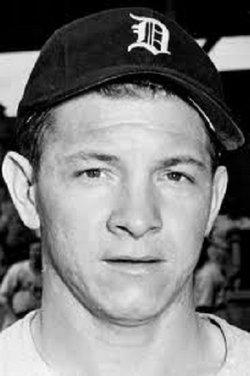
Joe Erautt was signed by the Detroit Tigers.
Begins pro career
Nicknamed “Stubby” for his short, stocky build, Erautt endeared himself to fans at almost every minor league stop.
In 1940, he batted .266 in 102 games for class-C Henderson and was named an East Texas League All-Star.
This earned him a promotion to the Class-B Winston-Salem Twins, where he quickly became a fan favourite in 1941.
“Catcher Joe Erautt, age 19 and not much bigger’n a minute, is rapidly establishing himself in popular favor with the pep and enthusiasm he displays behind the plate,” wrote Nady Cates for the Winston-Salem Journal in April 1941. “The fans especially like the way he races down the first base line on every hit ball and backs up the throw to [first baseman] Gale Smith . . . and the way he keeps yelling words of encouragement and exhortation to the pitcher.
“Popularity is nothing new for Little Joe. He’s been a reigning favourite everywhere he’s played. He gets more mail than any three Twins players combined.”
Erautt batted .200 in 84 games for the Twins that season and enhanced his reputation as a scrappy, team-first catcher.
U.S. Army
He was promoted to play 79 games for Class-A Beaumont in 1942 before enlisting in the U.S. Army for World War II. He served as a staff sergeant in missions in Italy and Algeria and would miss three seasons.
Back to baseball
He returned from his military service in 1946 and split the season between the triple-A International League’s Toronto Maple Leafs and Buffalo Bisons, hitting .222 with three home runs in 74 games.
The following year, he’d enjoy a breakout campaign with the double-A Birmingham Barons, batting .275 with a career-high six triples and 52 RBIs.
Unfortunately, he was also hit in the head by a ball twice.
The first instance came during a game on June 16 when he was beaned by a pitch from Chattanooga Lookouts right-hander Dick Weik above the left temple and knocked unconscious. He would spend several days under a physician’s care.
Just nine days later, he was hit in the left temple again when a ball came through the netting while he was standing behind the batting cage.
Best offensive seasons
But the beanings didn’t seem to slow him down. He put together his best offensive seasons with the double-A Little Rock Travelers in 1948 and 1949, batting over .300 each year and belting a career-high six home runs in 1949.
But Erautt had now played seven professional seasons and had yet to be called up to the big leagues.
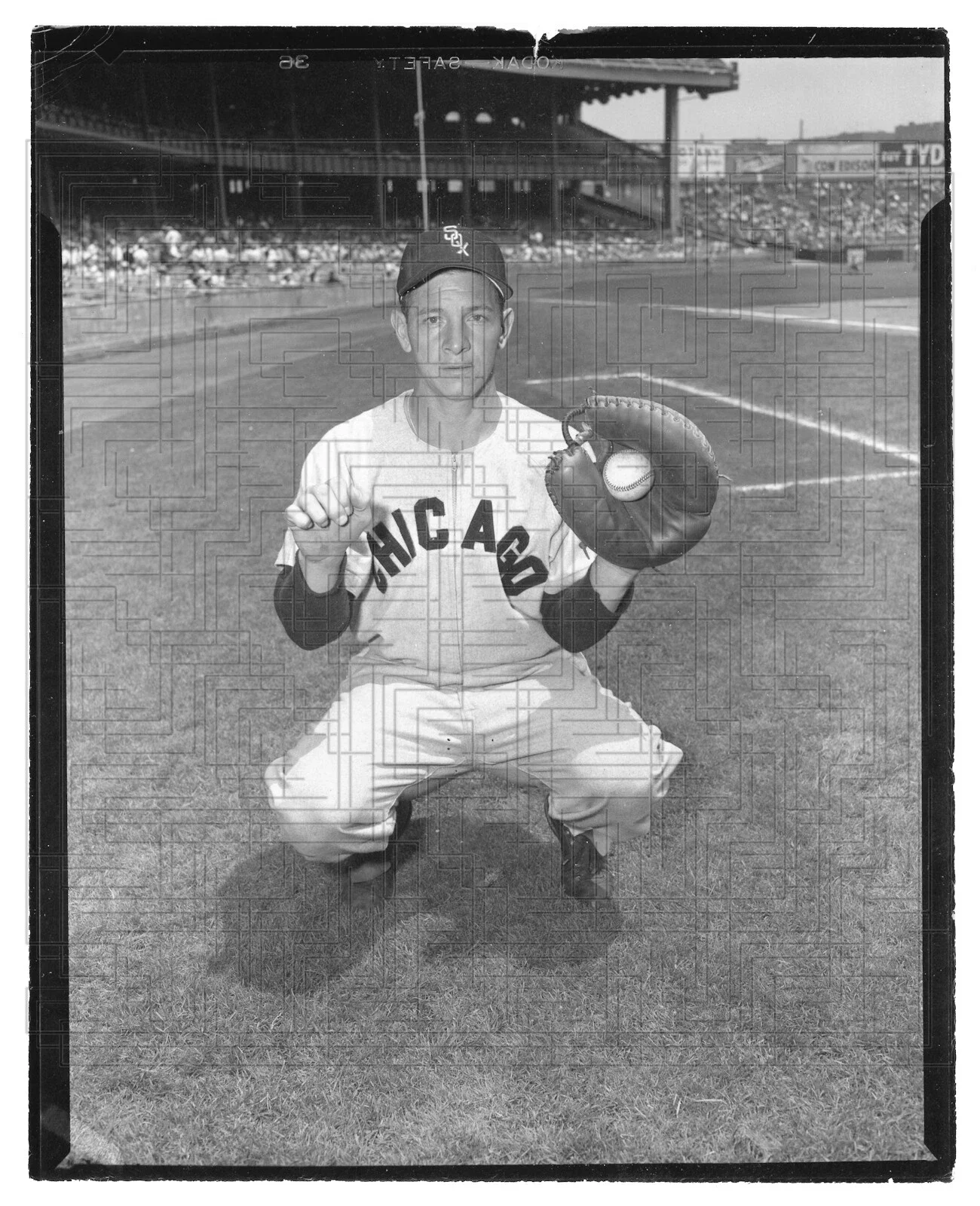
Joe Erautt played a combined 32 games with the Chicago White Sox in 1950 and 1951. Photo: William N. Jacobellis
Rule 5 draft
That would change after the journeyman catcher was selected by the White Sox in the Rule 5 draft on November 17, 1949. He’d serve as one of the big league club’s backup catchers for the next two seasons.
This made him the first position player born in Saskatchewan to compete in the big leagues (Pitchers Ralph Buxton (Weyburn) and Lefty Wilkie (Zealandia) had been major leaguers before him).
In total, in his two seasons with the Sox, Erautt went 8-for-43 (.186 batting average) in 32 games.
Back to minors
On July 22, 1951, the White Sox traded him to the triple-A Seattle Rainiers of the Pacific Coast League. He started the following season in Seattle before ending up back in the Tigers’ organization, splitting time between double-A Little Rock and triple-A Buffalo.
He returned to Buffalo in 1953 and then toiled in triple-A in the Philadelphia Phillies and Kansas City A’s organizations the next two seasons prior to finishing his career with the Pittsburgh Pirates’ double-A New Orleans Pelicans in 1956.
In total, Erautt played over 1,100 games in 14 pro seasons.
Parkinson’s disease diagnosis
A few years after hanging up his playing spikes, Erautt was diagnosed with Parkinson’s disease. The doctors told him that the beanings he experienced as a player were a contributing factor.
By 1962, he was “disabled,” according to a newspaper report.
On May 26, 1964, a testimonial fundraising dinner was held in his honour in Portland. Four months later, the triple-A Portland Beavers honoured him between games of a doubleheader and encouraged fans to contribute to a fund they set up to help him with his medical expenses.
The financial support was appreciated and much needed. It appears that the twice divorced Erautt lived alone in his final years. He did not have any children.
He died on October 6, 1976 in Portland at the age of 55. He was survived by his parents and his brother, Eddie. He was buried in the Willamette National Ceremony in Portland.
Erautt was inducted into the Saskatchewan Baseball Hall of Fame posthumously in 2015.