
Mark Potter: The late Max Jackson inducted into Queen's football HOF
November 20, 2025
By Mark Potter
Kingston’s Own
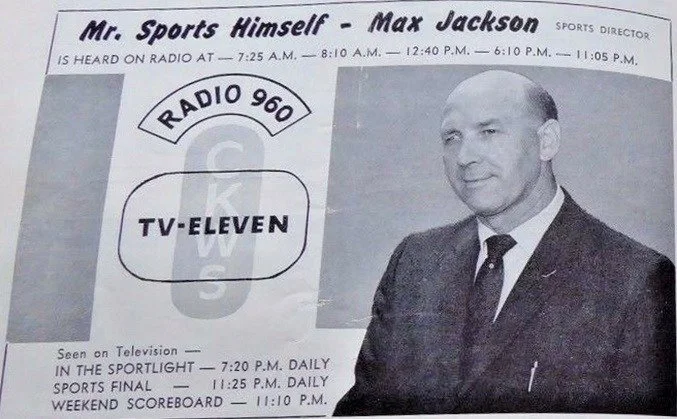
Legendary Kingston sportscaster Max Jackson is best remembered for his signature sign off, “If you can’t play a sport, be one.”
Born in Kingston in 1915, Max lost an eye in a childhood accident that limited his participation in organized sports, but it never dampened his enthusiasm and love for the game. Max became a coach, organizer, volunteer, and broadcaster. A champion for Kingston sports.
Memories of Max came flooding back as he was recently inducted into the Queen’s Football Hall of Fame. As early as the 1940’s Max was a prominent member of the local sports community. Max filed game reports for the Kingston Whig-Standard. He was the stadium announcer and official scorekeeper for the Kingston Ponies pro ball team, sending game summaries to the Associated Press in New York.
Max coached the Kingston Victorias Junior B hockey team and started the Lions Club Baseball League to give kids a place to play organized ball. Through his work with the Ponies, Max became great friends with Nelles Megaffin, the owner of the British American Hotel and a major supporter of Kingston sports.
Megaffin brought pro ball to Kingston in 1946 with the purchase of the Class C Border League Ponies and built Megaffin Stadium. In the summer of 1948, Megaffin provided financial backing for Jackson to start a new venture, opening the Pony Sports Shop on lower Princess Street in early July.
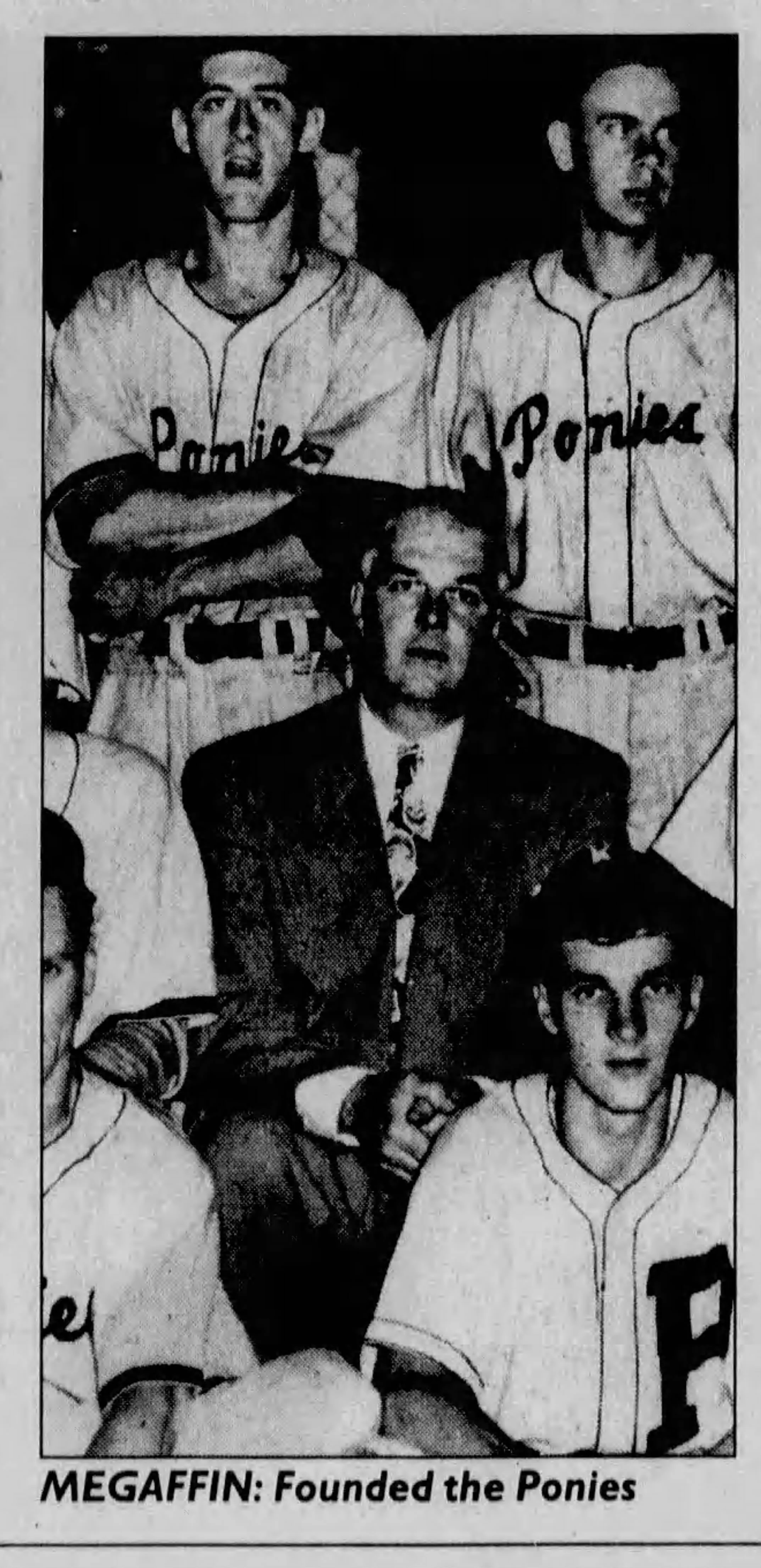
Tragedy struck over a month later with the shocking news that the 43-year-old Megaffin had suffered a massive stroke in his office at the ballpark. When Nelles was admitted to the Hotel Dieu, there were traffic jams with all the visitors. That’s how popular the man was. So, despite the signs reading “Quiet, Hospital Zone,” Police Chief Bob Nesbitt banned everyone but family from visiting but told all Nelles’ friends to honk their horns passing by on Brock Street. Nelles was in a corner room.
Someone complained and the Chief said, “What do you want me to do? The poor man is dying of a broken heart.” (due to the loss of the Ponies). Megaffin died in hospital in early September.
Under extremely challenging circumstances, Max forged ahead with his sports store.
In 1950, Max ran for Kingston City Council and won a seat as an Alderman in Frontenac Ward, polling the most votes among six candidates in his district.
Max was finishing his two-year term on Council in the fall of 1952; with another election looming Jackson’s Pony Sports Shop went into receivership. It made Max ineligible to run for a second term after losing the store.
Megaffin’s sudden death after the Pony store opened was a devastating blow for Jackson, and Max’s generous nature didn’t help him to turn a profit. If a kid needed a new hockey stick and didn’t have the money, Max would send him home with the stick and a promise to pay later. Too many promises went unfulfilled.
“Max is the only guy I know who loved hockey so much he lost a business over it,” recalled Don Cherry of his former coach, in a 1981 Whig Standard interview. “Max would give a kid a hockey stick or give a team sweaters when they couldn‘t pay for them. At the old Jock Harty Arena if there wasn’t enough money to pay the referees, Max would make up the difference.”
After losing his sports store and leaving City Council, Max went to work for his longtime friend and well-known Kingston sportsman, Wally Elmer, the owner of Patton’s Dry Cleaners. Elmer, a Stanley Cup champion with the Victoria Cougars in 1925, had Max as his team manager when the Jr. B Kingston Red Indians won an OHA championship in 1938.
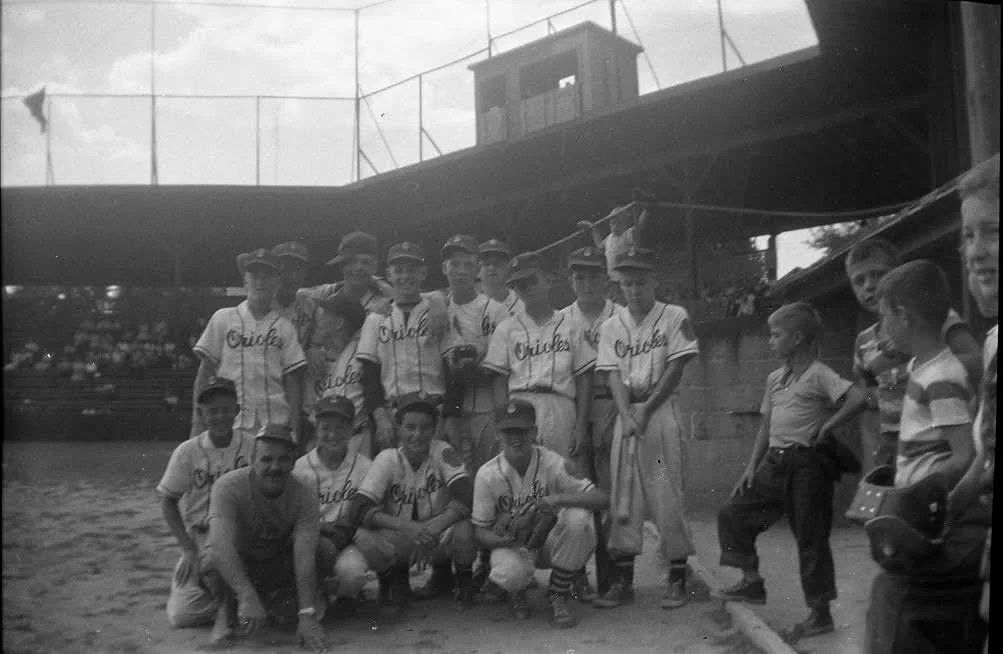
The Orioles of the Lions League at old Megaffin Stadium
In the early 1950’s, Max worked at Patton’s, coached hockey, was running the Lions League and doing some broadcasting work. Max coached the Kingston Victorias Junior B team for 15 years from 1940 to 1955, one of the longest runs in junior hockey in that era.
The Boston Bruins sponsored the Vic’s, Jackson was a part time scout for Boston and sent at least three players on to the Bruins organization: Lorne Ferguson, Don Cherry, and Bob Senior. Ferguson was a 14-year-old stick boy for the Vics, when they were short a player one night, “Max gave me an opportunity to play and that night I scored five goals. Max was very kind - and that was my first big break.” Ferguson went on to play eight NHL seasons and was an inaugural member of the Kingston and District Hall of Fame class.
When Max stepped away from the Vic’s, the OHA presented him with the prestigious ‘Order of Merit’ for his contributions to Junior hockey. CKLC radio went on the air in Kingston in 1953 and Sports Director Johnny Kelly began broadcasting Kingston Goodyears Senior B hockey. Max joined Kelly on the broadcasts as a color commentator. The Goodyears filled the seats at the Memorial Centre and won two Ontario championships.
Max also broadcast weekly Saturday afternoon Lions Club ball games on CKWS radio from his perch atop Megaffin Stadium. In September 1952, CBC Television went on the air in Canada. Two years later, CKWS-TV became one of the first local stations in the country, broadcasting from a new state-of-the-art broadcast centre at 170 Queen Street (CKWS-radio had been located in the Kingston Whig-Standard building on King Street since the 1940’s).
In January 1956, CKWS hired Jackson as a TV and radio sportscaster. It was the beginning of his legendary career at the station, a 26-year run that lasted until he retired in 1982. A few months after Max started at the station, CKWS hired his son, Maurie Jackson, then, 16. Maurie left high school at Queen Elizabeth high school to take a job for $25 a week, working audio for local TV broadcasts.
After a couple of years at CKWS, Maurie accepted a job at CFRA radio in Ottawa. It was a short stay, Maurie decided he really wanted to work in TV and returned to CKWS-TV. CKWS management had plans for Maurie to join his dad in the sports department, not something Maurie wanted to do.
“I went to the station with my dad one night and around 10 o’clock he told me was not feeling well and went home sick. So, I had to step in and do the sports on TV at 11:20 p.m.” Maurie thought it may have been pre-planned to get him in front of the camera.
Maurie would occasionally anchor weekend sports at CKWS-TV, but he preferred working behind the scenes. In 1961, Maurie left Kingston to pursue his TV career as a technical producer. Maurie worked at stations in Cornwall, Montreal, and Halifax – before relocating to CFTO-TV Toronto in 1964.
Maurie was at CFCF-TV in Montreal when it went on the air in 1962. Brian MacFarlane was the main sports anchor and Maurie remembers when MacFarlane brought in a young man for an audition.
“He was extremely nervous, his script fluttering so badly we could barely hear his audio. I went into the studio and told him put the papers on the desk and move each page as you read it.”
The young man took Maurie’s advice and was eventually hired. His name? Dick Irvin Jr.
In Kingston, Max was Mr. Sports, a true icon in the community, handling CKWS sports on radio and TV, working morning, noon and night and ending every sportscast with, “If you can’t play a sport, be one.”
Max was the play-by-play voice for Kingston Aces Senior A hockey in the 1960s and for the Kingston Canadians Major juniors when they arrived in 1973. Maurie remembers working with his dad as the color commentator for Kingston Canadians radio broadcasts when they played in Toronto or Oshawa.
“One night we were doing a game from the gondola at Maple Leaf Gardens. I had made a negative comment, and during the commercial break Dad took the microphone away from me and put it under the desk.” Max then said to Maurie, “I appreciate you helping me, but I don’t want you criticizing the hockey team.”
For the better part of two decades, Max provided live sports coverage almost 18 hours a day. He was there at 6 a.m. every day for radio sportscasts, and his day did not end until after his late-night sportscast on the 11 o’clock news.
He also organized the Max Jackson CKWS Junior Golf Classic that ran for over 20 years and gave 100s of young golfers a chance to play in the tournament. Wrestling shows were popular at the Kingston Memorial Centre in the 1950s and 60s, and Maurie recalls a story involving his father and wrestler Cowboy Carlson.
“Carlson came into the CKWS Queen Street studios where my father interviewed him on his sportscast to promote the wrestling card. At the end of the interview Carlson broke a folding chair over my dad’s head. Fortunately, it was a prop – one of those breakaway chairs like they used on movie sets.”
In the early 1960s, Max learned that golfing great Jack Nicklaus was duck hunting on nearby Wolfe Island. Max tracked him down and did an exclusive interview with Nicklaus that aired on CKWS. Maurie recalls his mother, Marjorie, had a real love of sports and it was fortunate for Max that she did. They would often golf together on weekends, and Marjorie won a couple of ladies club championships at Cataraqui Golf Club where she also curled.
For years Marjorie worked at Kingston Public Utilities, she completed one of the early IBM courses in Montreal and would oversee the early days of data processing at the utilities. The Jackson’s were a sports-minded family, Maurie remembers as a kid summer vacations in Tarrytown, N.Y., outside of New York City. With his parents and his late sister, Beth, they visited their Uncle Charlie (on his mom’s side) and Charlie was able to get them tickets for ball games.
For several summers, the Jackson family got to see games at Yankee Stadium, the Polo Grounds and Ebbets Field. Quite a thrill for a young kid and memories that would last a lifetime. For many years Max and his family lived on Brant Avenue in Kingscourt, where Max would regularly walk back and forth to work a few times each day to the Queen Street studios.

After his passing in 2001, as a lasting tribute to Max, a city park in the neighborhood near his former home was named after him. Maurie became technical director and later Operations Manager at CFTO. In the mid 1980’s he joined TSN and Dome Productions focusing exclusively on sports. Maurie was the technical director on Blue Jays broadcasts from Exhibition Stadium when Fergie Olver was doing play by play. He also did NHL games, CFL games, including Grey Cups, and PGA golf tournaments.
“I worked games in every NHL city, but I was in the production truck outside the rink, I didn’t get to see a game in person for many years – not until my son Marc took me to a game at Maple Leaf Gardens.”
Jackson also did a stint as a technical producer on Second City Television (SCTV), a 1970s breakthrough comedy sketch show. It featured talent like John Candy, Martin Short, Eugene Levy and Joe Flaherty. “I lucked into the freelance job at SCTV. They were a great bunch of people to work with, Candy, Short, Levy and Flaherty were our favourites.”
“It was an enjoyable time, and they were all great people, fun to be around.” Maurie’s son, Marc, has followed in his father’s footsteps, Marc is a technical director at CTV News, after spending many years at TSN.
In 1982, Max received the Honorable Achievement Award from the City of Kingston for “unselfishly giving of his time and energy to the promotion of sports in Kingston.” The scroll he received called Max “a shining example of a sportsman and human being for both young and old alike.”
Max Jackson lived full-time in Florida in retirement and died there at age 85 in January 2001. His last visit to Kingston came in the spring of 1997, back home to take his rightful place in the Kingston and District Sports Hall of Fame.
When Max was inducted into the Queen’s Football Hall of Fame in September, his son Maurie, who had quite a career of his own in sports TV, proudly accepted the honor on behalf of his dad. Max would be proud to see his family legacy in sports TV now runs three generations deep.
Max joined fellow media inductees: veteran scribe Claude Scilley, as well as voices Doug Jeffries, and Mike Postovit. Queen’s 2009 Vanier Cup championship team was well represented with players, Ryan Granberg, Osie Ukuoma and Dan Village, along with Gaels coaches Pat Sheahan, Pat Tracey, and Ron Augustine. Tim Pendergast and Joel Dagnone represented Queen’s 1992 Vanier Cup champions and centre Cam Innes went into the Hall of Fame from the 1968 Vanier Cup winners. Also honored were coach Frank Halligan, and former All-Stars Sam Sabourin and Derek Wiggan. In addition, Queen’s recognized the inaugural Gaels football team from 1882.
Mark Potter grew up watching Max, joined him as a newbie 20-year-old sportscaster in the
CKWS Sports Department in 1981 and later became CKWS Sports Director.