
Glew: New Canadian ball hall inductee Bédard employed elite curveball to rack up Ks

Former Baltimore Orioles left-hander Érik Bédard (Navan, Ont.) was inducted into the Canadian Baseball Hall of Fame on Saturday. He did not attend the ceremony. Photo: Canadian Baseball Hall of Fame
June 7, 2025
By Kevin Glew
Canadian Baseball Network
To say Érik Bédard is a private person would be an understatement.
How private you ask?
Well, so private that he declined to attend his Canadian Baseball Hall of Fame induction ceremony on Saturday in St. Marys, Ont.
It’s a decision that didn’t surprise his former Baltimore Orioles manager Dave Trembley.
“Erik was a throwback. He just wanted to pitch,” said Trembley in a recent phone interview. “He was very private. He didn’t say a whole lot.”
How private was Bedard during his time with the Orioles?
Well, after games he started, he often disappeared from the clubhouse before the media arrived. He did this so frequently that the media threatened to file a complaint, so Trembley had to work out a deal with the left-hander.
“Erik loved to hit. He liked to swing the bat. And back then, when we played National League clubs, the pitchers had to hit. There was no DH,” explained Trembley. “And I made a deal with him that if he would talk to the press after he pitched that I would throw BP to him the next day inside. He didn’t want to go outside because he didn’t want anyone to see him.
“So, he would come in early the next day and do his running and all his work and then I would meet him at the cage and I would throw BP to him, so he would hit for 10 or 15 minutes . . . And that’s where I really got to know him a little bit.”
But getting to know Bédard wasn’t easy.
Trembley liked to call his players a couple of times in the off-season to touch base and he could never connect with Bédard.
“I liked to call the players and say, ‘How are you doing? How is everything going?’ And I would always call him two or three times in the winter and I could never get him. I’d talk to his mother. And I would tell his mother, ‘Ma’am, could you please tell Erik that I called?’” he recalled.
But Trembley doesn’t want anyone to get the wrong impression of Bédard.
“Erik is a really, really nice person. He had no malice there. He wouldn’t do anything like that to be a bad guy, but he’s private,” said Trembley.
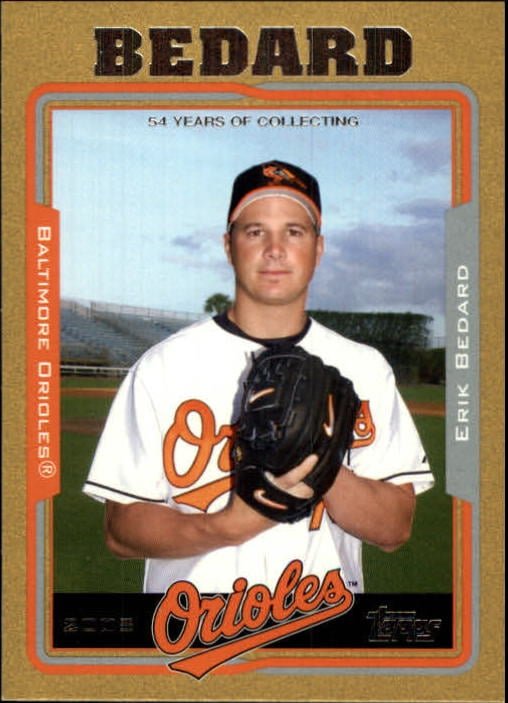
And it’s clear that Trembley and Bedard established a relationship that worked for both of them. Bedard enjoyed his best major league season in 2007 when Trembley was the O’s skipper for most of the season. That year, Bedard finished 13-5 with a 3.16 ERA and set an O’s single-season record with 221 strikeouts.
“Erik was very competitive,” said Trembley. “He had a very good routine between starts and he worked really hard.”
The Canuck southpaw showcased a mid-to-high 90s, four-seam fastball and one of the league’s best curveballs.
“His curveball was real sharp,” said Trembley. “Erik had what we used to call a downer or an Uncle Charlie. It was a 12-6 breaking ball . . . He was good at expanding the zone and getting hitters to chase because he had that four-seam fastball where he could elevate it and the batters were looking up for the fastball and then he could throw the curveball. It was certainly one of the better breaking pitches you would see.”
Trembley can recall Bedard tying an O’s single-game record when he struck out 15 batters in a start against the Texas Rangers on July 7, 2007 at Ameriquest Field.
“I think in that game he faced the minimum because there were a couple of double plays,” said Trembley. “I remember after that game, [O’s veteran first baseman] Kevin Millar said Erik had the best curveball he had ever seen.”
That’s high praise for a pitcher that was not considered a prospect out of high school.
Born in 1979 in Navan, Ont., Bédard honed his skills in Orleans, Ont., and attended Garneau High School, where he was only 5-foot-5 and 110 pounds heading into his senior year. He grew eight inches that year and headed to Norwalk Community Technical College in Connecticut and made their baseball team as a walk-on. He ended up being a Junior College All-American in 1999 and his performance inspired the O’s to select him in the sixth round of the MLB draft.
From there, he developed into one of the best pitching prospects in the O’s organization and was chosen to play in the MLB Futures Games in 2001 and 2002.
In 2004, Bédard joined the Orioles’ starting rotation. Two years later, he enjoyed a breakout season when he set career-highs in wins (15), starts (33) and innings pitched (196 1/3).
And, as noted earlier, he was even better the next season pitching for Trembley.
Trembley discovered early on that Bedard liked to go about things differently than other pitchers. For example, the Canadian lefty was not one for discussions in the dugout.
“He never liked me coming up to him after an inning and saying, ‘Hey, do you have one more? Or can you go another inning? Or how do you feel?’’ recalled Trembley. “I talked to him about that and he said, ‘Hey, that’s not my job. My job is to pitch as long as you want me to pitch. Your job is to make sure you know me as a person and know when I’ve had enough.’ So, I had a deal with him in that I said, ‘I will never ask you if you will go another inning or if you’re out of gas.’ . . . We agreed that would be my call. He liked that. He just wanted to pitch and if you took him out, you took him out. If you left him in, you left him in. But he did not want to be asked how he felt.”
It was a formula that clearly worked, as Bedard finished fifth in the American League Cy Young voting in his season under Trembley.
“We had a very good relationship,” said Trembley. “Erik didn’t want to be singled out. He didn’t want the spotlight. He just wanted to be treated like one of the fellas. I think he trusted me and I got to know what made him tick.”
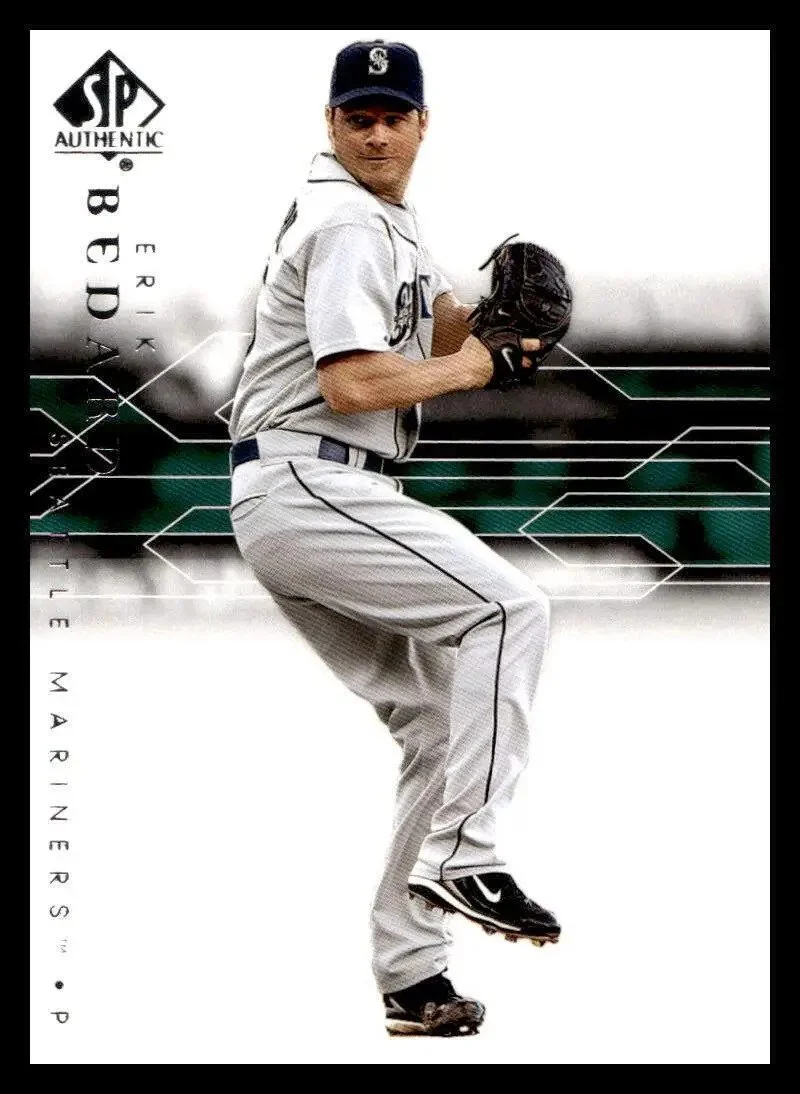
Following that campaign, the O’s dealt Bedard to the Seattle Mariners where he persevered through multiple shoulder injuries to record a 3.31 ERA and fan 249 batters in 255 1/3 innings in 46 starts over parts of three seasons prior to being dealt to the Boston Red Sox at the trade deadline in 2011.
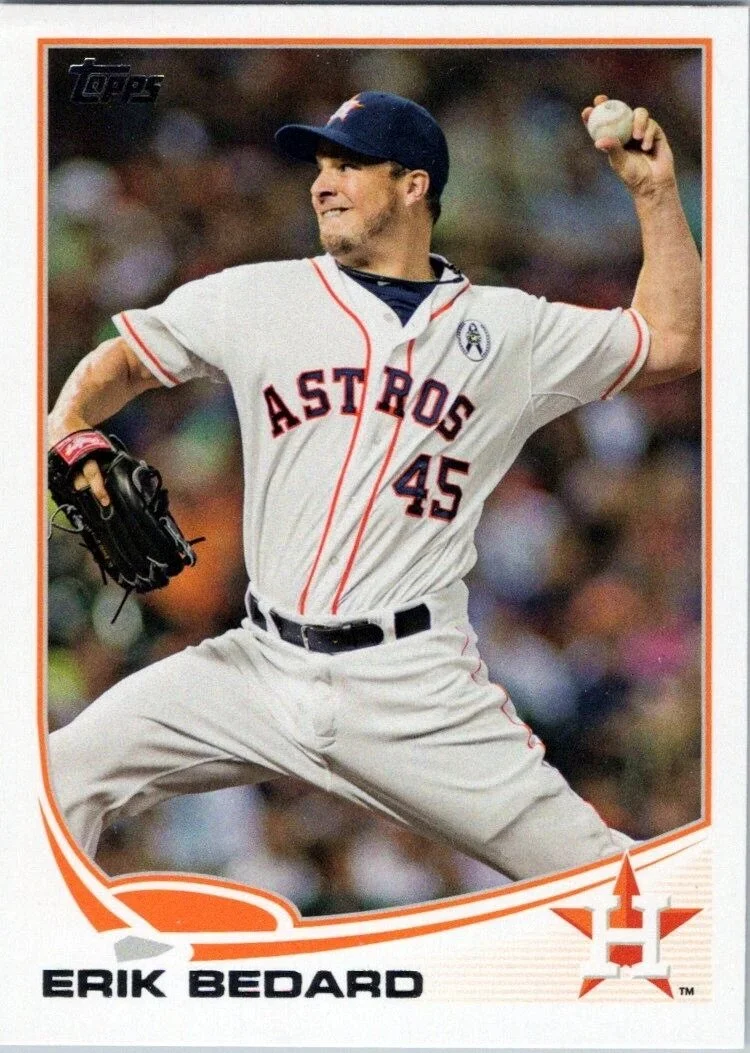
Bedard then signed with the Pittsburgh Pirates for 2012 before landing with the Houston Astros and reuniting with Trembley, who had moved on to become the Astros bench coach, in 2013. Trembley recommended to the Astros that they sign the lefty, telling the front office that they were going to get someone who was reliable, competitive and professional.
“The game needs people that are professional, that know how to act, have good presence in the dugout and on the field. With Erik, there were no theatrics. There was no rah rah. It was all business,” said Trembley.
After appearing in 32 games (26 starts) with the Astros, Bedard completed his major league career with the Tampa Bay Rays in 2014.
In all, Bédard finished with 71 wins and a 3.99 ERA in 241 major league appearances (230 starts).
Bédard remains the leader among Canadian big-league left-handers in starts, innings pitched (1,303 2/3) and strikeouts (1,246). He also ranks in the top 10 among all Canadian major league pitchers in several statistical categories, including third in strikeouts, fourth in starts, sixth in innings pitched, seventh in WAR (17.4) and 10th in wins.
It was these numbers that earned him his induction into the Canadian Baseball Hall of Fame on Saturday.
“That’s quite an honour for Erik,” said Trembley.
It is, indeed.
Hopefully, Bedard, who at last report was living in the outer reaches of Cumberland, Ont., is celebrating somewhere – in his own private way.