
R.I.P. Ryne Sandberg
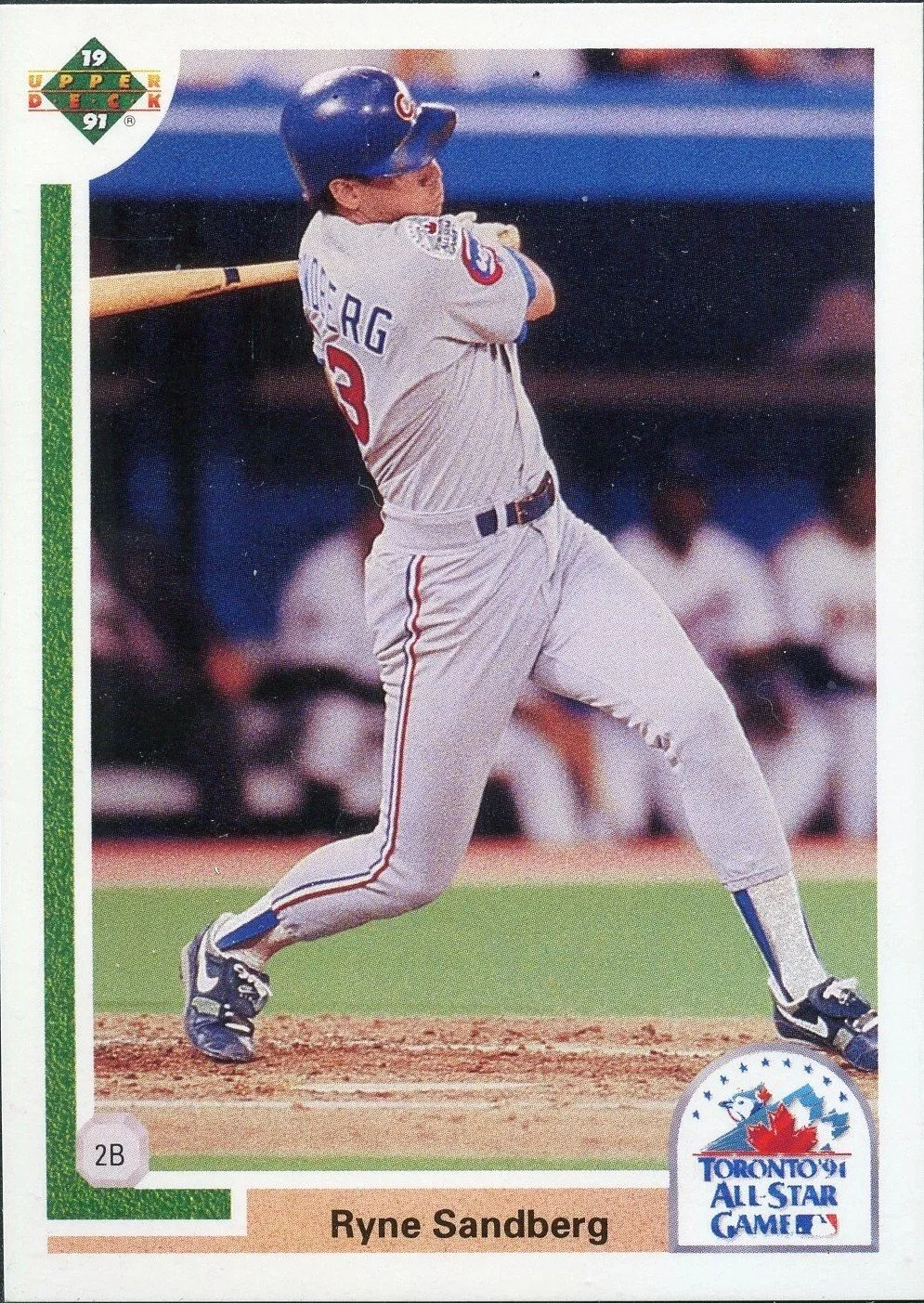
Ryne Sandberg bats in the 1991 MLB All-Star Game at SkyDome. It was the only game he ever played in Toronto.
July 30, 2025
By Kevin Glew
Canadian Baseball Network
Chicago Cubs legend Ryne Sandberg died on Monday at the age of 65 after a long battle with cancer.
The Cubs were the first to share the news of his passing.
“Ryne Sandberg was a hero to a generation of Chicago Cubs fans and will be remembered as one of the all-time greats in nearly 150 years of this historic franchise,” Chicago Cubs executive chairman Tom Ricketts said in a statement on Monday. “His dedication to and respect for the game, along with his unrelenting integrity, grit, hustle, and competitive fire were hallmarks of his career.
“He was immensely proud of his teammates and his role as a global ambassador of the game of baseball, but most of all, he was proud of Margaret, his children and his role as husband, father and grandfather.”
Sandberg had been diagnosed with metastatic prostate cancer in December 2023.
When the perennial All-Star hung up his playing spikes in 1997, he held National League records for second basemen for most home runs (277), most consecutive errorless games (123) and most Gold Gloves (nine).
Twenty-nine of his home runs came against the Montreal Expos and he belted 11 of those at Olympic Stadium.
Also, Sandberg enjoyed three of his 25, two-homer games against the Expos, who like 25 other teams missed out on drafting him in 1978.
Grew up in Spokane
Born on September 18, 1959 in Spokane, Wash., Sandberg was a three-sport star at North Central High School, excelling in basketball, baseball and football. A standout quarterback, he had signed a letter of intent to play at Washington State University when the Philadelphia Phillies, with Dallas Green as their scouting director, took a flier on the young infielder in the 20th round of the 1978 MLB draft. They later convinced Sandberg to play baseball with a $20,000 signing bonus.
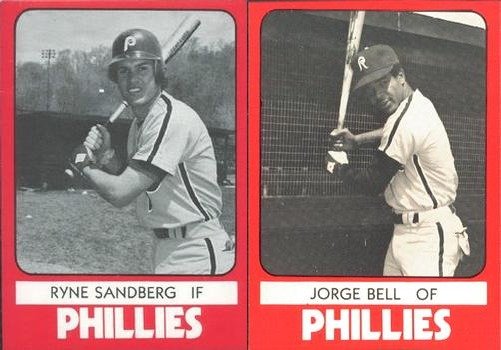
Sandberg began his pro career with the Phillies’ Rookie ball affiliate in Helena, where he was teammates with another future major league MVP – George Bell. In fact, the two played their first three pro seasons together.
As a minor leaguer, Sandberg was a smooth fielding shortstop who could run and hit for average, but with little power. After batting .293 in 133 games for the double-A Oklahoma City 89ers in 1981, he was called up by the Phillies that September.
In 13 games with the Phils, he mustered just one hit in six at bats. But fittingly that hit was a single against the Cubs at Wrigley Field on September 27.
Traded to Cubs
By that time, Dallas Green had moved on to become the Cubs’ general manager, and on January 27, 1982, he traded shortstop Ivan De Jesus to the Phillies for veteran shortstop Larry Bowa. And in one of the great trade heists of all-time, he also convinced the Phillies to throw in Sandberg.
Sandberg began 1982 as the Cubs’ starting third baseman and he stayed in that position until he was moved to second base near the end of the season. He batted .271 with seven home runs and 32 stolen bases in 156 games and finished sixth in the National League Rookie of the Year voting.
The following year, Sandberg became the Cubs’ starting second baseman and he produced similar stats – a .261 batting average with eight home runs in 158 games.
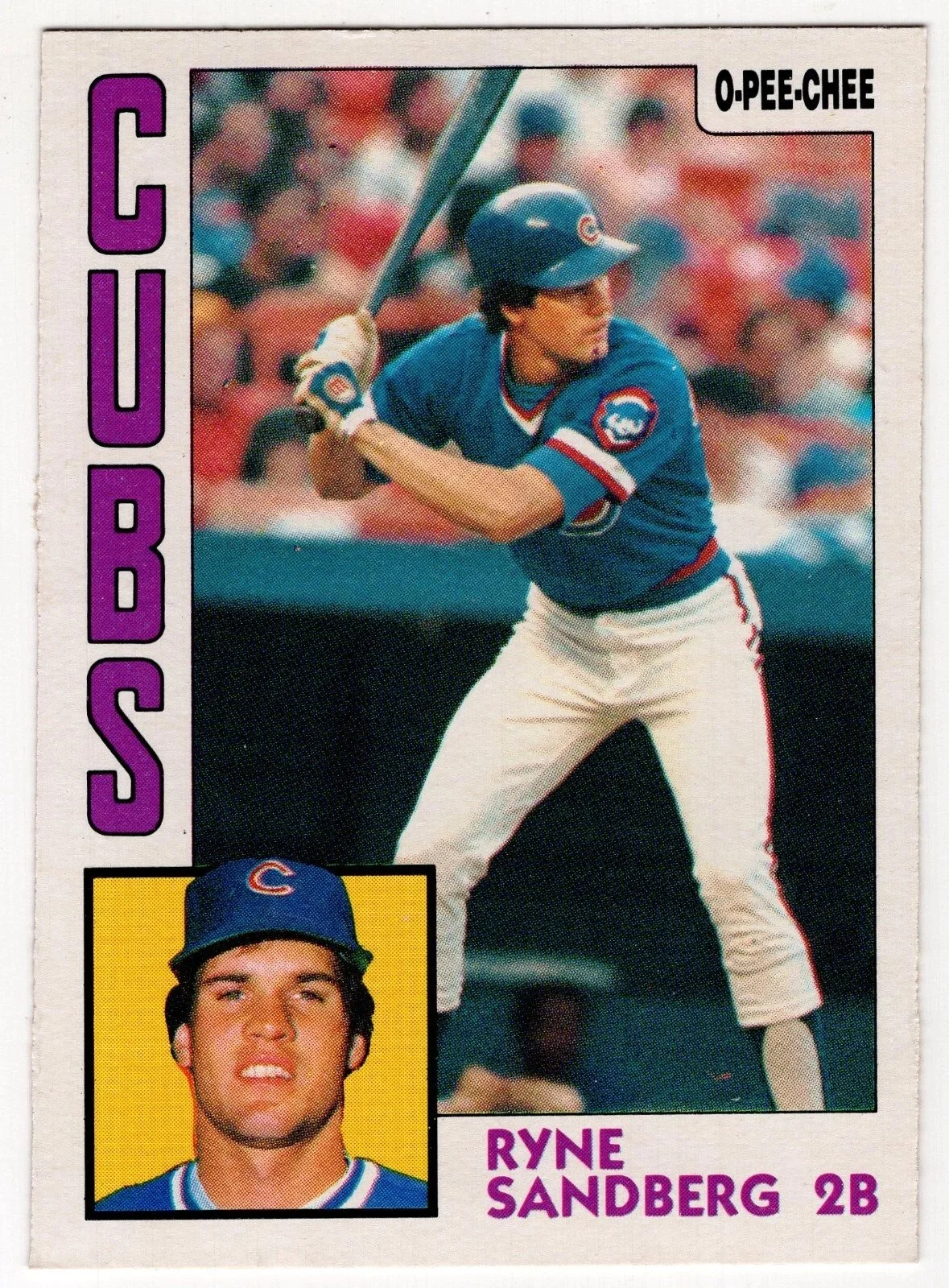
Prior to the 1984 season, Cubs manager Jim Frey challenged the young infielder to hit for more power and Sandberg responded with a breakout season. He batted .314 with 19 home runs, 36 doubles and 32 stolen bases. He also topped the National League with 19 triples and 114 runs and led the Cubs to their first division title since 1945. For his efforts, he was voted the National League’s Most Valuable Player.
One of the greatest second baseman
From there, Sandberg developed into one of the baseball’s most consistent and productive five-tool talents and one of the greatest second basemen in major league history. As a Cub, he was selected to the All-Star Game 10 times, won seven Silver Slugger awards and nine Gold Gloves.
He scored more than 100 runs in a season seven times, belted 25 or more home runs six times and swiped 30 or more bases five times.
Played his most games against Expos
And these statistics were bolstered by his performance against the Expos. He played more games (232) against the Expos than he did against any other team. In those 232 contests, he accumulated 238 hits and had a .272 batting average. His 48 stolen bases against the Expos were his most against any club and the 143 runs he scored against them were his second-most versus any opponent.
In 115 games at Olympic Stadium, Sandberg smacked 27 doubles – his most in any opposing park. His 20 stolen bases at the Big O were his second most at any visiting stadium.
As noted earlier, three of his two-home run games came against the Expos. The first occurred on June 27, 1990 at Wrigley Field when he socked solo homers off Kevin Gross and Bill Sampen in a Cubs’ 5-3 win.
More than six years later, on August 9, 1996, he had his only two homer game at the Big O. In that contest, he belted a grand slam home run off reliever Barry Manuel in the fifth inning and then added a solo home run in the ninth off Mel Rojas.
His final two-home run game against the Expos was the last two-homer game of his career. It came on August 24, 1997 at Wrigley Field when Sandberg hit a two-run home run off Carlos Perez in the first and a solo shot of Shayne Bennett in the fourth to propel the Cubs to a 12-3 victory.
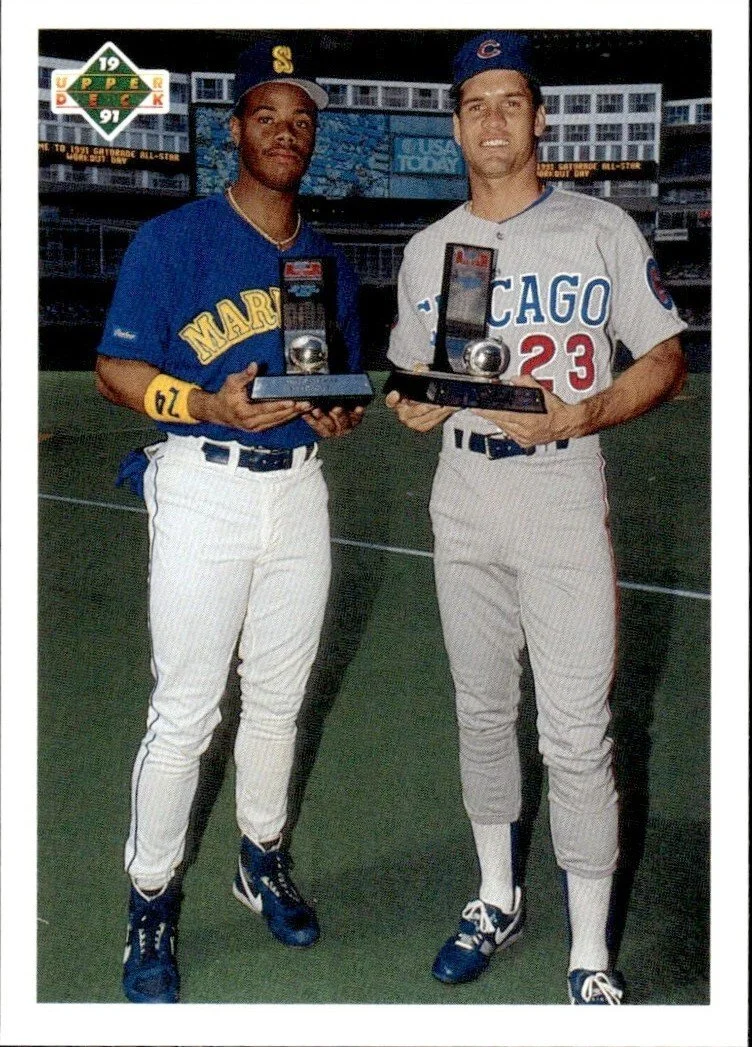
Ken Griffey Jr. and Sandberg receive their awards at SkyDome in 1991 for being the top All-Star Game vote-getters in the AL and NL respectively.
1991 All-Star Game at SkyDome
The only game Sandberg played in Toronto was the 1991 All-Star Game at SkyDome. Prior to that contest, Sandberg was recognized as the National League’s top vote-getter.
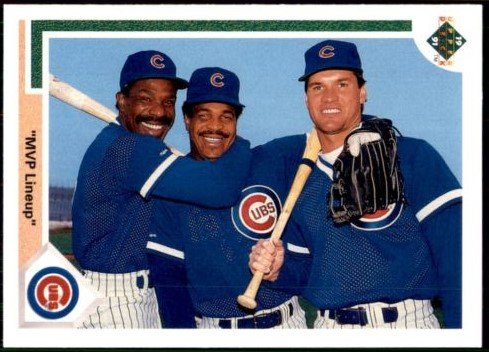
Sandberg, Andre Dawson and Bell represented the Cubs. It was Bell’s first visit to the Dome since he left the Blue Jays for a three-year, $9.9-million deal with the Cubs the previous December. Not suprisingly, the outspoken Bell was met by a large contingent of media at his locker, which was next to Sandberg’s.
The scene prompted Toronto Star reporter Tom Slater to call Sandberg the “Class act of the day” in his column.
“Ryne Sandberg [was] standing quietly aside, enjoying the solitude, while teammate George Bell conducted a massive press conference at the next locker,” Slater wrote.
In the game itself, Sandberg started at second base and batted second. He went 1-for-3 with a double off the left-centre field wall off Blue Jays left-hander Jimmy Key in the third inning.
Sandberg hung up his playing spikes after the 1997 season. In total, he played 2,164 games in 16 big league campaigns and batted .285 with 282 home runs and 344 stolen bases. He finished with 2,386 hits, including 403 doubles and 76 triples. He was elected to the National Baseball Hall of Fame in 2005.
Became a manager
Following his playing career, he became a minor league manager in the Cubs’ organization before Phillies’ general manager Pat Gillick hired him to be their big league bench boss for parts of three seasons from 2013 to 2015.
Among the players he managed with the Phils were Canadians Pete Orr (Newmarket, Ont.) and Phillippe Aumont (Gatineau, Que.).
Gillick, a 2011 Hall of Fame inductee, and Sandberg remained close after Sandberg was let go as manager. They often sat together in Cooperstown.
A statue of Sandberg in a fielding position was erected outside of Wrigley Field last year.
“Ryne Sandberg had a relentless work ethic and an unshakable positive outlook. With it, he inspired all those who knew him,” said Jane Forbes Clark, chairperson of the National Baseball Hall of Fame and Museum. “He always emphasized his respect for the way the game should be played, for his teammates and for the Hall of Fame, especially during his 2005 induction speech. We send our deepest sympathies to his wife, Margaret, and his family, as we remember and celebrate his life.”