
Gallagher: R.I.P. Wayne Granger, former Expos pitcher
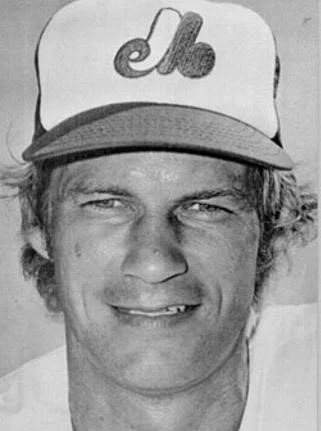
Former Montreal Expos pitcher Wayne Granger had died at the age of 81.
February 28, 2026
By Danny Gallagher
Canadian Baseball Network
How did a kid like Wayne Granger from Springfield, Massachusetts use the Canadian towns of Jonquiere and Port-Alfred, Quebec in the 1960s as a springboard to a major-league career that ended with the Expos?
It has happened a lot over the years in Canada's adult leagues, or senior leagues, as we call them in Canada. I use the word adult because some Americans might not know what the word senior means. Does it mean someone in their 60s and 70s? No. In this case, it means the age range of roughly 18-45.
Former Expos Roger Freed and Bill Campbell played for the Neilburg Monarchs in the Northern Saskatchewan league in the mid-1960s.
John Boccabella played for the Saskatoon Commodores in 1961.
Chris Speier suited up at short for the Stratford Hoods in Ontario's Intercounty league in 1969. A few years later, Jesse Orosco pitched in the same league for Cambridge.
There are many others too numerous to mention.
Granger, a stringbean who looked no more than maybe 150 pounds in some photos I have seen, was lured to Quebec, first by the Jonquiere Braves, a top-level in the Saguenay Region league, in 1963, and then he went on to play for the Port-Alfred Martinet down the road in 1964. Both are located near the larger metropolis of Chicoutimi, about five hours from Montreal.
The baseball world is mourning following the passing of Granger on Feb. 25 at the age of 81.
As you see on a map, Granger would have travelled by car or bus or train almost directly straight north from Springfield up through Vermont and Montreal to Jonquiere which is about 9-10 hours from Springfield, including stops for gas, washroom breaks and food. Quite a hike.
Granger was signed by Jonquiere Braves officials Rene Hebert and Harold Hicks, a scenario captured in photos in the local French paper.
I was attracted to this story for my book Explosion about Granger after the late Stephane Harvey of Port-Alfred posted something on Facebook in June of 2023. I was aware Granger pitched for Montreal but I didn’t know he had pitched in Jonquiere and Port-Alfred until Harvey made his post.
Harvey sent me clippings that showed Granger fired two no-hitters for Jonquiere. I have to pay tribute here to Harvey because he died Oct. 11, 2023 after a long battle with brain cancer.
Granger had played the 1962 season in his home state Cape Cod league with the Sagamore Clouters before heading to Quebec. With Port-Alfred, he batted .304 based on 31-for-102 hitting.
He played the 1965 season at his hometown Springfield College. That was the year the St. Louis Cardinals signed him, although he did draw interest from the Chicago White Sox, Washington Senators and Los Angeles Dodgers.
Granger credited the great Warren Spahn for paying attention to him in the minor leagues.
“The luckiest break I had in my career was having Warren Spahn as my manager in Tulsa,” Granger told Arthur Daley of the New York Times. “He is to pitching what Ted Williams is to hitting. It’s a pure science to him.
“He taught me concentration. I can’t throw within the six-inch circle he used to target, but I can hit it one out of three times and come close on the others.”
The Cardinals called him up to make his first appearance June 5, 1968. He ended up with Cincinnati for four seasons and became a dominating relief ace with 27 saves in 1969 and a major-leagues leading 35 in 1970. He would lose his closer's job to Clay Carroll in 1971 but was still an integral part of the Reds' relief corps, making 70 appearances.
Granger was the first pitcher to reach 90 appearances in a season. Only four others have accomplished that feat: Mike Marshall (three times), Kent Tekulve (three times), Salomon Torres and Pedro Feliciano.
Granger joined the Expos shortly after spring training began in 1976 on Feb. 27. He spent part of the 1976 season with Montreal, throwing 32 innings in 27 games for a 3.66 ERA and two saves. His overall performance on paper appeared to be solid but he was demoted to triple-A following his last game June 25.
During the last half of the 1976 season with the Denver Bears, Granger helped them win the American Association title while posting a 3-1 record along with a solid 2.45 ERA in 44 innings of work over 26 games. Those numbers were not enough, though, and the Expos released him in February 1977.
According to Baseball Reference, after a bit of playing in the Mexican league, Granger came back to Denver in 1979. He registered one save over 24 appearances with a less than favourable 6.75 ERA. This marked the end of his professional career in baseball.
In 1982, he was inducted in the Cincinnati Reds Hall of Fame.
With his blonde hair and lithe physique, which some called frail to coincide with his very white skin, you'd never think he would have much success but Granger proved the critics wrong.
“Whether it’s the short blonde hair, the baby face free of stubble, the thin neck masked by a turtleneck, or the rail-thin upper body, Granger gives us an image of an overage batboy. He is the antitheses of Dick Radatz, The Monster. Appearances, in this case, are deceiving, but also somewhat accurate,’’ historian Bruce Markusen wrote years ago.