
Gallagher: R.I.P. Wayne Morgan, former MLB scout
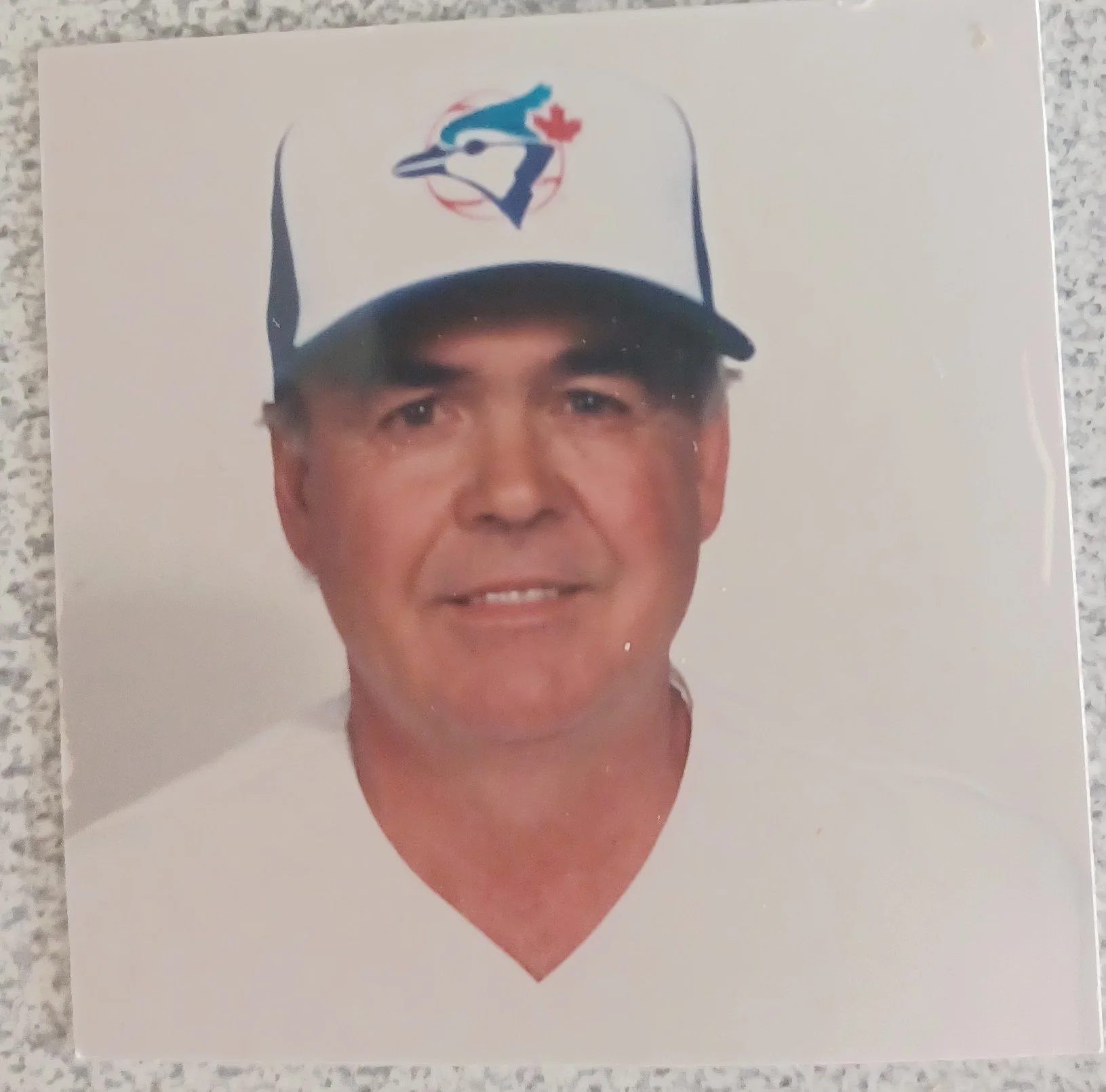
Former MLB scout Wayne Morgan (Saskatoon, Sask.) died on February 12 at the age of 81.
February 16, 2026
By Danny Gallagher
Canadian Baseball Network
Like many baseball scouts, Wayne Morgan worked in anonymity without much attention or recognition.
With his speed gun, stopwatch and his two eyes, Morgan (Saskatoon, Sask.) travelled thousands of miles and attended thousands of games to try to find a diamond in the rough for the major leagues.
He signed the likes of Jeff Kent, Dave Stieb and Lloyd Moseby for the Blue Jays, Canadian Terry Puhl (Melville, Sask.) for the Astros and Willie McGee for the Yankees.
Puhl was his first major signing. Morgan saw Puhl play at a midget tournament in Barrhead, Alta. and ran him through an individual tryout at Pirie Field in Melville before signing him in September 1973.
Kent was a breakthrough of sorts for Morgan. Kent was his first signee elected to the National Baseball Hall of Fame in Cooperstown -- in December 2025.
The scouting fraternity and baseball in general are saddened with Morgan's passing Feb. 12 in California where he had lived for many years. He was 81 years old.
He had been living in an assisted living facility with heart and mobility issues. He had moved to the home from his residence in Pebble Beach last November before I called him to tell him about Kent's induction.
Morgan was a top-notch senior baseball player as a young man with the Kindersley Klippers in Saskatchewan, attended the College of the Sequoias in Visalia, Calif. and obtained his Masters degree in physical education from San Francisco State University. He thus decided shortly after to stay in the U.S.
"I was just about to go scouting with the Phillies and all of a sudden, the Expos called me. It was Al Ronning, a scouting supervisor,'' Morgan told me for a story I wrote for the Regina Leader-Post in 1985. "They wanted me to scout part-time in California in the winter and do Western Canada in the summer.
“Being a Canadian, I thought I'd be better off with Montreal even though I knew Phillies scout Eddie Bockman better.”
It wasn't long after that when Astros general manager Pat Gillick hired Morgan full-time. That set the stage for Morgan to sign Puhl, who became a tremendous player in the majors.
Morgan also worked for the Yankees (under Gillick) for several years before spending decades with the Blue Jays, first under Gillick and later Gord Ash.
"I met Wayne a few times scouting in Western Canada,'' Gillick told me in 1985. "I first saw him in North Battleford. The Expos didn't have a full-time situation for him. We (Houston) did so, we took him.''
Puhl has always been thankful he ran into Morgan. Otherwise, he might never have made it in baseball.
“The first time I met Wayne was in Barrhead,’’ Puhl said years ago. “He introduced himself and said he scouted for the Astros. He asked me if I was interested in signing a professional contract. I kind of laughed and said yes.’’
Morgan had gone to the Kamloops International tournament in B.C. that weekend but admitted he had pretty much scouted all of the players who participated at that event. So he decided to go to the tournament in Barrhead the same weekend to see midget players he had never seen. Because there was no motel available, he stayed at a cabin at a lake near Barrhead with a family that was involved with the tournament.
So Morgan sized up Puhl and saw some good attributes.
“I had never heard of Terry Puhl,’’ Morgan admitted. “Amateurs pop up everywhere. I saw Puhl pitch the first game in Barrhead. After that, he did not throw very good from the outfield because his arm was sore from pitching. He was big and strong but I didn’t like him as a pitcher. I didn’t like his delivery, lack of velocity and overall mechanics.
“It was probably his physical strength I liked most. He was a pretty good-sized midget. Second thing was his running speed. He was an above-average runner. He ran 60 yards in 6.6 seconds. He could run and swing a bat. I sent in a report that I wanted to sign him but I was told to wait until his arm got better and then I would go to Melville and work him out.’’
Morgan also gave Puhl what is called a ‘card of interest,’ which Puhl filled out. Scouts give players an information postcard type to fill out with name, address, phone, height, weight, date of birth, etc. Players can give it to you or mail it back as a postcard.
As for Kent, Morgan said he saw him play shortstop for the University of California-Berkley.
Morgan had driven 75 minutes from his home on Morgan Hill Drive in Morgan Hill, Calif. to Berkeley to see another player.
"I'd never heard of Jeff Kent,'' Morgan said last December. "I went to the Berkeley game to see a pitcher, not Kent. Nobody else was interested in him. The other scouts were watching that pitcher, not Kent. Kent put on a great show with a lot of power to show what he was all about.
"Kent was a freshman and I was very impressed. He had a pretty good arm. I saw a lot of potential. He ran below average and had below average range so, to me, he profiled as a third baseman. He wasn't very big but he was athletic. He had a lot of ability.
"It was funny -- a lot of Kent's teammates were surprised and shocked he was drafted because he was undisciplined. He was always complaining about something,'' Morgan told me, chuckling.
Morgan never saw Kent again other than the one time he ran across him. Once Kent was drafted, Morgan got on the phone with Kent and offered him $25,000 U.S. to sign.
"He was cocky and excited,'' Morgan said when he called Kent. "I thought it was a lot of money for someone drafted down low. I had John Cole, a part-time scout for the Blue Jays, deliver the contract to Kent.''
Stieb told me today he was saddened at the news about Morgan's passing.
"Bad news but I think he lived a long, full life. He was a good guy,'' Stieb said. "The Blue Jays sent Wayne to Alaska to try to get me to sign when I was playing summer ball there. We couldn't come to terms.''
Stieb said he later signed with Toronto for $28,000 U.S. In less than a year after he was drafted in 1978, he was in the majors for good in 1979.
Morgan is survived by his wife Karen, a Kindersley gal, and two children, Jeffrey and Meri.
Mrs. Morgan said today she and Wayne were married for 61 years.
"We had a wonderful life,'' she said.
* * *
Besides Kent, McGee, Puhl and Stieb, Morgan is also credited (or shared credit) for signing major leaguers: Kevin Batiste, Mark Eichhorn, Mike Fischlin, Webster Garrison, Glenallen Hill, Rex Hudler, Graeme Lloyd, Lloyd Moseby, Greg Myers, Randy Niemann, Geno Petralli, Gordie Pladson (New Westminster, BC), Steve Senteney, Ron Shepherd, Roger Slagle, Ed Sprague, Matt Stark, Pat Tabler and Ted Wilborn.
And the following minor leaguers (according to the Bill Weiss questionnaires): Dave Baker, Sean Everton, Daniel Gorden, Matt Gourlay, Boris Hancock, Stan Hawkins, Ken LaHonta, Perry Lychak, (Glendon, Alta.), Bob McNair, Chad Needle, David Palmer, Richard Patterson, Chris Phillips, Mark Plantery (St. Catharines, Ont.), Todd Provence, Daniel
Rahmer, William Rosenlund, Bob Silverman, Craig Stone, Bob Tackitt, Fay Thompson, David Trimble and Geno Vaninetti.