
Langdon: How the game connects cultures
May 11, 2026
Baseball spans cultures for long-time coach
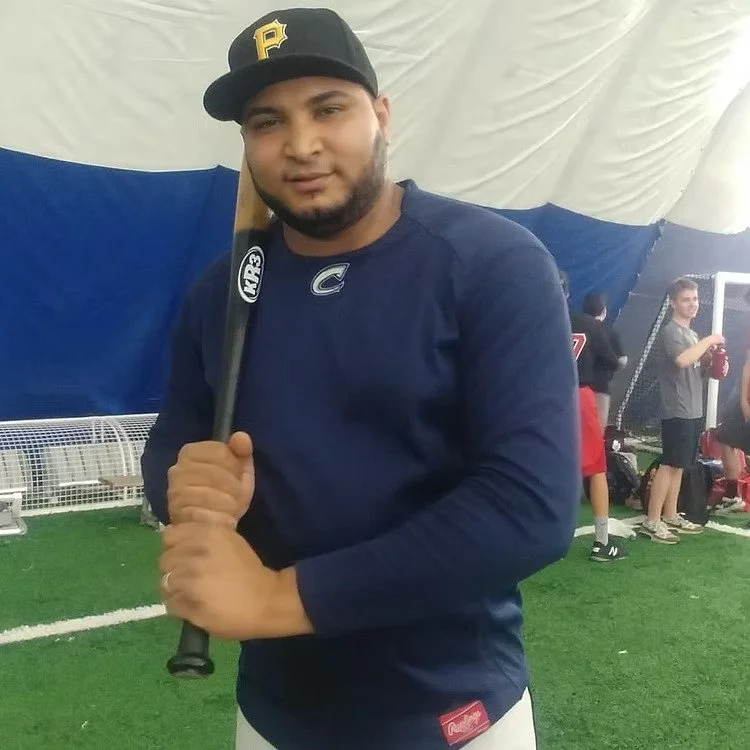
Wellington Francisco runs the Dominican Canadian Panthers of the Fergie Jenkins league.
By Scott Langdon
Canadian Baseball Network
Wellington Francisco left behind a lifetime of coaching in his native Dominican Republic (DR) when he moved to Toronto with his Canadian wife in 2017. It didn’t take long for him to resume his passion in his new country.
He coached at various levels for Leaside in east end Toronto for a few years before opening the Dominican Canada Baseball Corporation (DCBC) with partner Anthony Cohen in 2022. The DCBC occupies a 6,000-square foot facility in North York, Ont. to provide training, cage rentals, a summer camp, teams that compete in the Ferguson Jenkins Showcase League across southern Ontario, international opportunities and other special events for kids of various ages. One of its purposes is to create a cultural connection between his new and old countries through the game,
* * *
“I think it runs through our blood, the love of baseball, the passion, the discipline, the education. It’s something that you have to grow with in your heart. When you’re born, and you turn one, the first thing they give you is a glove, a bat and a ball. And that’s something that runs through our culture,”
_ Albert Pujols, Dominican slugger. hero and manager, Dominican Republic, World Baseball Classic, 2026.
* * *
Supporting Dominican children: In 2018, one year after moving to Toronto, Francisco started a tournament in his name in his hometown of Puerta Plata, the capital city of the Puerta Plata province on the DR’s Atlantic north coast.
The Wellington Francisco Baseball Tournament ran every year until 2025 to give Canadian and Dominican children from 10-to-15 years of age the opportunity to meet and play baseball.
“For Canadian kids it was an opportunity to see a different culture, to understand that Dominican kids don’t have the same equipment or playing facilities, but their passion for baseball is still very high,” Francisco said.
“In the Dominican, hundreds of kids might show up at the same field to play all at the same time only to find out everyone can’t play. So they play in the streets or their neighborhood,” he added.
Francisco collected donations of equipment, school supplies and other items from people in Toronto and distributed them to local kids during his tournaments.
“The donations, which include uniforms, catcher’s gear, helmets, bats, sport books, gloves, cups, and more were made possible thanks to the invaluable support of individuals in Toronto, Canada, who contributed to bringing joy to these children and giving them the tools to continue pursuing their sports dreams,” organizers posted on Instagram following a recent tournament.
“This generous action aims to support the development of young talent in the region, providing them with the necessary resources for their training and growth in the sport,” they added.
According to the Trade Facilitation Office Canada, a non-profit trade organization, the DR is the largest economy of Central America and the Caribbean, but the country continues to face challenges of high unemployment, underemployment and income inequality. The poorest half of the population receives less than 20 per cent of the country’s total gross domestic product.
Toronto’s Paul Collings is well-aware of the economic situation in the DR and knows the value and importance of Francisco’s efforts. Collings has been collecting, donating and distributing equipment and related items in the DR since the early 1980s.
“For many Dominican families, baseball is seen as a possible ticket off the island, if you will. They love the game, they have a great climate and skills and many good role models. It is such a big thing down there,” he said. “You give Dominican youngsters a baseball and they are almost in disbelief to see a real ball. They will run to show it to their family. I’ve seen it a 100 times.”
Collings started his donation efforts years ago while on vacation in the DR. He collects used equipment from local community leagues such as the Martingrove Association where he was a volunteer executive at one time or in collaboration with Rotary clubs.
When he was a Martingrove volunteer in 1990, the organization hosted two teams from the Dominican Republic thanks to the sponsorship of Tony Fernandez, the former Blue Jays shortstop who passed in 2020. Collings’ involvement in the DR has been so extensive that he became friends with Fernandez and George Bell, another Blue Jays star player.
It was Bell’s father, also named George, who Collings turned to for advice on how to distribute the donated equipment.
“There’s no such thing as a language barrier when it comes to balls and strikes,” Collings said. “Dominican kids just enjoy the game.”
* * *
Connecting cultures: The Wellington Francisco tournament isn’t planned for this year. But stacked cardboard boxes in his office suggest Francisco is still collecting used equipment and other donations for Dominican children.
Now, he has extensive international travel commitments for DCBC Panthers teams to play tournaments as part of the World Organization of Events (WORGBEV). Francisco is a director of WORGBEV in Canada.
WORGBEV describes itself as a global, non-profit organization promoting and organizing events around the world to encourage the practice of and for creating opportunities for players, coaches and organizations in various countries.
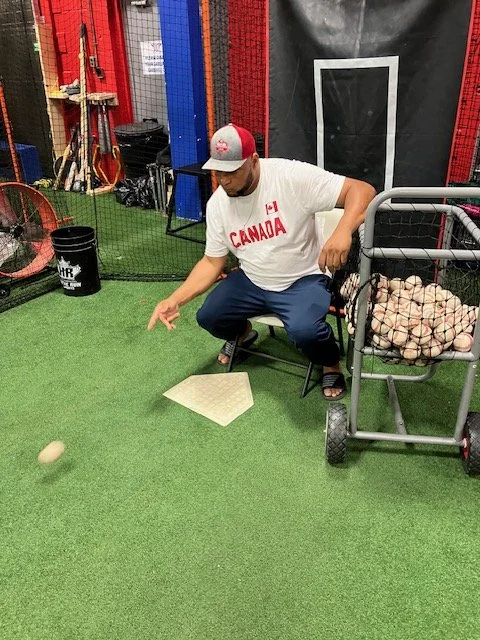
Francisco does a drill ….
Francisco says the tournaments are competitive but offer opportunities for life and cultural experiences for Panthers players. The tournament teams are selected from players who train and practice at the North York facility as well as from open tryouts advertised before each tournament.
Francisco recently returned from a tournament in Mexico where a Panthers U-12 team made it to the semi-finals. Other tournament destinations for Panthers teams this year include the Dominican Republic, Colombia, Venezuela, Puerto Rico and the United States.
“We are planning to host a tournament in Brampton this August,” Francisco said. “We are expecting teams from 15 countries.”
* * *
The Dominican Way: Francisco says the youngsters who come to his facility are taught to play in what he describes as “the Dominican way.”
“We mean when you walk through the door you are prepared to work hard to learn the mechanics of skills. Learning the proper mechanics will allow a player to improve and play the sport longer as they grow.”
The DCBC has five instructors in addition to Francisco:
_ Julian Valdez was a right-handed pitcher who pitched three years in the Blue Jays minor league system, including one game at double A.
_ Wilgenis Alvarado, of Venezuela, is another former Blue Jays farmhand who played three seasons reaching class-A Dunedin, now pitches for the Toronto Maple Leafs of the Canadian Baseball League (CBL).
_ Saul Vasquez, from Mexico, also plays in the CBL for the Barrie Baycats and was in the Chicago Cubs’ minor league system for three years.
_ Sammy Jimenez, an American of Puerto Rican descent, played competitive ball in New York City.
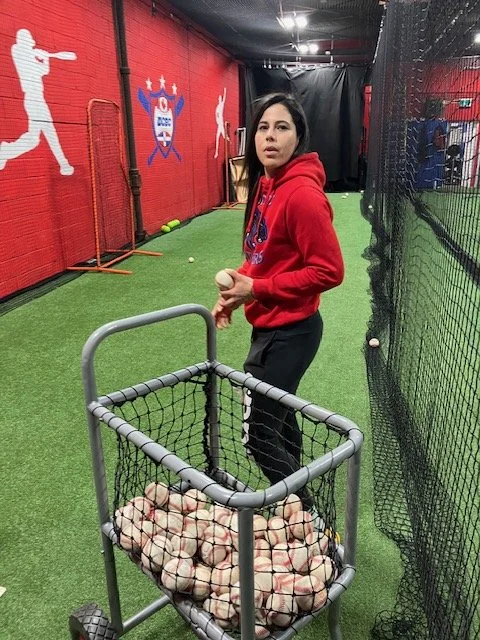
_ And Vanessa Flores, from Venezuela, played for the national women’s softball teams in Venezuela and Chile.
Flores echoes Francisco about the importance for children to learn mechanics.
“Baseball is hard,” she says. “Learning takes concentration. A hunger to learn will keep kids playing.”
Flores, who came to Canada in 2024 to live with family members who had immigrated to Toronto, plans to keep playing, herself. She will try out for the Canadian national women’s softball team this summer. There is little doubt her hard work and fundamentals will be on display.