
Munro: MLB should make adjustments on how wins are awarded to pitchers
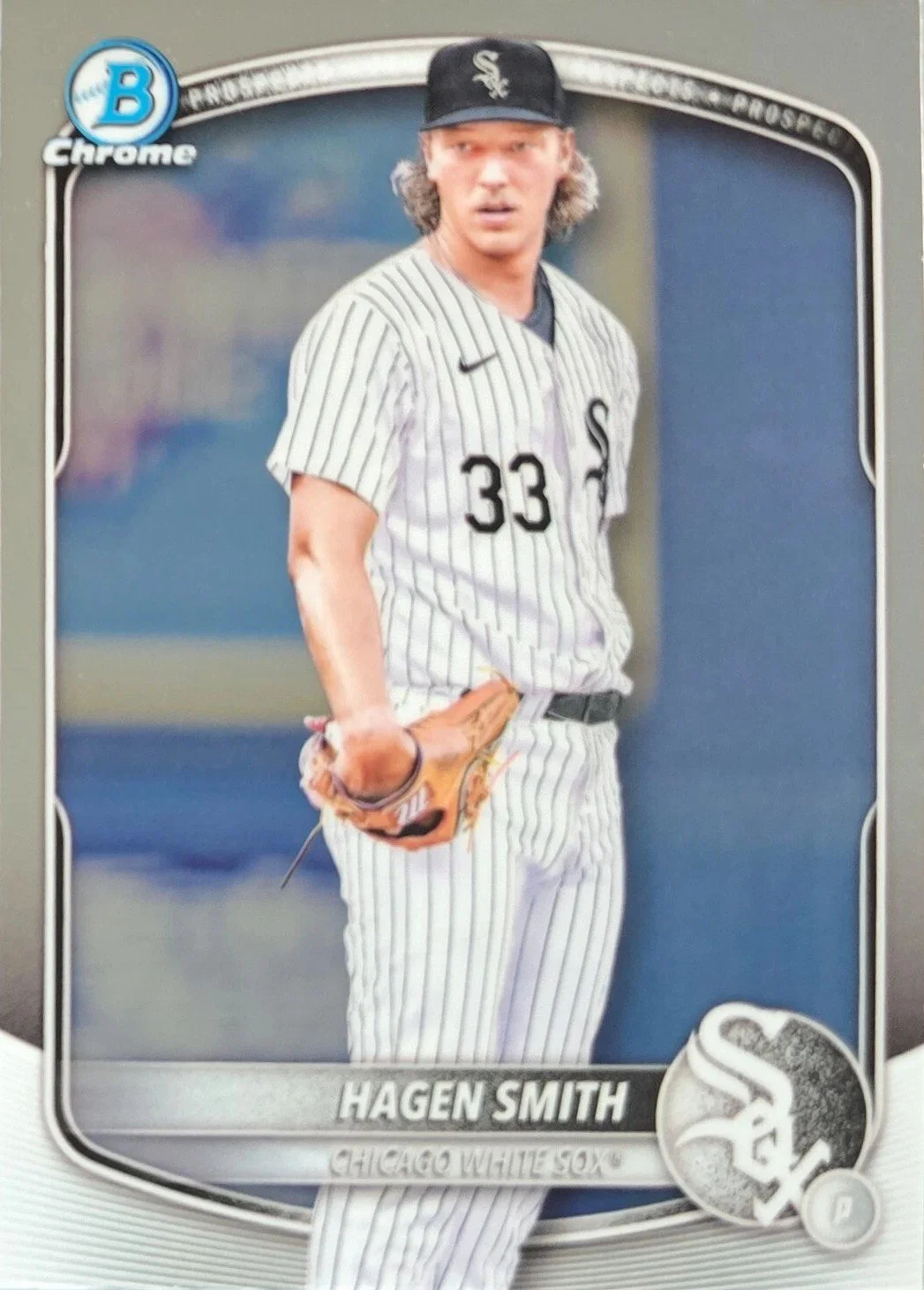
Chicago White Sox left-hander Hagen Smith tossed three scoreless innings against the Houston Astros in Game 1 of their American League Wild Card Series. He left with the White Sox leading 4-0. But since he didn’t pitch five innings he didn’t qualify for the win, despite the fact that the Sox never relinquished the lead.
November 4, 2026
By Neil Munro
Canadian Baseball Network
I am not surprised that for many their annual analytical evaluation of starting pitchers (using a minimum of 20 decisions) is running out of candidates.
What will they do when there are only three or four such pitchers a decade from now?
This is happening because the prevailing “wisdom” in MLB is that you must severely limit the number of pitches and the number of days pitching for starting pitchers. Imagine if a manager had gone to the mound to remove Bob Gibson from a game in which he had pitched six scoreless innings. The game would have to be stopped while the police investigated the resulting homicide.
I am sure everyone noticed it, but Max Scherzer pitched the last game of the season for the Blue Jays on just three days’ rest. His last few outings before this appearance were at least five innings, so he was not just coming off a very short outing. He pitched seven-plus innings, while giving up six hits, one run and one walk while striking out four batters. His 114 pitches was his highest total in four years. He is also 42 years old.
I have regularly questioned the prevailing wisdom in restricting pitchers to 100 pitches and using a five-man rotation. I see no evidence that this tactic reduces the number of injuries sustained by starting pitchers.
On another note, the restrictions in the use of relief pitchers also merits a comment. I assume most ball clubs are using the same “rule of thumb” as the Blue Jays do. They simply will not use a relief pitcher in three consecutive games unless a win is necessary for post-season qualification. As the starting pitcher is pulled from the game, the Jays announcer lists the relief pitchers that are available because they have not pitched in the two previous games.
I checked the final stats for 2026 to see how many ball clubs could not even produce one pitcher on their roster who made at least 30 starts. There were eight such teams, including last year’s World Series combatants – the Dodgers and Blue Jays. Another 11 ball clubs could produce just one starting pitcher who made at least 30 starts. On the other hand, Cleveland managed to have four pitchers with 30 or more starts each. I was glad to see them make the playoffs!
Since MLB managers are determined to continue the practice of five-man rotations (at least) and 100 or fewer pitchers in a start, I have a suggestion for a rule change in determining the pitcher to be awarded a victory in his team’s win. You are certain to be familiar with the rule, but I have appended it here for you. I think the requirement that a starting pitcher must have completed at least five innings to be credited with the victory should be eliminated. This can easily be accomplished by simply eliminating section 9.17 (b). Thus, the winning pitcher is the one whose team takes the lead and never relinquishes it regardless of whether he pitches as a starter or in relief.
This method is the case in other major sports. In hockey, the winning goalie is the player in net when his team gets the game-winning goal – even if he played just one minute in the entire game. Similarly for determining the winning quarterback in the NFL.
Furthermore, so many ball clubs are now having to increasingly rely on using a collection of relief pitchers when no healthy starting pitcher is available. I checked the Blue Jays in this respect and found approximately 25 such “bullpen games.” It is a little bit imprecise because many of these pitchers were regularly used as starters or in relief all season. In one instance, they had planned to allow Jameson Taillon (a regular starter for sure) to go only two or three innings in his start after coming off an injury to ease him back in the rotation. Clearly there must have been more than 50 such instances in all of MLB in which the pitcher of record when the game-winning run is scored cannot be awarded the victory.
In the most extreme case, if a starting pitcher throws four perfect innings (12 up and 12 down) and leaves the game with a 10-0 score, he cannot be credited with the victory. Assuming that five relief pitchers wrapped up the contest, each giving up one run in one inning of the 10-5 victory, the official scorer has to decide which mediocre performance gets the win for the reliever!
I check the scores and stats of the Canadian pitchers pretty closely (almost on a game-by-game basis). This year there were four Canadian starting pitchers with fewer than five innings worked in their team’s victory. There must be 50 or more such instances in all of MLB. Several of these starting pitchers are rightfully entitled to another win in their record (in my opinion). Indeed, it didn’t take long for a ball club to use a relief pitcher game in the playoffs. The White Sox used four relief hurlers in their opening game against the Astros, with Hagen Smith tossing the first three innings. He could not be credited with the victory even though his team was ahead and never relinquished the lead after his three scoreless innings of work.
Rule 9.17 Winning and Losing Pitcher
(a) The Official Scorer shall credit as the winning pitcher that pitcher whose team assumes a lead while such pitcher is in the game, or during the inning on offense in which such pitcher is removed from the game, and does not relinquish such lead, unless (1) such pitcher is a starting pitcher and Rule 9.17(b) applies; or (2) Rule 9.17(c) applies.
Rule 9.17(a) Comment:
Whenever the score is tied, the game becomes a new contest insofar as the winning pitcher is concerned. Once the opposing team assumes the lead, all pitchers who have pitched up to that point and have been replaced are excluded from being credited with the victory. If the pitcher against whose pitching the opposing team gained the lead continues to pitch until his team regains the lead, which it holds to the finish of the game, that pitcher shall be the winning pitcher.
(b) If the pitcher whose team assumes a lead while such pitcher is in the game, or during the inning on offense in which such pitcher is removed from the game, and does not relinquish such lead, is a starting pitcher who has not completed
(1) five innings of a game that lasts six or more innings on defense, or
(2) four innings of a game that lasts five innings on defense, then the Official Scorer shall credit as the winning pitcher the relief pitcher, if there is only one relief pitcher, or the relief pitcher who, in the Official Scorer’s judgment was the most effective, if there is more than one relief pitcher.
Rule 9.17(b) Comment:
It is the intent of Rule 9.17(b) that a relief pitcher pitch at least one complete inning or pitch when a crucial out is made, within the context of the game (including the score), in order to be credited as the winning pitcher. If the first relief pitcher pitches effectively, the Official Scorer should not presumptively credit that pitcher with the win, because the rule requires that the win be credited to the pitcher who was the most effective, and a subsequent relief pitcher may have been most effective. The Official Scorer, in determining which relief pitcher was the most effective, should consider the number of runs, earned runs and base runners given up by each relief pitcher and the context of the game at the time of each relief pitcher’s appearance. If two or more relief pitchers were similarly effective, the Official Scorer should give the presumption to the earlier pitcher as the winning pitcher.
(c) The Official Scorer shall not credit as the winning pitcher a relief pitcher who is ineffective in a brief appearance, when at least one succeeding relief pitcher pitches effectively in helping his team maintain its lead. In such a case, the Official Scorer shall credit as the winning pitcher the succeeding relief pitcher who was most effective, in the judgment of the Official Scorer.
Rule 9.17(c) Comment: The Official Scorer generally should, but is not required to, consider the appearance of a relief pitcher to be ineffective and brief if such relief pitcher pitches less than one inning and allows two or more earned runs to score (even if such runs are charged to a previous pitcher).
Rule 9.17(b) Comment provides guidance on choosing the winning pitcher from among several succeeding relief pitchers.
(d) A losing pitcher is a pitcher who is responsible for the run that gives the winning team a lead that the winning team does not relinquish.
Rule 9.17(c) Comment: The Official Scorer generally should, but is not required to, consider the appearance of a relief pitcher to be ineffective and brief if such relief pitcher pitches less than one inning and allows two or more earned runs to score (even if such runs are charged to a previous pitcher).
Rule 9.17(b) Comment provides guidance on choosing the winning pitcher from among several succeeding relief pitchers.