
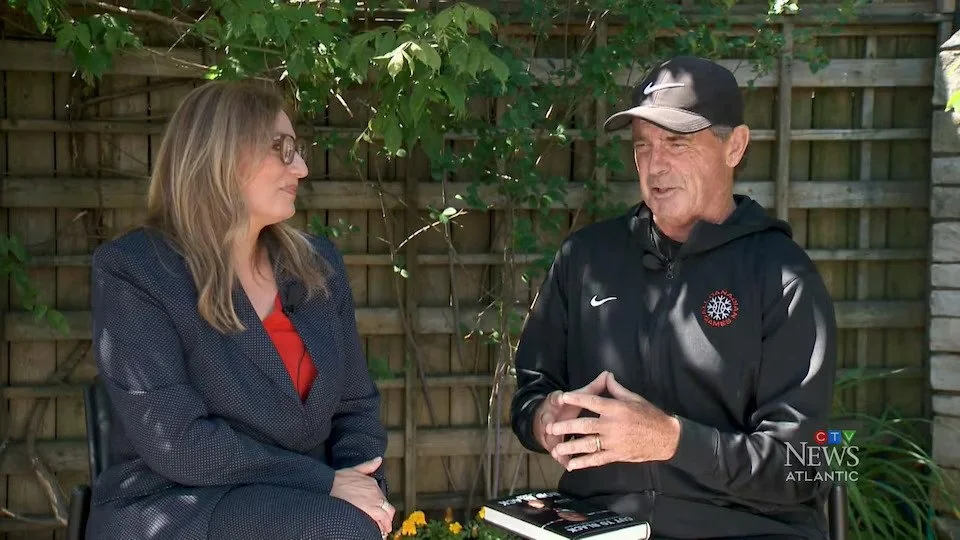
Hot Rod Black writes about his days in Blue Jays booth in his book Cut to Black
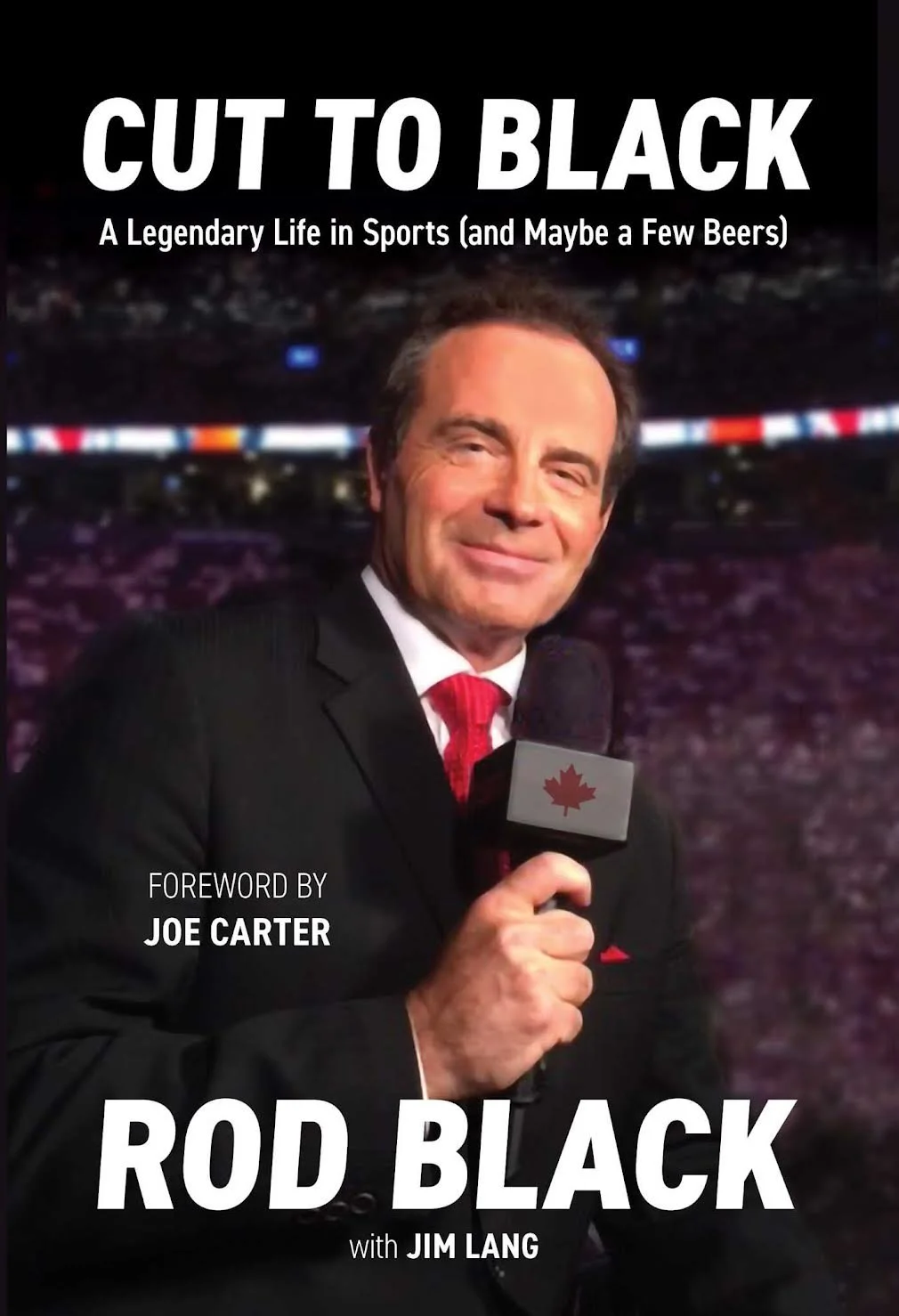
Excerpt from Hot Rod Black’s book ... Cut to Black … Hot Rod Black tells us tales from the broadcast booth while covering the Blue Jays ….
LIFE AT CTV SPORTS
After I got to CTV, I was on the fast track, going from sport to sport. I soon found out that life at CTV Sports in the 1990s was a source of many stories you just couldn’t make up.
It was crazy the lengths that they would go to so we could shoot openings to taped events. Events that we would voice back in the Toronto studio.
I flew to the Austrian Alps to shoot a 20-second on-camera report for a ski-jumping event. I flew to Aspen, Col., for a downhill on camera. I flew to Moscow to interview a coach.
The most mind-boggling trip of all was when an international broadcaster sent me to Egypt for 24 hours to shoot an opening for a squash exhibition in front of the Pyramids.
Tracy Wilson and I would go to figure skating events to do the on-camera so that we had the background, then we would fly back to Toronto and announce the event from the studio. They spent so much money on us to do all of these things — it was unreal. Some of the events, like the squash tournament in Cairo, were not that big.
I did what I was told, no questions asked, and I went wherever they asked me to go. Even though they were not big events, they were backed by generous sponsors.
The new CTV Sports era was exciting. But also very challenging. Johnny Esaw had bought the Canadian rights to Wide World of Sports from ABC. In the early 1990s the network decided to rename it CTV Sports Presents.
They tried to make it like CBC Sportsweekend, but we didn’t have many live properties. I would cover tennis, golf, and the Blue Jays, but these live events didn’t take place every week, whereas every Saturday we had a show. So, I would throw to everything from ringette to Formula Atlantic motorsports.
I once threw to a lawn bowling event that was two years old! We had to pretend it was live and we would give updated scores — during an event that took place two years earlier. During breaks, we would update live events that were taking place at the time. Then it was back to the Canadian national lawn bowling championship, or cricket, or whatever we had.
It was all pre-recorded, and it was all on two-inch tape. It was a crazy time. I once hosted a golf event, the Du Maurier Classic in Edmonton.
If it rained, we would have to find some way to fill the two-hour block of time. What we did that year was what everyone in that era who covered golf would do during a rain delay — we decided to replay the tournament from the year before. Lo and behold, I threw to the fourth-round coverage of the previous year’s event.
As I watched the tape roll, I noticed that it also started to rain the year before! The whole thing was like a circus. One of the TV sports columnists called us out for throwing to a rain delay during a rain delay. We deserved to take heat for that one.
ROD BALL
It’s a question that I get asked often: What is your favorite sport? Good question, and not an easy one to answer, especially considering I’ve called almost every sport known to man, with the exception of dodge ball and darts. (Then again, if CTV had secured sponsorship, I’m sure we would have broadcast anything, including rock paper scissors.)
But seriously, my answer to that question is usually that my favorite sport is whatever the next day brings. That response always elicits a laugh or a raised eyebrow, but trust me, it’s not a cop-out. The truth is that I honestly love covering any sport, any game, any event on any given day.
So, I guess that means that of all of the sports I cover—they are all tied for first. Now, if someone were to ask me what sport I’m most passionate about? Then my answer would unequivocally be baseball. It’s a game I’ve had a love affair with since my boyhood days in Winnipeg, watching my heroes like Pete Rose, Johnny Bench, Reggie Jackson, and Rod Carew (who earned my affection through our shared first name).
I also grew up watching and loving Canada’s team at the time, the Montreal Expos, whose minor-league franchise actually played in Winnipeg, as the triple-A Whips, in the early 1970s. I went to many of those games and like most kids, I was more interested in chasing down foul balls than watching any of the action.
Still, getting a chance to see the Whips up close further deepened my budding romance with baseball. The Expos weren’t contenders at the time, but they were fun to watch despite the fact that you could watch them only once a week, every Saturday on CBC. That’s when players like Rusty Staub, Steve Rogers, Andre Dawson, and “The Kid,” Gary Carter, were making names for themselves and becoming all-stars.
Little did the Expos know the impact they were having on impressionable kids across Canada who had big-league dreams. I was one of those kids.
During the summers, I played from sun-up until sundown, competing on the local community teams, the city all-star teams, and even a senior semi-pro league while working at CKY. If there was a game scheduled on a night I was working, I would prepare my scripts and highlights in short order, quickly hustle to the local diamond, play as many innings as I could, and then race back to the studio to deliver the late-night sports.
It was often quite comical, especially if I was running late. I pushed into scramble mode, forcing me to throw my jacket, dress shirt, and tie over my dirty, muddy baseball uniform. Even funnier, I sometimes kept my metal cleats on, which would make a lot of noise on my way into the studio.
It was never a problem until one memorable night when I scurried onto the set, hit a wet patch, and took a flying tumble only seconds before going live to air. I jumped back up as though nothing had happened, delivered my segment without a flaw, and then sheepishly returned to my desk with a huge bruise on my ass.
That was the second-worst baseball injury I ever had. Number one on the hit list was the time I got too close to a centre-field wall in Grosse Isle, Man., which is about 30 minutes north of Winnipeg. I was playing for my senior team, the Blue Jays, when I experienced my worst sports moment.
We were playing in the opener of a tournament early on a Saturday morning in July. I had the weekend off from my TV duties, which meant I could devote my entire time to playing a bunch of games without having to worry about sprinting back to the studio. I was so excited for a full two days of high-level tournament ball with my buddies, many of whom were former pro hockey players.
I remember jogging out to my position, thinking how perfect the day was — a spectacular summer morning on this Field of Dreams carved immaculately into some Manitoba farmland. I got a quick stretch in, adjusted my glove and cap, and focused in as the opening pitch was delivered and immediately smashed towards me in centre field.
The ball was scorched, sailing over my head as I sprinted back towards the chain-link fence. “You got room! You got room!” shouted my left fielder, a newbie to the team. I shouldn’t have listened to that moron. In full stride, I lunged into the air as the ball hit my glove — and I crashed through the fence!
I don’t remember much after that, except the hole in the chain-link and the look of concern on the face of my right fielder, former NHL tough guy Daryl Stanley, who hovered over my prone body.
“Oh boy, Rod,” Daryl said, his voice shaking. “You better stay down.” I loved Daryl — great guy who, after hockey season, always came home to play ball with the local team. He was as cool a dude as they come, but at that moment, Daryl wasn’t exactly the epitome of comforting. He was right, though. I needed to stay down.
My face was all cut up, blood gushing all over the place, my jaw felt like it was broken, and I wasn’t quite sure what day it was. Worst of all, I looked down at my glove and the ball wasn’t there. Shit. I didn’t make the catch.
So, just one pitch into my much-anticipated all-baseball weekend, I was headed for the hospital. I spent the day there, getting stitched up, licking my wounds, and most of all, being jolted by a serious reality check.
The biggest thing that popped in my head — besides metal chain-link — was the undeniable fact that I was making a living, working on television, where people actually see your face: a face that shouldn’t look like it was to appear in the next Halloween movie.
The only thing hurting me worse than my jaw was the inescap-able truth that my competitive days of semi-elite ball were, unfortunately, over. But that didn’t mean I was done with a team called the Blue Jays.
When I left Winnipeg for Toronto, one of the big assignments that CTV threw at me was an opportunity to host the national broadcasts of Toronto Blue Jays games. Wow, another dream job. I was so excited, I would have run through a wall — oh, wait, never mind.
The Blue Jays, sharing the national stage with the Expos, had quickly become a contending team and had developed a huge nationwide audience. Their games were broadcast across the country on the CTV net-work twice a week, Wednesdays and Saturdays, and I was responsible for opening the show, setting the stage, and then appearing in the middle of the fifth and seventh innings with a sports update sponsored by Coca-Cola, showing highlights and scores of other games. It was a great gig with huge visibility, and while I was on air for only a few minutes every game, it was not an assignment I took lightly.
What was even better, the Blue Jays weren’t just a good team — they were becoming a great team, especially after making the biggest trade in franchise history on Dec. 5, 1990. I had just started my new job in Toronto when I reported the news that the Jays had traded perennial all-star Tony Fernández and future Hall of Famer Fred McGriff to San Diego in exchange for young, slick second baseman Roberto Alomar and slugging outfielder Joe Carter.
It was a blockbuster trade that would reshape the Blue Jays’ fortunes for years to come. I got a chance to meet the newest Jays when I went to my first spring training camp a few months later in Dunedin, Fla, which was another eye-opening experience. Just when I thought this job couldn’t get any better, covering spring training was like nothing I could imagine.
The days were grueling: Wake up in a beach side hotel, head to the stadium to do some interviews, take in the afternoon game, do a couple of post-game interviews, and then, in mid-afternoon, hit the golf course for a quick nine before wrapping up a hard-working day with happy hour and a nice dinner. The most difficult decision I had all day was whether to use a 25 or 50 SPF for my sunscreen.
If any reporter complained to me about the grind of reporting from spring training, I immediately wanted to kick them in the shins. How could you not love this job? How could you not love this game? And how could you not love covering this team?
The Jays were loaded. A team full of studs. Both new acquisitions were great to deal with. Alomar was more soft-spoken but always available, while Carter was friendly, loud, and ultra confident. Even in spring training, you got a sense that these two guys were going to make a big difference — and they did. Joe and Robbie made an immediate impact, and both represented the Jays at the 1991 all-star Game, which was coincidentally played in Toronto, giving the city a chance to show off its spectacular SkyDome, the world’s first stadium with a fully retractable roof.
I hosted the Canadian broadcast of the all-star game, which was carried on the CTV network, and I was as stoked as a kid making his first visit to Disney World or, maybe even better, Cooperstown. I thought I had died and gone to baseball heaven.
All of the stars of the game, present and past, seemed to be in Toronto, including legends Joe DiMaggio and Ted Williams, whom I had chance to chat with before they took to the field to be honored for the 50th anniversary of their magical 1941 seasons. I had goosebumps as I shook their hands, knowing what those hands had accomplished five decades earlier — the Yankee Clipper with an incredible 56-game hit streak and the Splendid Splinter being the last player to hit over .400 in a season.
To me, these weren’t ball players, they were gods. As thrilled as I was, I was even more excited for my parents, who had come into town for the festivities and were having a blast. I was already on the air, but I glanced down from my host location and smiled as I saw something I had never seen before from my mom and dad. For all of the games that they had taken me to, for all the times they let me and my brothers enjoy special sports moments, this was the first time I saw them cheer for someone they had worshiped.
And so, there they were, Bonnie and Jack, on their feet, wildly applauding two stars from their generation. It was beautiful. My parents looked like kids again. The ovation for DiMaggio and Williams was thunderous, but it wasn’t as loud or as long as it was for the hometown contingent, those Blue Jays who were selected as all-stars.
Cito Gaston was named as one of the coaches and waved his cap to the adoring crowd. Alomar, the starting second basemen, received a deafening introduction as he ran out of the dugout, but the comedic moment came when Carter was announced while the camera was on Jays pitcher Jimmy Key, who was in the wrong spot on the third-base line.
The crowd roared anyway while Carter stood bemused with his arms crossed. It was a little uncomfortable, but it was funny, and both Jimmy and Joe eventually broke into big smiles, soaking in the slightly embarrassing spotlight. The craziest thing was that, had any of us been able to peek into the
future, no one — and I mean no one—would have upstaged or forgotten about Joe Carter.
Despite that botched introduction, Toronto’s all-star game was spectacular, emotional, and historic. It was a broadcaster’s delight. The mid-season classic played out like a midsummer night’s dream, and all the stars and stories were colliding.
Baseball’s all-time home-run leader, Hank Aaron, was introduced as an honorary captain alongside Rod Carew, who was only few weeks away from being inducted into the Hall of Fame with Chatham, Ont.’s Ferguson Jenkins, who was about to become Canada’s first inductee into Cooperstown. Fergie, a former Cy Young Award winner, got a hero’s welcome when, appropriately, he threw out the first pitch.
Watching with pride, Williams and DiMaggio also became part of the game’s plot line, linking past and present as baseball always seems to do masterfully. Robbie and Sandy Alomar Jr. became the first brothers to play in an all-star game together since Joe and his brother Dom DiMaggio in 1949. The Alomars also became the first brothers ever to be voted into an all-star game by the fans.
Meanwhile, Carlton Fisk, 43, became the oldest player to record a hit in the game, taking the torch from — you guessed it — Ted Williams, who was forty-one when he got an all-star game hit in 1960.
From first pitch to last out, the night was electric, and taking in all the action were Canadian Prime Minister Brian Mulroney and US President George H. W. Bush, who we interviewed during the broadcast. President Bush, a former baseball star at Yale and a huge fan, wasn’t the only Bush in attendance. So was his son, George W. — the owner of the Texas Rangers — who I had a chance to interview during the All-Star Game workouts.
Maybe I caught him at the wrong moment, but W, who was on the path to follow in his dad’s presidential footsteps, didn’t seem that well versed on the city of Toronto or the country of Canada. He mangled some names and almost forgot where he was.
Fortunately, the interview was on tape, and we decided not to use it, which was a good thing for everyone. I thanked the Rangers’ owner for his time, and as I walked away, I remember telling my cameraman, “That guy might own a ball team, but he’s as dumb as a bag of hammers.”
That opinion changed the next day, when I bumped into him in the bowels of SkyDome and he apologized for his poor responses, saying he was distracted and had a difficult time hearing all of my questions through the noise of the crowd. I told him no worries and added that we didn’t use the interview
anyway.
“That’s why we love you Canadians, son,” the future president said with a wry smile and walked away. The game didn’t disappoint. Blue Jay Jimmy Key got the win; Joe Carter got a hit and scored a run as the American League defeated the National League, 4–2. The biggest story, beyond Toronto’s celebration, however, was Baltimore Orioles superstar Cal Ripken Jr. Cal had won the home-run derby the day before and followed it up by hitting another homer in the actual game to earn MVP honors.
I hustled down to interview Cal post-game and was struck by his calmness and humility. Most players would have been emotional in the spotlight, but not Ripken. This seemed like another day in his life, another game, another highlight in the terrific season he was having. He was a true gentleman and, as it would play out, a future Hall of Famer. I didn’t know it at the time, but here I was, standing in the locker room with a guy who, five years later, would break a record no one thought would be touched: Lou Gehrig’s “iron man” streak for most consecutive games played.
For a young TV guy from Winnipeg who had dreamed about being in the big leagues, that whole night could not have been any cooler. How lucky was I to be hanging around with all of my baseball heroes? From Mr. 56 to Mr. .400 to this ordinary dude who someday would become Mr. 2,632, I really needed to pinch myself.
But I was able to keep it together. I didn’t freeze, didn’t ask for any autographs, and didn’t drool on anyone. That ’91 all-star game was the best icebreaker a rookie baseball broadcaster could ever experience. It was an intimidating eye-opener, but I knew that this was a place I belonged, and if I wanted to have success in the boys-of-summer club, I would need to take a page out of Cal Ripken’s book: Don’t get too high, don’t get too low, and show up every day ready to play.
And so, that became my approach, and for the most part it worked — except for one game that season that I almost didn’t make. It was in late July, and the Jays had an afternoon game in Chicago. We had a telecast scheduled to start at 1:30 p.m., which was not an issue except that I had to make a network appearance early in the morning at Lionhead Golf Club in Brampton for an upcoming televised skins game that would feature Canadian Dave Barr, Fuzzy Zoeller, Peter Jacobson, and the “King,” Arnold Palmer.
I knew it was going to be a busy day with a lot of moving parts, but I was more than confident that our golf crew could get all of our feature and preparatory work done before I had to leave the course, which was around a 45-minute drive to the downtown CTV studio. Things were going as smooth as Arnie’s swing until we lost complete track of time. That’s when my colleague, Canadian women’s golf legend Sandra Post, looked at her watch and remarked that I should really think about hitting the road, since it was already 11:30 a.m.
She was right. But no problem, I thought, as I hurried to my car, realizing that I still had plenty of time and conservatively should get into the studio by 12:30, an hour before the first pitch. Another built-in bonus was that I was not part of the opening of the broadcast that day, so I really wasn’t required until the middle of the fifth inning. Lots of time. Except traffic, as it normally is in Toronto, was brutal.
I was cruising along nicely until I hit Lake Shore Boulevard, which was at a complete standstill. I looked at my watch. It was slightly before noon, but no worries, I thought. I was only another 20 minutes or so from the studio and still really wasn’t needed for a couple of hours.
About 30 minutes later, after moving approximately five feet, my mindset was changing considerably. Making matters worse was that mobile phones weren’t quite what they are now. I had one of those big, clunky in-car cell boxes, and after my calls to our control room had dropped a number of times, I was finally able to touch base with my producer and explain the situation.
“I’m stuck in traffic,” I yelled into the phone. “But don’t worry — I will be there. Looks like it’s clearing up.” I couldn’t have been more wrong. Glaciers moved faster. I was pounding my steering wheel as I turned on the radio to listen to the Jays pre-game show with the voices of the dynamic duo, Tom Cheek and Jerry Howarth. Not only was I not moving, but I was running out of gas.
The radio broadcast started with Jerry’s familiar “Hello, friends,” and my bulky phone rang. “Are you close?” pleaded my producer. “Yep, getting through. I’m real close,” I lied through gritted teeth.
Now I was really starting to panic.
The only thing fading faster than my fuel gauge was my confidence. Even more troubling, the game was clipping along at a bullet pace, with both pitchers wasting no time as they threw clean innings. It was the top of the second inning when I decided I had to make a move. Desperate times call for desperate measures. I pulled over to the shoulder of the road, got out of the car still wearing my golf clothes, grabbed my suit, which was on a hanger, and then dashed through the maze of cars.
People were probably wondering where this nut bar had come from and where he was going. I clumsily hurdled the concrete barrier and then, like a scene out of Tom Cruise’s Mission: Impossible, I had to dodge the traffic going full speed the other way to make it across the road. I vaulted over another cement wall, continuing my sprint uphill for another kilometre until I hit a major intersection, where I was fortunate enough to be able to hail a taxi.
Breathlessly, I asked the cab driver to get me to CTV at 42 Charles Street East as fast as he could, and could he also please turn on the radio. Unfortunately, in my haste to escape, I’d left my phone in the car, so I had no chance to communicate with the control room — which, I was certain at this point, was sending out an APB.
The driver tuned in the radio and turned up the volume, and my mood worsened. It was now the bottom of the third inning. I’m toast, I thought. I’m not going to make it. But my cabbie, realizing my urgency — not to mention the sweat pouring onto his back seat — set a land speed record and got me to the front of the building just as the radio broadcast was breaking away before the start of the bottom of the fourth. I wanted to hug the guy, but he was probably happier with the hundred-dollar bill I gave him, since I had no time to get change.
I flew into the building, ripped past the security guard, took the elevator up to the fifth floor, toweled myself off, hurriedly threw on my shirt, tie, and jacket, got a quick powder from the makeup artist, and then brashly walked into the studio in the top of the fifth inning — still wearing my shorts and golf spikes. I sat down, put my earpiece in, and heard exactly what I expected to hear.
“Holy crap, man,” my bellicose producer bellowed. “You know how to give a guy a heart attack.” I don’t think he realized I was closer to a cardiac arrest than he was, but I nonchalantly put my hands in the air, looked into the camera, smiled, and mouthed one word: “What?”
When we finished our updates and post-game show, which surprisingly went off without a hitch, I knew I had some explaining to do. I apologized to the producer and crew for putting everyone in a precarious position, but after I’d relayed the details of the entire escapade, they all understood it was an extraordinary situation, and they couldn’t believe I’d actually pulled it off.
Craziest thing of all is that around 6 p.m., when I returned to the Lake Shore, fully expecting my car to have been towed away, there she was, still on the shoulder, middle of rush hour — no tickets, no damage, just waiting for me to take her home. Thankfully, I didn’t have any more traffic jams or panic attacks that season. The broadcasts went well, and the Blue Jays were humming along like a major championship contender, finishing with 91 wins in the ’91 season.
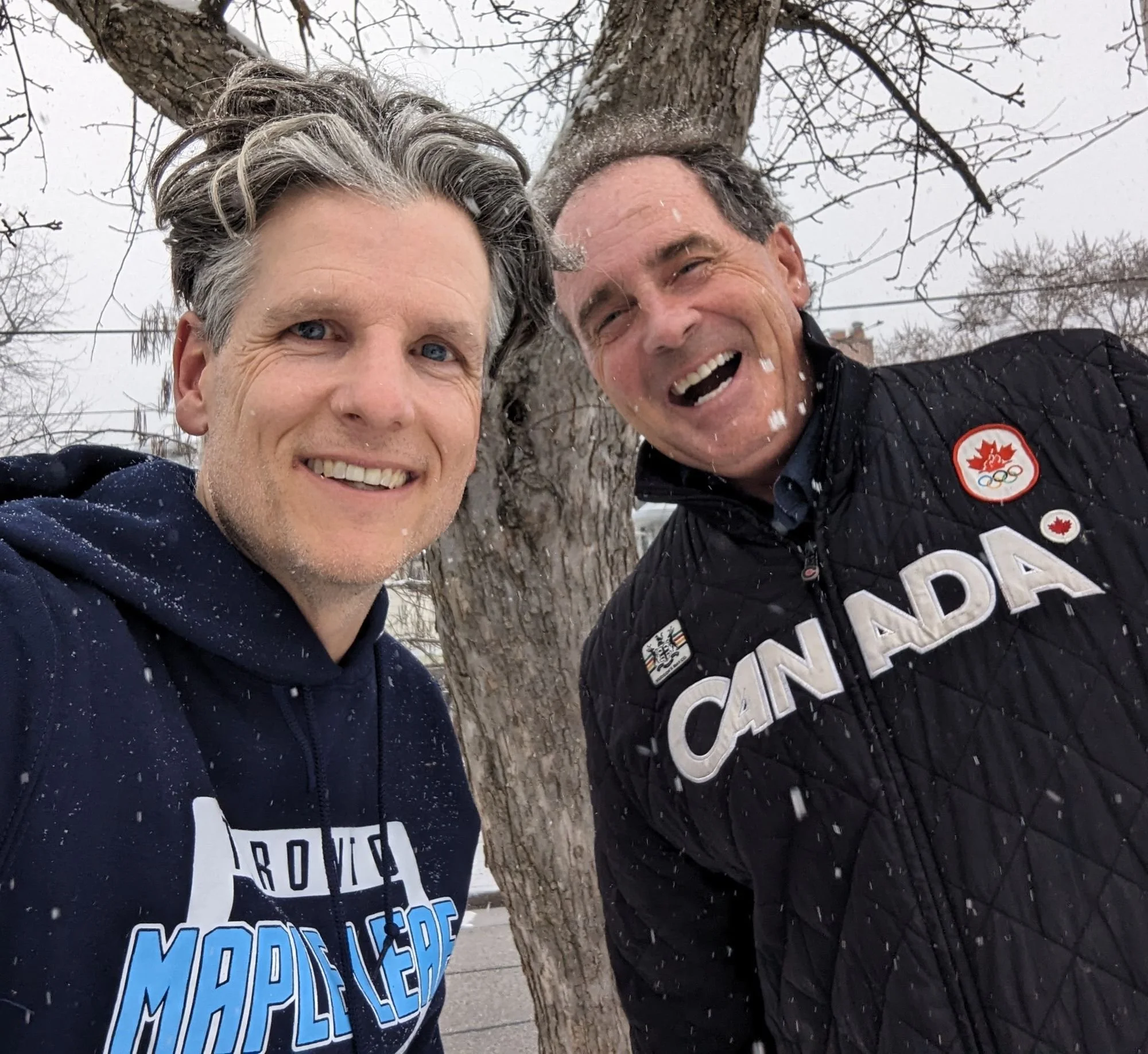
Mike Boon of Toronto Mike’d and Hot Rod Black
They made it to the playoffs — which, unlike today’s era, didn’t feature wild card or divisional series. The math was pretty simple: You had to finish first in your division to make it to the post-season. Two winners in each league. The best in the East vs. the best of the West. Winners meet in the World Series.
I hosted the playoff games on CTV and, just as I did with the all-star Game spectacle, felt so lucky to be part of something so meaningful, not only to Toronto but to an entire country. Carrying the weight of huge expectations, the Jays split the first two games of the AL Championship Series with the West Division winners, the Minnesota Twins, and returned home to SkyDome, where they had set an all-time attendance record, becoming the first team ever to draw four million fans in a season.
Game 3 was the turning point in the series, but it also became another turning point in my career. The Jays and Twins were tied, 2–2, late in the game when CTV somehow lost the audio of the CBS feed, which the network was simulcasting. I was in our host position in the press box when our producer jumped on the intercom, telling me I would need to apologize for the technical difficulty and then would have to call the game until the CBS audio was restored.
I didn’t know what to think, and I had no time to ask questions. The only other time I had done play-by-play for baseball was when I was a kid calling my pretend backyard games, but now there was no pretending. This was suddenly and unexpectedly very real. I was thrown right into the fire — and as it turned out, I loved the heat. We were live for only half an inning or so, and I called it like I saw it. The game stayed tied.
The Twins’ Dan Gladden got a hit, and fortunately, nothing consequential or controversial happened before CBS restored its feed. Whew. Another speed bump overcome. Huge sigh of relief. I got some love from our executives and the TV critics for being able to seamlessly leap into action, but to me it was just another step on the learning curve. Like everything else in this business I was consuming,
I was loving the taste and craving more. I knew right then and there that someday I wanted to call baseball. Unfortunately for the Jays, they not only lost that game in extra innings but also dropped the next two to the Twins, who would go on to win their second World Series in four years.
That loss, for the Jays, was bitter. It stung just like it had in 1985 and 1989, when they also had their hearts broken in the ALCS. But in the grand plan, the 1991 loss might have been the best thing that could have happened in Toronto. The team realized it still had work to do, that it wasn’t quite there yet but was getting closer, and needed to load up even more in the off-season in order to climb to the top of the mountain the following season.
The Jays’ management, led by team president Paul Beeston and general manager Pat Gillick, had the mentality that if you can’t beat them, go get the guys who beat you. And so, they didn’t just add players, they added superstars, signing two future Hall of Fame free agents in Jack Morris, who had just pitched the Twins to the World Series championship, and veteran megastar Dave Winfield, a long-time enemy of Blue Jay fans.
Most of the hate for Winfield came naturally, since he had played for the evil empire, the New York Yankees, but some of the vitriol also stemmed from a bizarre incident that had occurred at the Jays’ old park, Exhibition Stadium. The Ex was an eyesore on the best of days. A sprawling football field that was converted to a bad facsimile of a baseball stadium.
The old Cleveland Municipal Stadium was often called the “mistake on the lake.” Well, Exhibition Stadium in Toronto did the job, but just barely, and many despairingly referred to it as the mistake on the lake. Beeston once told me in an interview that “it was not only the worst stadium in baseball — it was the worst stadium in sports.”
Beyond the shoddy facilities, the rock-hard artificial turf, and the fierce winds that whipped off Lake Ontario, it was also a breeding ground for hungry and intuitive seagulls that liked to swarm the stadium on game days.
It was during a game against the Yankees in 1983 that Winfield, while warming up between innings, threw a ball and struck one of those pesky gulls, killing it dead on the spot. Whether the fowl ball was premeditated or an accident (which Winfield later claimed it was), the story took a crazier turn when Winfield was actually arrested and charged by Toronto police for causing the bird “insufferable harm.”
Either the police officer was a Yankee fan or this was a Monty Python skit, but the whole seagull saga was blown completely out of proportion and charges were quickly dropped. Still, every time Winfield came to Toronto, the fans were merciless. The boo-birds never let him forget about the dead white bird.
But now, all was forgiven because Dave Winfield was a blue bird. The Jays weren’t done. GM Gillick, who in the past had been called Stand Pat by some media members, was suddenly known as Trader Pat as he continued to wheel and deal, including trading for Mets ace David Cone in late August, adding a final piece to the puzzle.
The team responded to management’s moves, winning 96 games, finishing first again, and setting another attendance record. We were off to another American League Championship Series, broadcast again on CTV, and this time the opponents were the West Division champion Oakland Athletics.
The pre-Moneyball A’s were a powerful team with great pitching, but the Jays took two of the first three games, and then in Game 4 in Oakland produced a series-changing defining moment. Trailing by two runs in the ninth inning, with lights-out closer Dennis Eckersley on the mound for the A’s, Roberto Alomar shocked the Oakland–Alameda County Coliseum crowd with a game-tying home run to right field.
Even Alomar looked stunned, his mouth wide open and his outstretched arms reaching for the sky. The Jays would miss a chance to clinch in Game 5 in Oakland, but they were still in the driver’s seat, up 3–2 in the series. History, however, was still not on their side as they returned home to see if they could shake King Kong off their backs and finally advance to the biggest show in baseball.
If they were nervous, they didn’t show it in batting practice. Joe Carter gave me a smile and a wink as he launched bomb after bomb into the empty SkyDome seats. “We got this, Rodney,” Joe boldly told me in a pre-game interview. He was more confident than I was, but when he stepped to the plate in the bottom of the first and belted a two-run home run off A’s starter Mike Moore, I was becoming more convinced.
I became a complete believer in the bottom of the third inning, when Candy Maldonado hit a three-run bomb, and right then, every-one in the stadium had a feeling that something special was in the air besides the smoke from all the fireworks going off. The A’s would never threaten, and the Jays wouldn’t stop hitting and scoring, building an insurmountable 9–2 lead heading into the ninth inning.
I was getting wired up for the post-game show from our hosting perch high above the field, and I remember looking down to see every person in the building standing on their feet, hands clapping, watching with intoxicating anticipation, like a countdown to midnight on New Year’s Eve.
This was something I had previously seen only on television, and I had always wondered what it would be like in real life. In one word: indescribable. Fifty thousand times better than TV. When the “Candy Man,” Maldonado, made the catch in left field for the final out, I honestly thought the SkyDome roof was going to blow off.
No New Year’s Eve bash could ever top this, I thought. It was pure pandemonium in the stands and absolute bedlam on the field. The players dove into a dog pile at home plate and our cameras caught all of the emotion.
I’ll never forget the mile-wide smile of Cito Gaston running out to join the celebration, the experienced respect from Dave Winfield exchanging hugs with Jack Morris, who was now partying with the team he’d beaten a year earlier, and the innocence of Carter and Maldonado, who were dancing around like little boys.
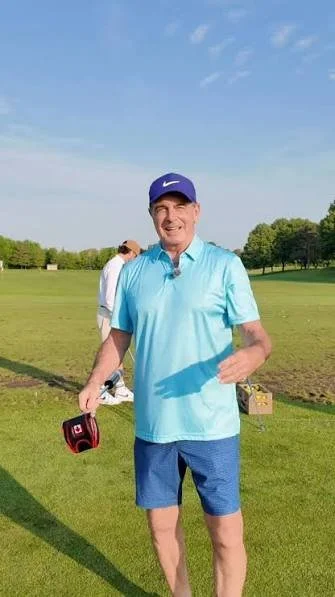
At the annual Joe Carter golf tournament
Budding superstar John Olerud looked overjoyed but also over-whelmed. Series MVP Robbie Alomar was being embraced, and I’m sure thanked, by nearly everyone on the field. If it weren’t for Alomar’s lightning bolt in Oakland, there was a chance the Blue Jays might have been watching the A’s celebrating a championship.
Fireworks and smoke filled the dome as the players bolted into the dressing room to uncork the champagne. At long last, the wait was over. The ghosts of ’85, ’89, and ’91 had left the building. The Toronto Blue Jays were finally American League champions and were partying like they had just won the World Series.
But oh, wait, that was still to come. Where were you in ’92? Now, I realize that some of you may not have been born yet in 1992, to which I say too bad for you because 1992 was a historic year in Canadian sport.
If you weren’t living on the planet at that time, were part of a witness protection program, or were perhaps living under a rock in the Canadian Shield, I would encourage you to tap into YouTube, or even better, jump into my “Rod Black to the Future time machine,” where we can set the flux capacitor to overdrive and take you back to a year that saw stuff happen that had never happened before, at least in most of our lifetimes.
Every time Canada competed at the Summer or the Winter Olympics, it was a dream come true for sports fans. The summer games in Barcelona was a good Olympics for Canada. That year Canada won 18 medals, including seven gold, the country’s second-best showing at the time. It wasn’t just the Olympics in 1992 that was special. It was everything, every sport,in every way possible. It was a smorgasbord, or should I say, smorga-sport. And it was mind-boggling.
My broadcast world was spinning like a figure skater after a triple espresso, and while I got very little sleep trying to cover it all, I felt so lucky to be wide awake and right in the eye of that ’92 sports hurricane. So many athletes and teams to cover. So many amazing stories to tell. So many magical moments to witness, and I was privileged to have a front-row seat for most of them—and best of all, once again, I was getting paid to be there.
The highlight of the year came in October, when I had the opportunity to go to a place I had only ever dreamed of: the annual Fall Classic, the World Series. With the Toronto Blue Jays becoming the first Canadian-based team to ever advance, a nation known for hockey was suddenly bursting with baseball pride, especially with the possibility of becoming the champions of America’s pastime.
It didn’t matter to the average Canadian that the Blue Jays were made up of players born and bred in the US and Latin America, or that the Series only pitted one city against another — Toronto against the National League champions from Atlanta.
No, to most Canadians, this was more. Much more. This was country against country — this was us versus them, Canada and the United States — a baseball battle of the border. The War of 1812 on the base paths.
Frankly, the hype was a little contrived, but we all bought in, and why not? This was uncharted territory for so many of us, especially most of the players. The Jays were a confident bunch and deserved to be exactly where they were. They had been built for success. They had the highest payroll in baseball, and they made believers of everyone who doubted them from their previous playoff failures by capturing the AL title.
Despite all of the positive Blue Jay mojo, though, there was still some trepidation around the team heading into Game 1 in Atlanta, and for good reason. While Toronto shared the best record with Oakland in the AL during the regular season, 96–66, the Braves owned the best mark in all of baseball at 98–64 and were coming off a Game 7 thriller over the Pittsburgh Pirates in the NLCS. Like their visitors from the north, the hometown team also had a bounce in its step.
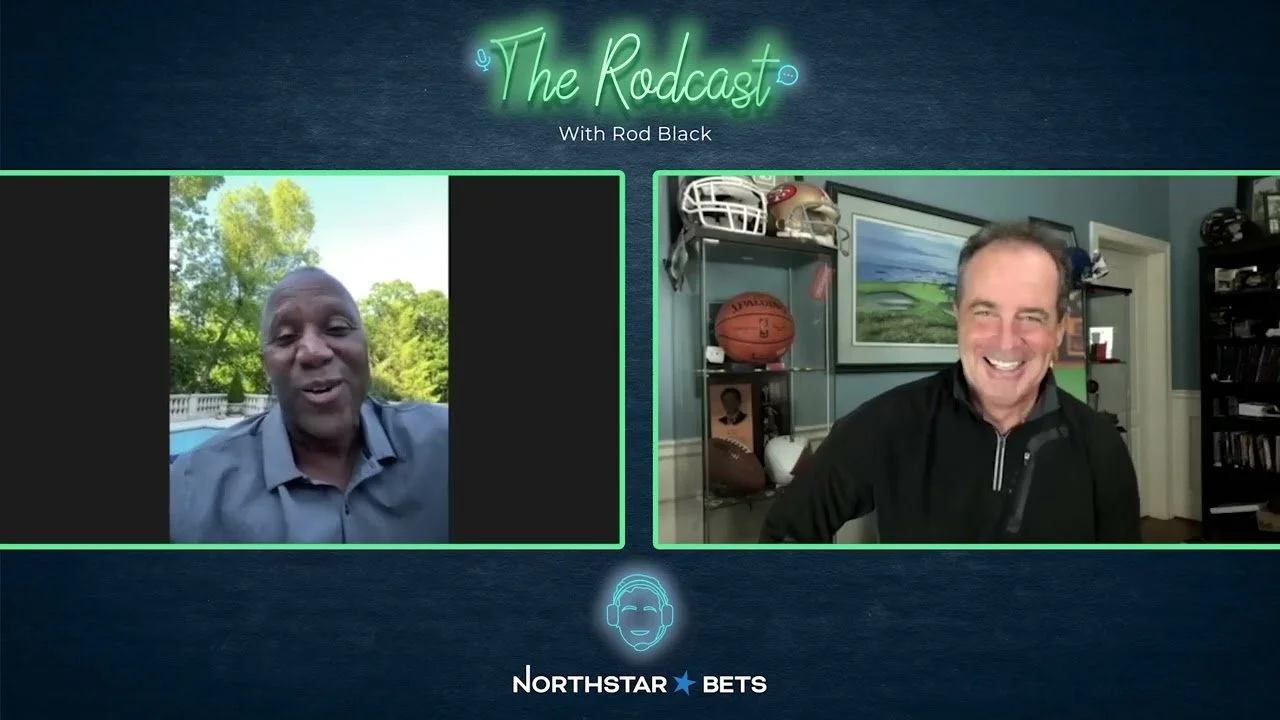
Reunited: Broadcast partners Joe Carter and Rob Black.
Managed by former Blue Jays skipper Bobby Cox, the Braves were a determined but bitter bunch, carrying a huge Georgian pine on their shoulders, having gone from worst to first in 1991, only to lose to Minnesota in Game 7 of the World Series. They not only had unfinished business on their minds, but also had one of the deadliest pitching staffs, led by John Smoltz, Steve Avery, and lefty ace Tom Glavine, who would get the start in the opener. If future Hall of Famers Glavine and Smoltz got hot, there was little chance to extinguish the fire. They were that good. Atlanta’s biggest advantage, however, was its home field, Fulton County Stadium.
It was my first trip to the home of the Braves, and while it didn’t seem to be anything extraordinary, a number of Jays players had mentioned to me during batting practice that what made the place special was not what you saw but what you heard. I remember a number of the veteran players, like Dave Winfield, taking some of the newbies who had never played in this NL park aside and warning them to be ready for the sound, or as Winfield put it, “the chop shop.”
Honestly, I was confused as shit by all the chatter. I mean, any arena or stadium can get loud, and I had already been to a number of eardrum-splitting venues. It’s the World Series, for chrissake; of course it was going to be loud. All that noise about the noise still wasn’t resonating with me as we prepared to go live to air across the CTV network.
As with the previous playoff series, we were forced to simulcast the games with CBS, taking their American broadcast and supplementing their coverage throughout the game by inserting our Canadian stories during the odd commercial breaks, which in my mind seemed so cheap and so wrong.
Dammit, I constantly lamented, we should be doing our own broadcast for our own country. How can we give proper perspective if we aren’t actually doing the game for our viewers? How could Major League Baseball be so tone-deaf to their fans north of the border? How could CTV just roll over and let the American TV army march in? Who the hell made any of these decisions?
Many questions, very few good answers. CBS, with its years of experience and financial girth, still put on a good show, for the most part playing it straight and showing very little favoritism to either side. As you would expect, they showed why they are a network superpower. Even though we were lean, our CTV crew went above and beyond to bring the best possible coverage to a dramatic World Series that had a little bit of everything and a whole lot of something I did not expect.
That whole lot of something was exactly what Winfield was talking about in warm-ups—the noise, which wasn’t the stereotypical roar from the stadium crowd but a chant called the “Tomahawk Chop,” which Atlanta fans had started doing a year earlier at the ’91 World Series.
I remembered watching and listening to the series on TV, as Braves fans stood in unison, chanting the war cry at the top of their lungs while simultaneously waving one arm in a tomahawk-throwing motion. It was loud, it was intimidating, and of course it was controversial, especially with its racially insensitive overtones. Over the years, the tradition would become widely criticized by many Native American groups, but back in 1992, despite the backlash, it was part of the emotional soundtrack to the Series.
To me, it was haunting. The game hadn’t even started yet, and the chant was already echoing throughout the stadium, cascading in a crescendo as the players were introduced one by one. I could feel the sound pounding through my entire body as I looked down from our broadcast perch, barely able to hear myself think. The only time it stopped was when the color guard marched onto the field and national anthems were played.
Canadian tenor and Les Misérables actor Michael Burgess was selected to sing “O Canada” for the first time at a World Series and sang it beautifully, in both English and French, and was greeted with warm polite applause. Country music star Billy Ray Cyrus then performed “The Star-Spangled Banner” wearing blue jeans and a cut-off T-shirt and though he looked like he wanted to break into a chorus of “Achy Breaky Heart,” he pulled it off nicely, hitting the last line — And the home of the brave — perfectly, bringing a roar from the Fulton County crowd and setting the tone for an epic six-game tug-of-war.
The atmosphere was electric, and Game 1 lived up to the hype, especially the match up of two superstar pitchers in Atlanta’s Glavine and Toronto’s “Black Jack” Morris, who had dashed the Braves’ World Series hopes in a brilliant Game 7 performance with Minnesota a year earlier.
Each team got only four hits off the future Hall of Famers, but two of those hits were home runs. Joe Carter silenced the “chop house” when he opened the scoring with a solo shot in the top of the fourth inning. But unsung hero Damon Berryhill answered in the bottom of the sixth with a three-run home run that proved to be the difference in
the Braves’ 3–1 series-opening victory.
Yes, it was only one game, but I have to admit I was a little less optimistic about the Blue Jays’ chances when heading back to the hotel after wrapping up the post-game show and doing some locker room interviews. The players said all the right things, but I could smell the disappointment and frustration from top to bottom. They knew they had played a terrific game, but they also recognized that all of that momentum they had flown into Atlanta might have disappeared into the Georgian night. The pressure was back on. The team needed a turnaround in Game 2.
And things did turn around — or should I say, they turned upside down. Unbelievably, prior to the start of Game 2, the US Marine color guard marched into the stadium—and the Canadian flag was flying upside down.
Conspiracy theorists still think it wasn’t an accident, but American officials were deeply embarrassed by the gaffe. The flag mishap wasn’t bad luck for the Blue Jays, though. In the ninth inning, Toronto was trailing 4–3 when pinch hitter Ed Sprague stepped to the plate. Only a few months earlier, Sprague’s wife, Kristen Babb, won a gold medal for the US at the Summer Olympics after a controversial judging error cost Canada’s Sylvie Fréchette a victory.
This time, it was Babb’s husband striking gold for Canada, hitting a two-run home run that helped send the Jays to Toronto with the series tied at 1. Flag-gate was far from over. Scores of Blue Jays fans showed up wearing shirts with the American flag upside down, and several signs displayed the maple leaf with the words “This Side Up.” It was all in jest, though Canadian baseball fans were still pissed.
They were much happier after Joe Carter and Kelly Gruber homered to give the Jays a 2–1 series lead.
Jimmy Key was brilliant as the Blue Jays won Game 4 by a score of 2–1. In Game 5, the Braves beat the Blues Jays in Toronto 7–2 to send the series to Atlanta with the Jays on the edge of history.
And then ... On Oct. 24, 1992, the Blue Jays finished off the Braves in six games to become the first Canadian team to win the World Series. The winning pitcher, again, was Jimmy Key, and Joe Carter caught the final out in the bottom of the 11th inning.
I’ll never forget that night of Oct. 24 for many reasons — both good and bad. I was moments away from hosting the Game 6 pregame show from the right-field bleachers, sitting alongside the beautiful World Series trophy, when suddenly, a baseball bounced off the trophy with a thud.
Horrified, I looked down to the field, and there was reliever David Wells grinning from ear to ear after using the trophy as target practice. Thankfully, he didn’t break anything, but I could only imagine if he had, and I came on live with a damaged trophy. It might have been a worse situation than the upside-down flag.
The game itself was an October classic. With the Jays holding a 2–1 lead to the ninth, I was sent down to the locker room for the potential celebration interviews. When I walked into the Jays’ clubhouse, people were busy taping plastic around the lockers and gearing up for the champagne showers. We watched the ninth inning on the television monitor.
Team president Paul Beeston was nervously chomping on his unlit cigar, and starting pitcher David Cone was taking a drag on a cigarette. That’s when the Braves tied the score to send it to extra innings. Beeston almost choked on his cigar. He motioned for all of us to “Get the heck out.”
Two innings later, we were shuffled back in when Dave Winfield hit a double down the line to give the Jays the lead. I had one foot out the door in the bottom of the 11th when the Braves pulled within one run, but then with two outs, Otis Nixon inexplicably laid down a bunt that reliever Mike Timlin fielded and shoveled over to Joe Carter for the final out. Joe started jumping and was joined by his ecstatic teammates in a dogpile for the ages.
The Blue Jays were bringing the World Series trophy north of the border for the first time, and the celebration on the field and in the locker room could be felt all the way back to the SkyDome in Toronto, where 40,000 were watching on the Jumbotron. Our post game interviews in the locker room were priceless. Half-naked players hugging it out like they were little boys. Champagne spraying everywhere, stinging my eyes, but we kept broadcasting live to Canada until we heard from all of the new champions.
It was a weird feeling walking back to the hotel after the Blue Jays won the World Series. The streets of Atlanta were so quiet. We got to our hotel, and there was a party taking place to celebrate the World Series win. But everyone was so exhausted that the party wasn’t too crazy. I flew back home the next day, wondering what the reaction had been like in Canada.
It was a little underwhelming to experience winning the championship on the road. Our flight landed, and we went straight to SkyDome for the parade. When I got to the stadium, it hit me how big of a deal it was. I had heard about the people celebrating the night before, but now we were able to experience it first-hand.
The players realized that they hadn’t won a World Series for the city of Toronto, they’d won it for all of Canada. For the next year, I hosted a lot of events with the players, and I would interview them everywhere from Sears to a charity golf tournament.
During the 1992 World Series, I came up with an idea for a story to show people why it was so important that Toronto had a domed stadium. In the third inning of the third game, back in Toronto, I did my live hit from home plate at the old Exhibition Stadium. I was a few kilometers from the Dome, and it was a miserable day of cold rain and wet snow. I was frozen stiff. I realized at that point that the Blue Jays would have never been in a World Series if it weren’t for SkyDome.
One year later, on Oct. 23, 1993, Joe Carter hit one of the most famous home runs in baseball post-season history as the Blue Jays repeated as World Series champions. Throughout the entire 1993 season, the Blue Jays were incredible.
The season didn’t feel like a celebration tour; the team had a back-to-business mindset. Coming off the win in 1992, Paul Beeston and Pat Gillick did a great job of reloading, acquiring veterans like Paul Molitor and Rickey Henderson. Both players were key components that year and were on base when Joe Carter hit the series-winning home run. The 1992 team was good, but the 1993 team was a powerhouse, with the famous WAMCO group—Devon White, Robbie Alomar, Paul Molitor, Joe Carter, and John Olerud — at the top of the batting order. Olerud really stepped up in 1993; he flirted with hitting .400.
There was a perfect balance in the clubhouse of fiery and emotional players and cool, calm, and collected players. If you ever had to design a team, the 1993 Jays were the team you would want to put together. Rickey Henderson was 34 when he played for the Blue Jays, and he was like a little kid every time you spoke to him. He loved baseball so much.
When the Jays got back to the post-season, they were on a mission. I know people talk about Joe Carter’s home run, but an equally important home run for the Jays was Robbie Alomar’s in the 1992 ALCS against the Oakland A’s. Ed Sprague’s homer in the 1992 Series was also very important. In 1993, they defeated the Chicago White Sox in six games in the ALCS and faced the Philadelphia Phillies in the World Series.
In 1992, CTV Sports had simulcast the American feed of the World Series. In 1993, the network had a bigger role. We were doing live reports and fan interviews throughout the series from Barrie, Ont., to Calgary. Every CTV affiliate and the network led with the Blue Jays every day, all day.
That was the year that Rob Butler, from East York, was a member of the Blue Jays, and we did many stories about his Canadian connection. Years later, I developed a deep friendship with Rob. I don’t know if my sons would have ever been pro ball players if it weren’t for Rob Butler. When they were young, I took them to the camps put on by Rob and his brother Rich.
In Game 4, the Jays were trailing and Rob came into the game and helped spark a comeback. In the end, the Jays won the game, 15–14.
In Game 6, I did the pre-game and the post-game. Before the game, I did a hit from the bowels of SkyDome. Near the entrance to the Blue Jays’ clubhouse, there was this big cement wall covered with pictures and posters and letters from Canadians from coast to coast. Live on the air, I started reading one of the notes from an 11-year-old girl from Pembroke, Ont. It read, “Robbie Alomar, will you marry me?”
The entire country was in love with the Blue Jays in 1993. I spoke to Joe Carter at the batting cage before the start of Game 6. He looked at me, winked, and said, “Rodney, we got this.” The game went on and I was upstairs, doing the opening of the broadcast.
I was going to be reporting from the clubhouse at the end of the game. In the seventh inning, I headed down to the lower level, in the tunnel before the entrance to dugout. I was standing with Buck Martinez, who was reporting for TSN that night.
Jays pitcher Dave Stewart came out of the game after giving up a three-run home run to Lenny Dykstra, and he almost hit Buck and me as he threw his glove. Stewart had a high-pitched voice, but he had a menacing stare. I looked into the dugout and I could see Rob Butler sitting there with his head in his hands, like he was in a trance.
In the bottom of the ninth, with the Jays trailing 6–5, Rickey Henderson got on base; two batters later, Paul Molitor singled. Now, Phillies reliever Mitch Williams had never used the slide step before in his career. But he was so worried about Henderson and what he would do at second base.
Williams kept slipping off the mound as he made his slide step. Then he threw that fateful pitch to Joe Carter, who was always a good bad-ball hitter, didn’t miss, and the rest was history. Because Buck and I were not totally in the dugout; we were watching the video feed of the game on a monitor.
What people don’t realize is that TV broadcasts are on a slight delay. And all of a sudden, I heard a thunderous boom from the crowd; it felt like an earthquake had hit the stadium. I hustled into the dugout, and everyone was running everywhere, and it was pandemonium on the field.
To win the World Series at home was unreal.
It was so joyous in the clubhouse afterwards. I was able to interview Henderson and others after the game.
One of my all-time favorite interviews was with Rob Butler. He was giddy. And he wasn’t just a token Canadian on the team; he had contributed to the team’s success and had a couple of hits. “I’m so happy!” he said. “I love everyone in East York and I love everyone in Canada!” He had tears in his eyes. “My brother Rich, this is for you. I love you, man!”
Then he took a can of beer and poured it all over my head and ruined my brand-new suit. But it was all worth it. The 1992 and 1993 World Series wins were two of the greatest things I have ever witnessed.
I have been at the Olympics and called gold medal wins. I have called the hockey World Championships, and I have been to the Stanley Cup Final. I was at the Masters when Mike Weir won, for goodness’ sake. But to be a part of the back-to-back World Series, to me it is at the top of my list of things that I have covered. It was unbelievable to cover, and it was unbelievable the way the city of Toronto and all of Canada reacted.
It was great to see a Canadian team defeat an American team. It was the first major championship that I had been around. The Blue Jays in 1992 were good, but they were not favored to win the World Series. In 1993, the Jays were the definite favorite.
Fast-forward to 1998, and Joe Carter had retired from baseball. Sportsnet had a press conference to announce that they had purchased the rights to broadcast 40 Blue Jays games. Baseball holds a special place in my life. I played baseball as a kid and I loved it. I followed the stories; I loved the fact that it was great theatre. I loved that baseball had no score clock.
I loved the stories about the players: where they came from, how they got to the big leagues. I loved the poetry of baseball and all of the stats that came with the game. I followed all of the announcers.
I loved Dave Van Horne, the voice of the Expos, and the long-time voice of the Dodgers, Vin Scully. I used to mimic all of the great announcers while I was playing baseball. But I didn’t think I would ever call play-by-play of a ball game.
Up until the late 1990s, I had hosted baseball broadcasts, but I had not done any play-by-play. I was at Sportsnet in the late ’90s when network president Scott Moore called me and said, “How would you like to do baseball? And I have a partner for you, too. His name is Joe Carter.”
That was an easy thing to say yes to. I called 20-to-30 to games a year, and then Sportsnet lost the rights. I moved to TSN and started calling 20-to-30 games a year there. One year, we did close to 50 Blue Jays games, which was great. I loved being on the field before the game; I loved that every night you went to the ballpark, you could see something that you’d never seen before.
This is the beauty of baseball. That is a broadcaster’s dream. I was doing these Jays games after their glory days of winning back-to-back World Series titles. I was also hosting Montreal Expos games, and I knew about the importance of baseball to Canadians. I closely followed all of the Canadian-born players when they came into Toronto or Montreal. Guys like Éric Gagné, Jason Bay, Kirk McCaskill, and others.
When I was a kid, Fergie Jenkins and Terry Puhl were the only prominent Canadians in the big leagues. But suddenly, the list was growing. And I could only imagine how many more would be on their way to the show after being inspired by the Blue Jays’ World Series wins.
I got to work with Joe Carter. Joe and I became great friends over time. Because we not only loved baseball, but we also shared the same passion for another sport. Joe and I both loved to golf. The thing with Joe Carter is it didn’t matter what city we were in, he could get on any golf course.
On an off day Joe would call the clubhouse: “Hi, I’m Joe Carter.” And these were elite golf courses I am talking about. It didn’t matter what course, we would get a tee time, and usually it was for a great price: free.
Joe was a very generous guy with all of the crew. Whenever he was in Toronto, he never had to buy a drink or food because of that World Series–winning home run. He would talk to the catering staff and make sure there was a food cart with enough treats for everyone.
Our last year working together was 2000. But it was my most memorable. On July 26, I was scheduled to call a noon Blue Jays game. The night before, my wife, Nancy, went into labour. I tried to call for a replacement and couldn’t find anyone, so I was going to have to call the game no matter what happened. I’d told Joe that I didn’t know what was going to happen, and he replied, “Rodney, don’t worry about it. I am at the SkyDome hotel, and I have an extra bed. Don’t worry.”
Nancy was induced, and Tyler Alexander arrived at 3:21 a.m. We were all excited. I tried to sleep in the corner of Nancy’s room at the hospital before saying goodbye to her and Tyler to get some rest before the Jays game. I went to the hotel and arrived at Joe’s room around six in the morning. I knocked on his door, and he gave me a big hug and congratulated me. I walked into his room, and there weren’t two beds — there was only one.
So, Joe Carter and I recreated the famous scene in Planes, Trains, and Automobiles. Two guys, one bed, and a pillow in between us. The upside is that I got to sleep with Joe Carter, a World Series hero. After a few hours’ rest, we went to the ballpark and called the game.
In the middle of it, the Blue Jays put a notice on the Jumbotron that Tyler had been born, and they congratulated us. I was sky high, and the Blue Jays won. Afterwards, I had the scorecard signed as a memento for Tyler. On that scorecard were a number of players who would later help Tyler on his path to the major leagues — guys like Robbie Alomar, Rob Butler, and Paul Spoljaric.
Eighteen years to the day that he was born, Tyler got a chance to play in the East Coast Pro Classic, held at what had been SkyDome but was now called Rogers Centre. It was almost as if Tyler was born to play baseball. I had grown so close to Joe that we had considered calling him Carter. Then I thought it would be too much pressure on him. As it turned out, Tyler was the perfect name.
One year, Joe and I were at the Masters. I was there working with TSN, and Joe and a friend of his were going to join us at the house we were renting. I’d told Joe we had lots of room. He was arriving late at night, around two in the morning. It turned out the couch didn’t turn into a bed, so we found a mattress, and Joe and his friend slept on it in the dining room. The thing is, I hadn’t told any of the crew that Joe was arriving.
So, around six in the morning, a crew member nudged me awake because we had to head over to Augusta National. Then he said, “Hey, there is a Black guy and white guy sleeping in the dining room, and the Black guy looks like Joe Carter. What is going on here, man?”
Now, if you ask Joe about his memories of what happened, he has a slightly different version of the events:
“Rod is not always the best with instructions. Rod and I were talking about going to the Masters. Not only had I never been there, but I also didn’t have a place to stay. Rod tells me, ‘Oh, you guys can stay with me at our rental house.’ This is in February, two months before the Masters. I took Rod at his word, and when the Masters rolled around, I called him up and said, ‘Rod, where is the house located?’ He had no clue what I was talking about. I said, ‘You know, Rod, you said we could stay at the house with the production crew.’ Rod had forgotten about it.
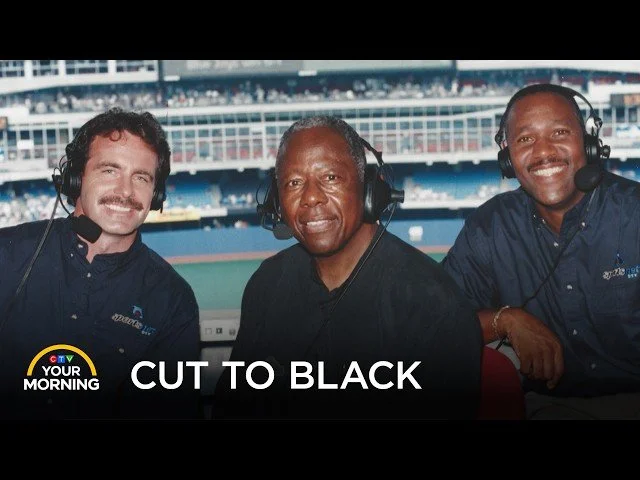
Hot Rod Black, home run slugger Henry Aaron and Jumpn’ Joe Carter, Game 6 hero.
“My buddy Terry Jarvis and I arrived at the house at night, and I ended up sleeping on the couch. When the guys woke up to leave for the golf course to interview Mike Weir, they found me sleeping on the couch. My buddy Terry was in the other room. The next night, we got our hands on a blow-up mattress that we set up in the dining room. It was a queen-size inflatable mattress, and Terry and I slept on that. I came from humble beginnings and I was never too proud where I couldn’t sleep on a couch or an inflatable mattress. The crew loved having me there because I made them my pecan pie. Every day, they couldn’t wait to eat my pecan pie. They said it was the best they ever had.”
Yes, the pie was great, and unfortunately, I did forget about telling Joe that he could stay with us in Augusta. Hey, it happens. In my defense, I thought we had plenty of room for Joe. Despite the fact that he had to sleep on the floor, he doesn’t hold grudges and we are still buddies. To this day, I host the Joe Carter Classic celebrity golf event in the Toronto area, which has raised millions of dollars for charity over the years.
Joe Carter touched them all, but he has touched a lot of people’s lives as well. It’s a friendship that has lasted beyond baseball.
I also covered the Montreal Expos during my time at CTV. As with the Blue Jays, I hosted the Expos broadcasts. I did the same job that Fergie Olver did for the Blue Jays: I would sit in the dugout with the players, working as a host and a reporter. As I discovered, crazy things would happen in the dugout, from pranks to sudden breaking news.
During a game in August 1993, veteran Expos pitcher Dennis Martinez came over to me and shook my hand, and said, “I’m out of here.” He had been claimed on waivers by the Atlanta Braves. This all took place in the middle of the game. I reported the news of the deal from the dugout during the broadcast.
One day later, Martinez used his 10-and-5 veteran player rights as per the collective bargaining agreement and vetoed the move, and he ended up staying in Montreal. The next time I saw him in a dugout, I shook his hand and said, “Welcome back.” Dennis laughed at that.
Another time, we came close to losing our broadcast license. Dave Van Horne was doing play-by-play, and Ken Singleton was the color analyst, and during a pre-game hit for local news, they threw down to me in the dugout with Ivan Calderón.
Calderón was from Venezuela, and I asked him about his off-season trade from the White Sox. “What did you think about when you got traded to Montreal?” He answered, “Oh, it shocked me. I was in the backyard, playing with my cock.” He said this live on the air!
I jumped in: “You mean your roosters?” Calderón was emphatic: “Yes, I play with my cock.” I kept trying to say “rooster.” As I turned red, I threw back to the studio, knowing full well that Dave and Kenny were laughing upstairs in the booth. I was so relieved that social media had not been invented yet.
This was the kind of moment as a broadcaster that I loved. It was totally unplanned, and without knowing it, Calderón had given me one of the funniest moments of my career.
* * *
Editor’s Note: First off Hot Rod Black is a friend. I interviewed his son Tyler at a high school showcase (“So, who is the best broadcaster you have ever heard? Joe Bowen or your father?”). He graduated from the Toronto Mets and joined the Wright State Raiders. When I would see Hot Rod at an event (ball game, banquet) I’d ask “so how is his nibs doing?”
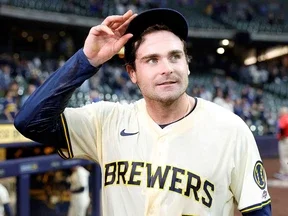
Tyler Black
My father used to use that term -- I think because he could not remember the name of all the players he coached. One day Hot Rog asked me if I knew his wife Nancy last name. It was “Knibbs ... he played in the NHL. I thought for a second “Not Billy Knibbs?” Yep. “I saw him play for the Kingston Frontenacs in 1962-63 with Harry Sinden, Dick Cherry, Bobby Leiter, Pat Stapelton, Jean-Paul Parise, Wayne Connelly and Ed Westfall.” Nibs. Knibbs Tomato. Toe-mat-toe.
Now we come to draft year and his nibs was the sixth highest college hitter selected in the draft. Each year we name the Canadian Baseball Network all-Canadian college and Player of the Year. Tyler won the award his junior year and we asked Hot Rod to write the piece, which was about college ball, sandlot ball, etc. The final line was “could I have the envelope please-- and the winner is my son.”
In 2024 he was promoted to the Milwaukee Brewers and on April 30 he was promoted to the majors. He didn’t start, but he pinch ran when Gary Sánchez was hit by a pitch and left the game. Both Nancy and Hot Rod make the first pitch. Tyler doubled in his first major-league at-bat. And singled next time up -- while the Brewers reporter was interviewing Hot Rod who said something like “hey, there’s another hit for my son.” after Tyler had singled.
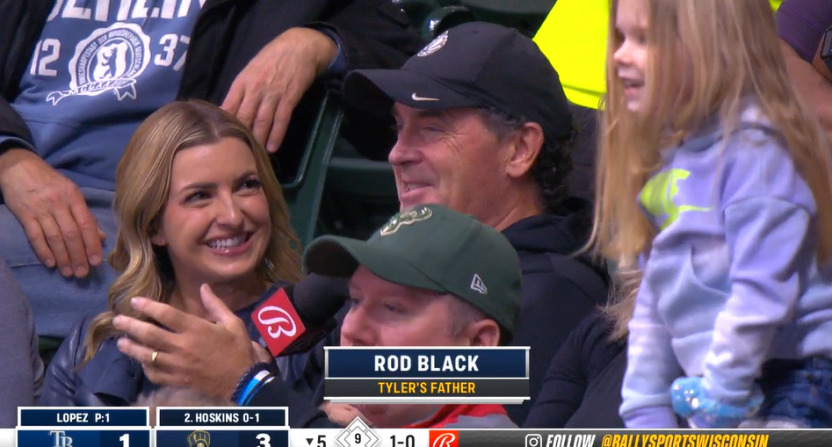
Brewers back-up announcer Rod Black calls his son’s second hit — a single.
This season Tyler played nine games the Brewers and will get a World Series ring next spring..
* * *
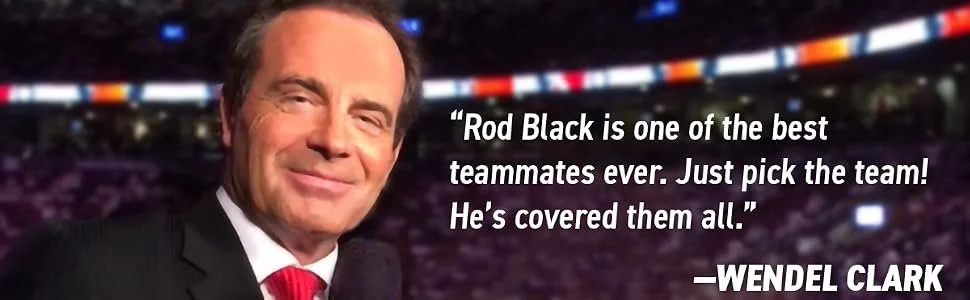
Legendary broadcaster Rod Black (TSN, CTV, Sportsnet) has written a wonderful 304-page book on stories from his days covering the wide world of sports. And especially his love of baseball. The book sells for $36.99 and is available at bookstores such as Indigo or by mail order through indigo, Amazon, or your local bookstore.