
Whicker: Patches O’Houlihan Murphy has Brewers rolling with Drumstick, Clifford, Batman and Rock
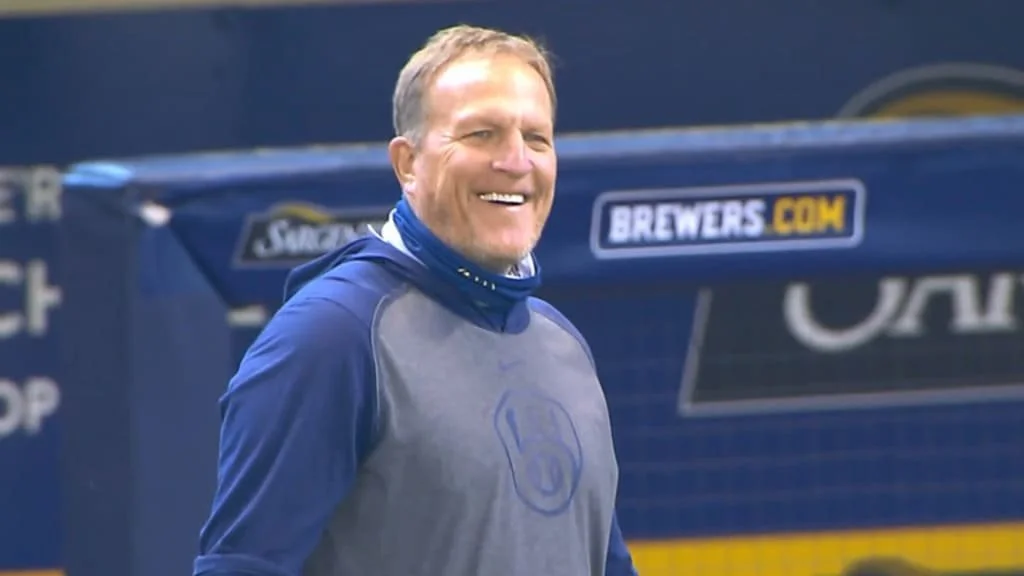
Milwaukee Brewers manager Pat Murphy has the Milwaukee Brewers rolling … could the Blue Jays meet the Brewers in the World Series?
August 26, 2025
By Mark Whicker
Canadian Baseball Network
Sixteen years ago he was unemployed and tainted twice over. College baseball coaches don’t become major league managers, or even major league coaches. Fired college baseball coaches, especially brazen ones, don’t become much of anything.
Today Pat Murphy is not only on the verge of winning the National League Manager of the Year award, as he did in 2024. He has restored the very role of the baseball manager, the trail boss, the theme composer, the man Out Front.
The Milwaukee Brewers have the game’s best record, and last year they won 93 games and the National League Central, and they do this without breaking anybody’s bank or knocking down fences. When they screw up, their manager points it out, not delicately. When he screws up, he admits it. Murphy is 66 years old and one year removed from his rookie year as manager. His give-a-damn, when it comes to convention and custom, was busted decades ago.
Murphy coached at Notre Dame and Arizona State. He went to four consecutive College World Series at ASU and won the Pac-12 each of his last three seasons. But once you take the college fork in the coaching road, there is no place for a U-turn. College coaches divide up the scholarships, recruit instead of draft, and run their own show.
College jobs are also more secure, for the most part, because the baseball team isn’t usually the focal point for donors and fans. Bobby Winkles was a powerhouse coach at ASU, winning three national titles, but floundered when he managed the Angels and Athletics. And he didn’t have a whole shelf of Samsonites on his back the way Murphy did.
Murphy was caught up in an NCAA scandal involving excessive phone calls and illegal compensation. He was fired when the NCAA determined he was paying players for work they hadn’t done at his non-profit camp. The players “earned” $5,800 total, which won’t get you a long snapper in college sports these days, and Murphy pointed out repeatedly that the whole investigation was the fruit of poisonous trees inside the football program.
Those who didn’t know Murphy connected him with a brawl at USC in 1996, when pitching coach Bob Welch, the ex-Cy Young Award winner, went after Trojans coach Mike Gillespie, and ASU outfielder Mikel Moreno ran into USC catcher Jeff DePippo at the end of the USC victory. He was known as “Black Hat Pat,” and was a willing lightning rod. He hadn’t built enough goodwill to get rescued by another college, so eventually he took a job managing the Padres’ Rookie League team in the Northwest League for $30,000.
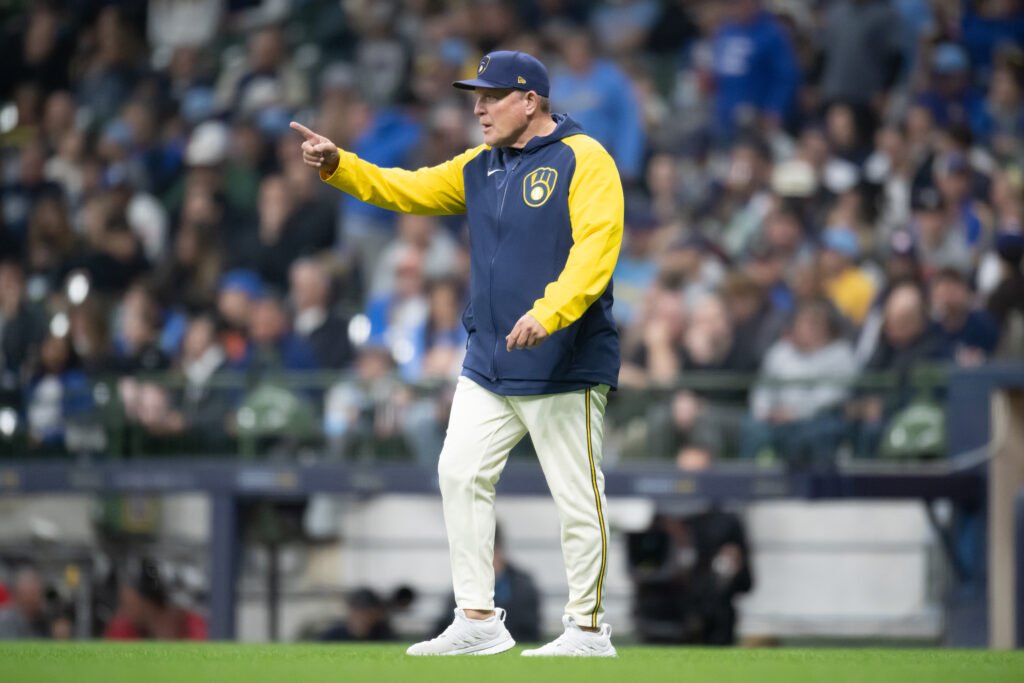
The skills and attitude that brought Murphy an even 1,000 college wins paid off, and he rose through the system, and when his old Notre Dame infielder, Craig Counsell, needed a bench coach to coordinate strategy with the Brewers he was managing, Murphy got the call.
But that’s just part of the iceberg that you’ve seen. Murphy was the son of an alcoholic in Syracuse. Alienated and desperate, he spent his late afternoons in a local boxing gym, working off the frustrations. After high school he went to LeMoyne College and then Bowling Green, but he began wandering the country, and he was on his way to Miami’s famous Fifth Street Gym to take up boxing again. On the way he saw a sign for “Florida Atlantic University” in Boca Raton, and dropped in on Steve Traylor, the baseball coach, campaigning for a chance.
He didn’t know FAU was just starting baseball. All the better. He played and coached there, wound up at Claremont Mudd Scripps in Southern California, and when he heard that the Notre Dame job was open, he called the athletic director and said, “I’m the guy you’re looking for.”
Most major league clubs have quit looking for strong personalities in the dugout. Earl Weaver need not apply. The statistical analysts have their lineup preferences, thinly disguised as suggestions, and the ideal manager is supposed to listen, nod, and make sure there’s a minimum of flying projectiles in the clubhouse. As players get richer, their skin gets thinner, and no criticism is constructive. Dallas Green of the Phillies was told, during the 1980 World Series, that Greg Luzinski was unhappy on the bench.
“I want to play him every day,” Green retorted, “but I’m not the one hitting .228.” That would launch a thousand posts today.
No doubt Murphy listens to his numbers people, as he should, but the Brewers play a modified throwback game that the modernists reject. They are second in NL in runs scored but only seventh in home runs, and only four teams have fewer strikeouts. Their batting average is one point off Philadelphia’s league lead, and they’re the league leader in steals, having recognized that the new pickoff rules are the equivalent of the green flag.
Pitching is the Brewers’ touchstone, and they’re third in league WHIP and second in ERA. With Trevor Megill the established closer, Murphy has furiously juggled Jared Koenig (60 appearances), Abner Uribe (63, with a 1.71 ERA), Nick Mears (0.860 WHIP in 56 games) and Grant Anderson (57 games). Their energy level will help determine whether the Brewers earn their second-ever Series appearance and first championship.
“It’s more like a college-type atmosphere,” said reliever Hoby Milner, who was a Brewer last year. “A little more gritty, we’re in it to win today. Even the big guys don’t try to do too much in big situations. Just hand it to the next guy. It’s not like the way it is most places — everybody go up there and try to hit a homer.”
Murphy feels obligated to give every Brewer a nickname, although some of them don’t make sense at first.
“I like to let them marinate,” he said. “Put some Epsom salts in there and let them develop.”
But no one’s figured out why Koenig is Drumstick, or ex-Brewer Colin Rea was Code Red, or Megill is Clifford. Murphy decided outfielder Garrett Mitchell looked like Batman, hence the name Bruce, and of course Bryan Hudson was Rock and Joey Ortiz is Tito.
Christian Yelich played the name game when he dubbed Murphy “Patches O’Houlihan,” after the manager in “Dodgeball,” and the garish jacket hangs in Murphy’s office. Of the many stories, Adam McCalvy of MLB.com wrote about the night Mitchell was on first base in an obvious steal situation yet spent two pitches rooted to first base. Murphy finally called out to Dodgers’ first baseman Freddie Freeman: “Will you please tell Mitchell to run?”
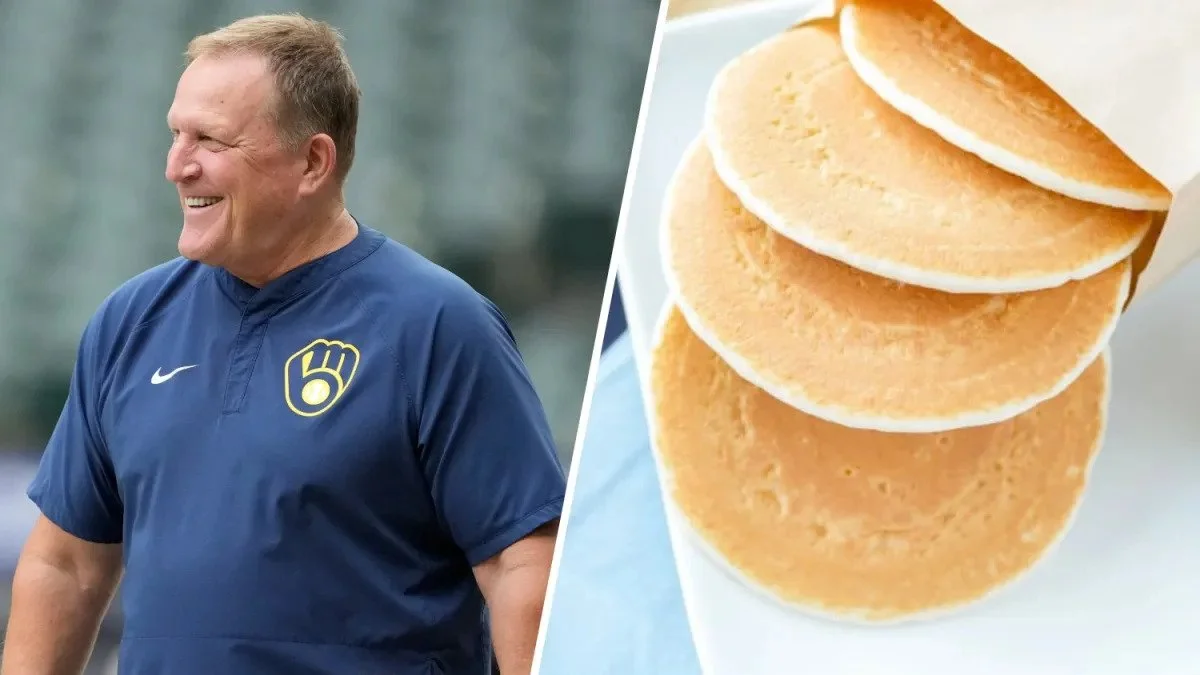
Concessions now sell “Murph’s Pancakes” the same kind the manager carries around in his pocket.
And Murphy is famous for carrying pancakes, pizza slices and waffles around in his warm-up jacket. The players don’t bite, but the concession stands at the ballpark now sell “Murph’s Pancakes.”
Murphy connects his favourite Brewers to other delicacies. He has said his ideal player is an “orange Life Saver.” Why? Because when the Life Savers are opened, everybody goes for the red. The orange ones are rejected, unloved and yet motivated, like Isaac Collins, the outfielder who wasn’t protected by the destitute Colorado Rockies and became a Rule 5 draft by the Brewers, for whom he’s been driving in big runs all summer.
Collins had one of those big hits last Wednesday in Chicago, just after his wife Isabella gave birth to son Carter Michael. That win followed the Cubs’ doubleheader sweep of the Brewers.
“It was a big hit for Moon and Baby Moon,” Murphy said, and everyone else was left to figure out that Murphy was referencing Michael Collins, the Apollo 11 astronaut who had to fly around the moon in 1969 while Neil Armstrong and Buzz Aldrin got to play. Collins was the chauffeur but wound up basking in the same ticker tape parades that celebrated the other two. If you’re building a champion or merely saving a baseball life, all the colors are primary.