
Whicker: John and Jobe changed Major League Baseball
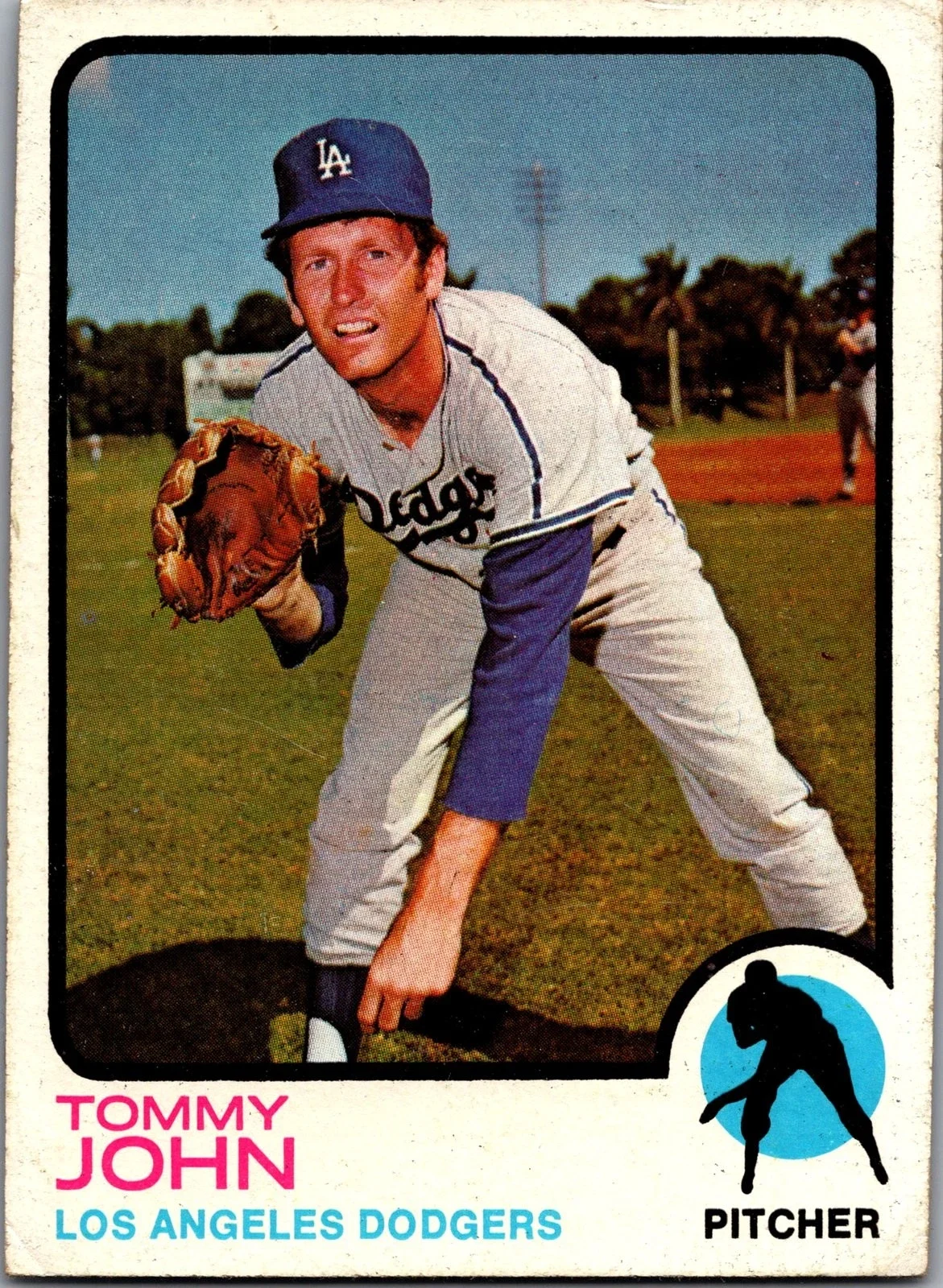
Legendary left-hander Tommy John died on Saturday at the age of 83.
August 18, 2026
By Mark Whicker
Canadian Baseball Network
Like Lou Gehrig and Dr. Alois Alzheimer, Tommy John will always be associated with his condition.
He didn’t discover Tommy John surgery, the way Alzheimer discovered a particular form of dementia, and he wasn’t a helpless victim of ALS the way Gehrig was. In fact, he was unconscious, on the operating table, when Dr. Frank Jobe looked at John’s left elbow and realized he had to do something unprecedented to save John’s pitching career. But John’s life wasn’t at stake. Without the operation, he would have quietly gone home to Terre Haute, Ind. to begin his second life, the way most injured pitchers did.
When John awakened from the surgery in September of 1974, he was puzzled to see his right hand in wraps. Jobe had taken a tendon from that right hand and used it as a replacement for the one in the left elbow that was shattered. There had been transplants to the legs of polio patients, but Jobe was the first to attach the tendon to an elbow. There was no manual for this, and not much confidence either. But John had already given something more valuable than his elbow. He had given Jobe his faith.
John, who called himself “the eternal optimist,” did not pitch again until April of 1976, when he went five innings for the Dodgers against the Atlanta Braves. He pitched 14 years after the operation and didn’t retire until he was 46. He completed 101 games, post-op, and won 20 or more games three times.
John ended with 288 wins, most of anyone in the modern era who isn’t in the Hall of Fame, with the exception of Roger Clemens. We know why the voters and the secretive Veterans Committee have rejected Clemens, as lame as those reasons are. We have no idea why John was on the outside looking in, and died that way on Sunday, at the age of 83.
The John/Jobe collaboration was the equivalent of flying without instruments. Jobe privately thought John had a one percent chance of pitching again, and he warned the pitcher that he was going beyond his empirical knowledge. John’s elbow betrayed him on the night of July 17, 1974, when he threw a pitch to Montreal’s Hal Breeden in Dodger Stadium and felt that his arm had literally left his body. Incredulous, he tried another pitch and the same thing happened, and he walked off the mound.
John later said he had originally hurt his arm when he was 13, when he joined a Babe Ruth League, where the distance to the plate increased from 45 feet to 60. He estimated later that he took 40 cortisone injections between 1963 and the night he faced Hal Breeden.
John tried to rush the recovery process, upping his running to 10 miles a day. But as the elbow improved, he began to lose feeling between his fingers, which was too close for comfort among Dodger fans who remembered Sandy Koufax. When he first got hurt, he had promised that he would pitch again before his wife Sally gave birth to their first daughter. That due date was Sept. 10. It came and went, and Tamara was walking by the time John competed again.
That was the first shot in a medical revolution that baseball had never seen before. Over 2,600 major league players, mostly pitchers, have had Tommy John surgery. Most of them have regained velocity and command. Chris Sale, Sandy Alcantara, Justin Verlander, Tarik Skubal and Jacob deGrom are among Tommy John patients who won Cy Young Awards. Four days before John died, Cincinnati’s Hunter Greene became the 41st player this season to get his Tommy John badge. But, over the years, more amateur, high school, college and minor league pitchers have gotten their surgery, too. The Dodgers’ Hong-Chih Kuo had the operation four times.
Think of the literal centuries of extra major league service time that John and Jobe created for those who followed. Think of the literal billions of dollars in salary that those pitchers commanded. Because of the Tommy John safety net, young pitchers continue to throw with blind ambition, using maximum effort to make the radar gun dance in a scout’s hand. The more that happens, the more the shoulders and elbows rebel, and the more Tommy John operations become necessary. You can measure John’s impact in the catamarans that sit on the docks of the orthopedists. Maybe he can make their Hall of Fame someday.
John lived an eventful life, and not all the events were kind. As a high school valedictorian in Terre Haute, he was prohibited from giving a graduation speech because of a stuttering problem. In 1981, his son Travis, at age 2, fell out of a window at a New Jersey beach house and was in a coma for two weeks. He recovered in time to throw out the first pitch at a World Series game, and Tommy and Sally wrote a book together and were briefly America’s most beloved couple, but, later on, they divorced. A son, Taylor, was an accomplished stage presence as a kid, singing in “Les Miserables” on Broadway, and his recorded version of the Star-Spangled Banner was played at ballparks for years. Taylor died, at 28, after he overdosed on prescription drugs. John’s final years were devoted to a fight against bladder cancer.
Someday the doctors will find a way to discover CTE in a football player’s brain before he dies. Someday the medical profession will quit finding these obliques and sports hernias that have come out of the blue to fill up the injured lists. And someday baseball might stumble upon the answer to why pitchers work less and get injured more. Tommy John and Frank Jobe, who died in 2014, can rest peacefully, having done all they could.