
Baba, Clapp, Psota, Runge, Stoneman, White elected into Canadian ball hall
February 5, 2026
Official Canadian Baseball Hall of Fame News Release
St. Marys, Ont. – The Canadian Baseball Hall of Fame and Museum’s class of 2026 will consist of six new inductees.
Former Toronto Blue Jays centre fielder Devon White will be inducted alongside national team legend and current St. Louis Cardinals coach Stubby Clapp (Windsor, Ont.), former Women’s National Team star Kate Psota (Burlington, Ont.) and early Montreal Expos ace and later executive Bill Stoneman. Longtime Baseball Canada executive director Jim Baba (Moose Jaw, Sask.) will also be inducted posthumously.
The Canadian Baseball Hall of Fame’s Veterans Committee has also elected former major league umpire Paul Runge (St. Catharines, Ont.).
The Canadian Baseball Hall of Fame’s 2026 class will be honoured in a ceremony at the Hall of Fame grounds in St. Marys, Ont., on June 20.
"We look forward to celebrating the outstanding careers of this year’s inductees in St. Marys this June," said Scott Crawford, the Canadian Baseball Hall of Fame’s director of operations. “Each of them, in their own way, has made a tremendous impact on the game of baseball in our country.”
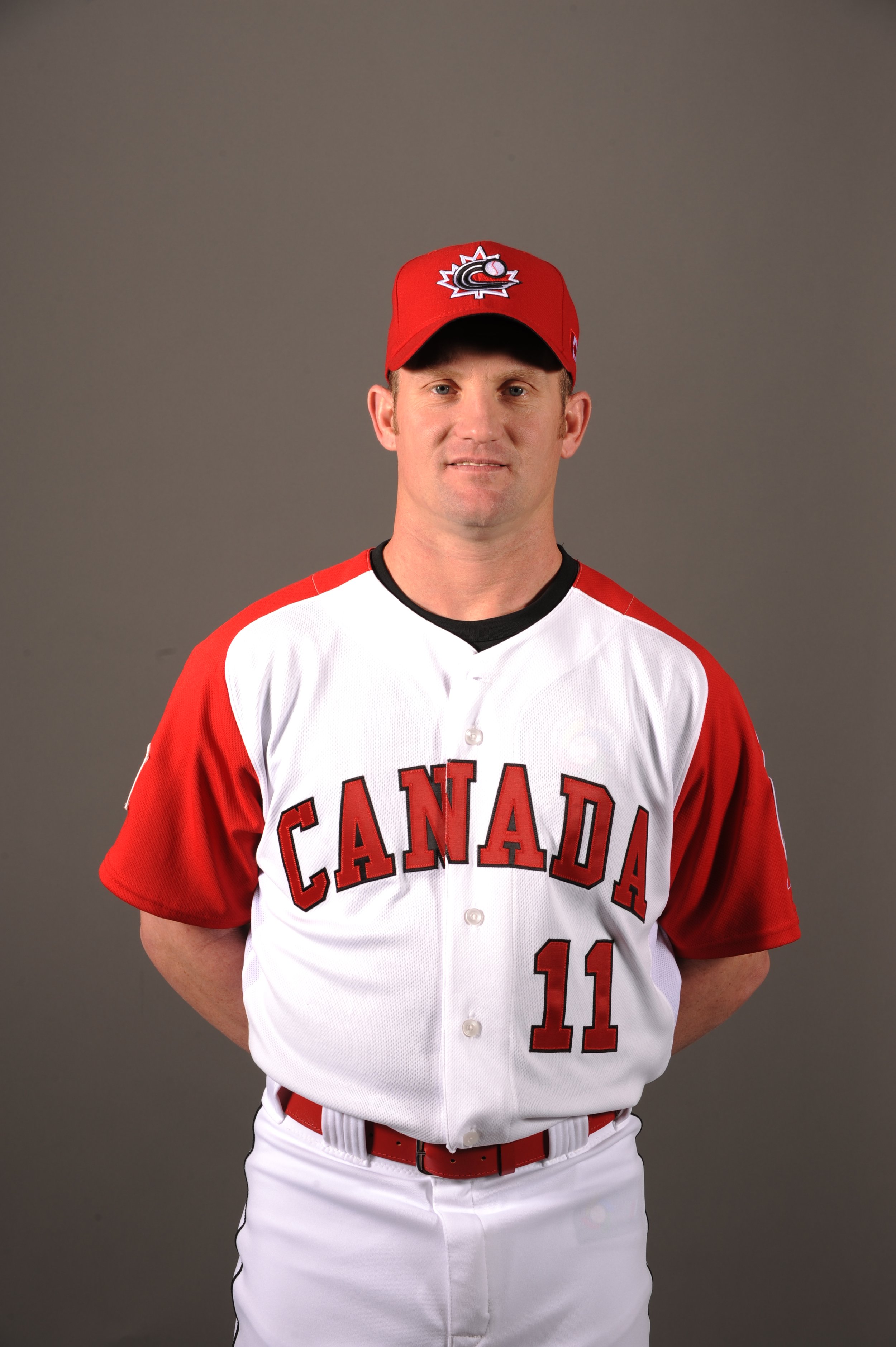
Stubby Clapp (Windsor, Ont.). Photo: Canadian Baseball Hall of Fame
Stubby Clapp
Born on February 24, 1973 in Windsor, Ont., Stubby Clapp is known as “Captain Canada” for his long commitment to the national team, which includes more than a dozen appearances as a player and coach.
Clapp honed his skills in his hometown of Windsor before joining the Junior National Team in 1991 to help the squad to a gold medal at the World Youth Baseball Championship in Brandon, Man., that summer. That remains the only gold medal the Junior National Team has won.
After graduating from Texas Tech University, the scrappy 5-foot-8 infielder was selected in the 36th round of the 1996 MLB draft by the St. Louis Cardinals. Against long odds, Clapp made his major league debut with the Cardinals on June 18, 2001.
In total, Clapp played 23 games with the Cardinals and 11 seasons in the pro ranks. He spent four of those (1999 to 2002) with the Cardinals’ Triple-A Memphis Redbirds where he became one of the team’s most productive and popular players. Often doing a back flip when taking the field, he became known as the “Mayor of Memphis” and his No. 10 was retired by the club in 2007.
But even during his pro career, Clapp never forgot his roots. In 1999, he suited up for Canada at the Pan Am Games in Winnipeg and delivered a walk-off, bases loaded single in Canada’s extra-inning, upset win over the U.S. to help Canada to an eventual bronze medal.
Following his playing career, Clapp entered the pro coaching ranks, eventually returning to Memphis to manage the triple-A club to Pacific Coast League championships in 2017 and 2018. For his efforts, he was named PCL manager of the year in both campaigns. That performance earned him a promotion to the position of first base coach with the Cardinals in 2019, a post he has held for the last seven seasons.
Over the years, Clapp has also served as a coach for the national team. He is the only person to have been in the dugout for all three of Canada’s international gold medals. He played for the junior team that won the 1991 World Youth Baseball Championship and was a coach on Canada’s gold medal-winning squads at the 2011 and 2015 Pan Am Games.
To recognize his contributions to the national team, Baseball Canada created the Stubby Clapp Award, which is presented annually to a Canadian player who has stood out for their hard work, perseverance, positive attitude and strong performance on the field.
Clapp was inducted onto Baseball Canada’s Wall of Excellence in January 2025.
“This is an absolute honour to receive the call from the Canadian Baseball Hall of Fame,” said Clapp “I was totally caught off guard. It’s a great blessing to get this news on my daughter’s birthday.”
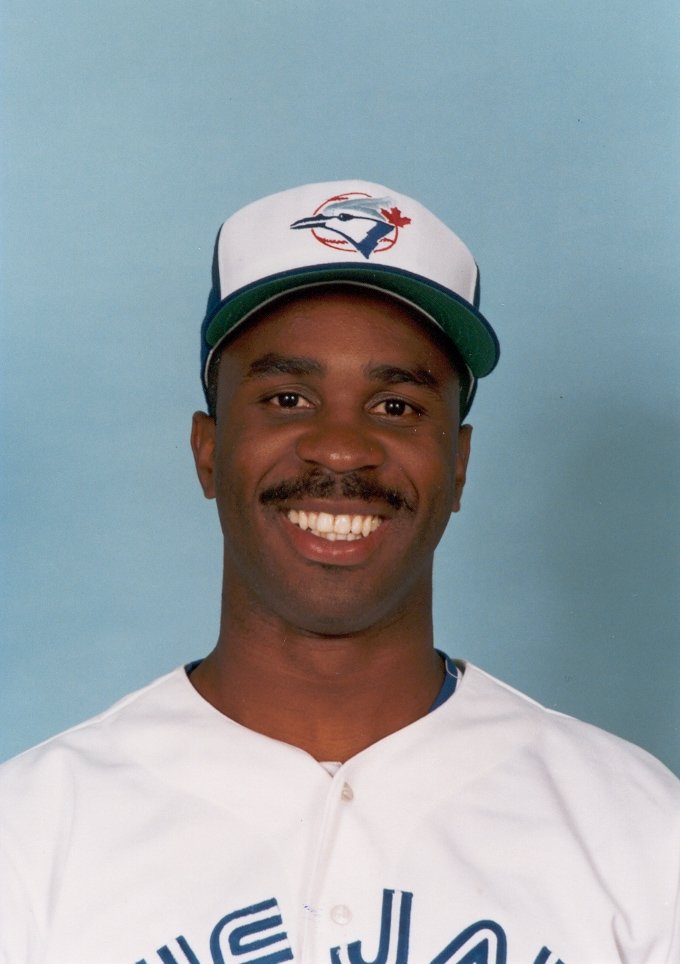
Devon White. Photo: Toronto Blue Jays
Devon White
Born on December 29, 1962 in Kingston, Jamaica, Devon White cemented his reputation as one of the greatest defensive centre fielders in major league history while with the Toronto Blue Jays from 1991 to 1995.
White moved to New York City when he was nine and emerged as a standout on the diamond at Park West High School in Manhattan where he caught the eyes of the California Angels who selected him in the sixth round of the 1981 MLB draft.
He would spend almost five seasons in the minors – including a tenure with the Triple-A Edmonton Trappers – before making his major league debut. In 1987, his first full season with the Angels, he had 24 home runs and 32 stolen bases and led American League outfielders with 424 putouts. He followed that up by winning Gold Glove awards in 1988 and 1989 and being selected to his first All-Star Game in 1989.
On December 2, 1990, White was traded to the Blue Jays and he became their leadoff hitter and starting centre fielder in 1991. In his first season with the Blue Jays, he batted .282 with 17 home runs and 33 stolen bases in 156 games. He also topped the team with a 6.3 WAR (Wins Above Replacement) and captured his third Gold Glove.
He followed that up with another strong season in 1992 that saw him lead the majors with a 3.9 dWAR (Defensive Wins Above Replacement), which remains a single-season record for a Blue Jays fielder. In the World Series that year, he made what is arguably the most famous defensive play in franchise history. In the fourth inning of Game 3, with runners on first and second and nobody out, Atlanta Braves slugger Dave Justice belted a ball deep to centre field at SkyDome. White leapt into the wall and made a miraculous catch to begin what should’ve been a triple play. It was a momentum-shifting grab in a pivotal game that the Blue Jays won 3-2 to take a 2-1 lead in the series that they eventually won in six games.
White returned in 1993 to serve as a catalyst atop the Blue Jays’ WAMCO offence (White, Alomar, Molitor, Carter, Olerud). He was selected to play in the All-Star Game and helped the Blue Jays to their second consecutive championship.
The veteran outfielder collected two more Gold Gloves with the Blue Jays in 1994 and 1995 before signing a three-year contract with the Florida Marlins.
White still ranks in the top 10 in several all-time Blue Jays statistical categories, including second in stolen base percentage (84.6%), sixth in stolen bases (126) and seventh in triples (34). His five Gold Gloves are the most by any outfielder in Blue Jays’ history.
White earned a third World Series ring with the Marlins in 1997 and enjoyed an All-Star season with the Arizona Diamondbacks in 1998 before ending his 17-season MLB career with tenures with the Los Angeles Dodgers and Milwaukee Brewers.
Since hanging up his playing spikes, White has worked as a coach in the minor league ranks, including several years in the Blue Jays’ organization. His most recent position is special assistant to player development for the Blue Jays.
“Receiving the phone call last night informing me that I was being inducted into the Canadian Hall of Fame was a dream come true!” said White. “Toronto has always felt like home to me and to now be etched into history is a legacy I could have only hoped for. I am deeply humbled and grateful.”

Kate Psota (Burlington, Ont.). Photo: Canadian Baseball Hall of Fame
Kate Psota
Born on April 30, 1986 in Burlington, Ont., Kate Psota joined the Women’s National Team in 2004 and evolved into one of its best and longest tenured players.
A standout hockey and baseball player during her youth, Psota honed her skills with the Burlington Organized Minor Baseball Association (BOMBA) where she cracked the roster of a boys triple-A rep team at age nine. Four years later, she was named to Team Ontario and then proceeded to become the first female to receive the Baseball Ontario Junior Player of the Year award in 2002.
When the Women’s National Team was formed in 2004, Psota made the team and developed into a star at first base who regularly hit near the top of the order.
In 2008, Psota won Baseball Canada’s Ashley Stephenson Award, which is handed out annually to a women’s team member to recognize their on-field accomplishments, team spirit and leadership. She followed that up by being named the Women’s National Team MVP in back-to-back years (2009, 2010).
In her 15 seasons competing for Canada, Psota was on teams that captured six Women’s World Cup medals, including silvers at the 2008 and 2016 tournaments. Throughout that time, she was an offensive force for Canada, batting .552 and .440 in the 2012 and 2018 World Cups respectively to help Canada to a bronze medal at each of those competitions.
In total, Psota was named to the World Cup All-Star team four times (2010, 2012, 2016 and 2018) and was also a member of the silver medal-winning Canadian squad at the 2015 Pan Am Games.
She hung up her playing spikes in 2021 and became a coach with the Women’s National Team. She added another Women’s World Cup bronze medal as a coach in 2024.
For her efforts, she was inducted into the Burlington Sports Hall of Fame in 2023.
"I was surprised to get that call from Scott on a frosty January morning. I am genuinely honoured and humbled to be part of the 2026 Canadian Baseball Hall of Fame induction class,” said Psota. “There is no better feeling than representing Canada on the international stage. I have always been so proud to be associated with such an amazing group of women and our support staff. I am excited to share the weekend with the other inductees and all of the people who helped me get here."

Jim Baba (Moose Jaw, Sask.). Photo: Baseball Canada
Jim Baba
Born on August 6, 1956 in Moose Jaw, Sask., Jim Baba devoted more than three decades to the growth and development of baseball in Canada. His most prominent role was as the executive director of Baseball Canada from 2000 to 2021.
Baba started his career in sports as the Parks and Recreation director in Kindersley, Sask., before moving on to become the director of operations for Baseball Saskatchewan from 1989 to 2000.
Throughout his career, Baba’s greatest passion was coaching and he taught countless National Coaching Certification Program (NCCP) courses. In the early 90s, Baba began his association with Baseball Canada, coaching and managing national teams at international competitions, including at the 1991 Pan Am Games and later at the 1994, 1998 and 2005 Baseball World Cups.
In 2000, Baba became Baseball Canada’s manager of baseball operations prior to transitioning to the executive director position. Some of his most notable achievements as executive director included supporting men’s senior national team gold medal wins at the 2011 and 2015 Pan Am Games and overseeing the implementation of national programs like Rally Cap, Girls Baseball and Winterball.
Baba also made a strong impact on baseball internationally. Between 2002 and 2021, he served as a technical official for the World Baseball Softball Confederation (WBSC) at 25 international events, including Olympic qualifiers, Pan Am Games, the U18 Baseball World Cup, the Women’s Baseball World Cup and the World Baseball Classic.
For his efforts, he was inducted into the Saskatchewan Baseball Hall of Fame in 2008 and was presented with the WBSC’s Order of the Golden Diamond award in 2022. This award recognizes individuals and organizations who have “advanced the ideals of baseball/softball, and whose outstanding achievements have expanded horizons, innovation and research” in the sport.
He passed away on September 12, 2025 at the age of 69.
“We are incredibly proud of our dad and the impact he had on the baseball community across Canada. He poured his heart into baseball, and we are deeply grateful to celebrate the legacy he leaves behind. While we wish he were here to experience this honour himself, it means so much to see his contributions recognized in such a meaningful way,” said Baba’s three children Melani, Mitch and Jamie.
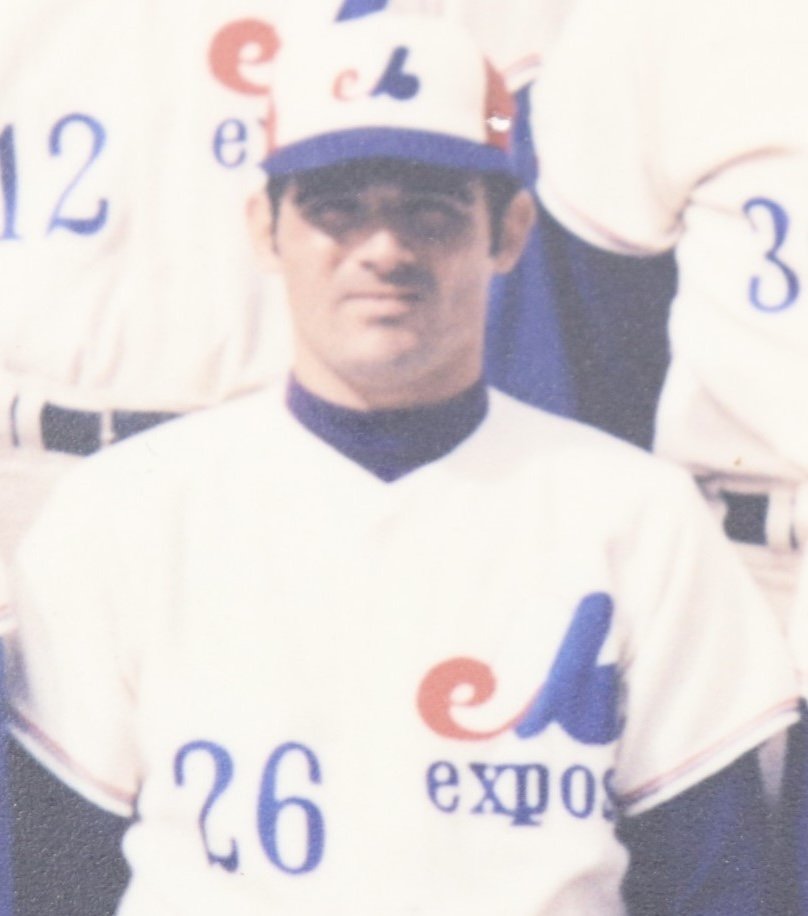
Bill Stoneman. Photo: Canadian Baseball Hall of Fame
Bill Stoneman
Born on April 7, 1944 in Oak Park, Ill., Bill Stoneman was the ace of the Montreal Expos during their early years. He’d later become a key executive with the club.
Selected in the 31st round of the 1966 MLB draft by the Chicago Cubs, Stoneman spent his first two big league seasons as a reliever with the Cubs before being chosen by the Expos in the 1968 expansion draft.
The 5-foot-10 right-hander cracked the Expos’ inaugural Opening Day roster and on April 17, 1969, in just the ninth regular season game in Expos’ history, he tossed a no-hitter against the Philadelphia Phillies at Connie Mack Stadium. This made him the first pitcher to throw a no-hitter for a Canadian major league team.
Stoneman proceeded to lead the Expos in wins (11), starts (36), innings pitched (235-2/3), strikeouts (185), complete games (8) and shutouts (five) in 1969.
Over the next four seasons, Stoneman was top-of-the-rotation starter for the Expos. In 1971, he recorded a career-high 17 wins and posted a 3.15 ERA in 39 appearances (38 starts) and established then franchise records in complete games (19), innings pitched (294-2/3) and strikeouts (251). He also ranked second in the National League in innings pitched, third in strikeouts and finished eighth in Cy Young Award voting.
Stoneman followed that up with another outstanding season in 1972 when he registered 12 wins and a career-best 2.98 ERA in 35 starts. On October 2 of that year, he threw his second no-hitter. This one came at home, at Jarry Park, in a 7-0 victory over the New York Mets. This made him the first pitcher from a Canadian major league team to throw a no-hitter in Canada. It has also made him the only pitcher to throw more than one no-hitter for a Canadian major league team.
After one more season with the Expos, Stoneman completed his playing career with the California Angels in 1974.
Upon his retirement, he came back to Canada and became a manager at Royal Trust before returning to the Expos in 1983 as an assistant to the president. In September 1984, he was promoted to the position of vice-president, baseball administration and then later to vice-president, baseball operations. In 1987, he was named the team’s interim general manager and he worked in that capacity until Dave Dombrowski replaced him in July 1988.
Stoneman continued as a prominent Expos executive through the 1999 season when he was hired to be the general manager of the Angels. In 2002, he assembled the Angels’ only World Series-winning team. He continued as the club’s GM through the 2007 campaign and then transitioned into a senior advisor role.
“I was totally surprised to hear the news that I would be inducted into the Canadian Baseball Hall of Fame,” said Stoneman. “I am looking forward to joining the group in St. Marys in June.”
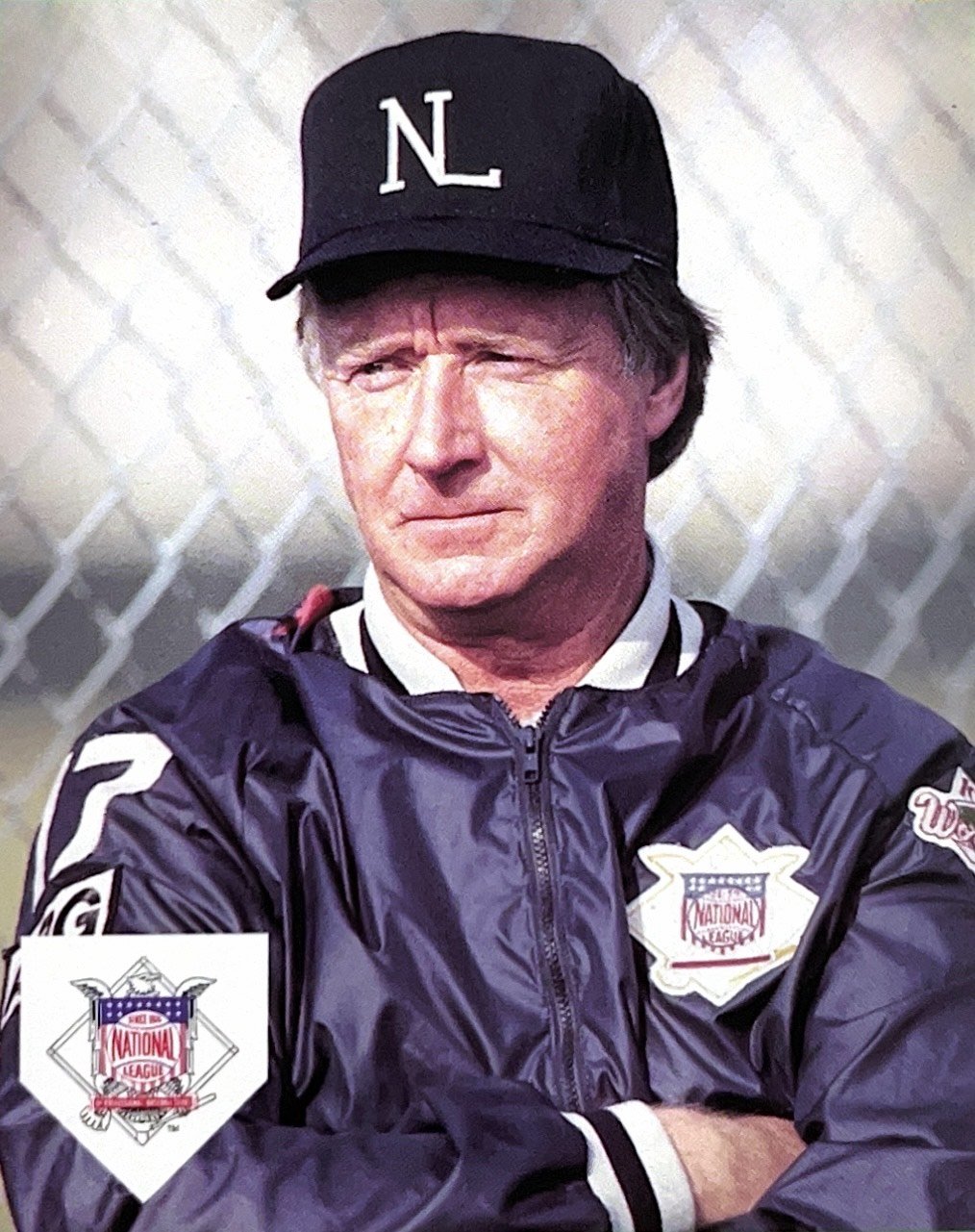
Paul Runge (St. Catharines, Ont.). Photo: Canadian Baseball Hall of Fame
Paul Runge
Born on October 20, 1940 in St. Catharines, Ont., Paul Runge was a highly respected National League umpire for parts of 25 major league seasons from 1973 to 1997.
He began his career in pro baseball as an outfielder/catcher in the Houston Colt 45s and Los Angeles Angels organizations from 1962 to 1964 before deciding to follow in his father Ed Runge’s footsteps and pursue an umpiring career.
He polished his skills as a minor league umpire for parts of nine seasons before graduating to the National League in 1973. Over his quarter century as a big league umpire, Runge became one of the most esteemed in the game. He was selected to umpire nine National League Championship Series, four World Series (1979, 1984, 1989 and 1993) and three All-Star Games (1978, 1986, 1994).
Among his career highlights was being the third base umpire when Expos’ right-hander Charlie Lea tossed a no-hitter on May 10, 1981. It was the first no-hitter thrown by an Expos pitcher at Olympic Stadium.
More than 12 years later, on Oct. 23, 1993, Runge was umpiring second base when Blue Jays slugger Joe Carter belted his walk-off, World Series-winning home run against Phillies closer Mitch Williams.
In total, Runge umpired 3,194 regular season MLB games, 43 championship series contests and 22 World Series games. Just three Canadians have umpired more MLB games: Bob Emslie (Guelph, Ont.), Jim McKean (Montreal, Que.) and Ernie Quigley (Newcastle, New Brunswick).
In 1998, Runge became the National League’s director of umpires. He served in that post through 1999.
His son, Brian, was also a National League umpire from 1999 to 2012.
“This news came as a wonderful surprise and I am truly honored to be recognized,” said Runge. “It is a pleasure to be accepted into the Canadian Baseball Hall of Fame.”